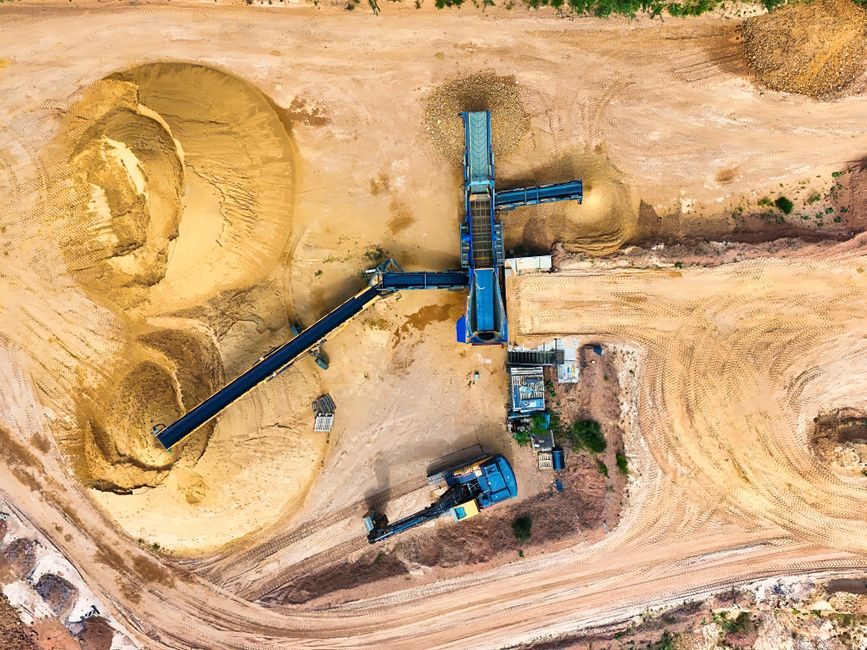
For municipal solid waste (MSW) landfills, the excavator class is dictated by daily incoming tonnage: sites below 50 t/day are served by a 50-60 kW bulldozer alone, while 50-1000 t/day sites are explicitly specified to use an excavator in combination with a dozer, a water-spraying machine, and a ties/elevator mechanism, per the European landfill operations guidance manual [S5].
For waste-handling duty, manufacturers segment the equipment line into a dedicated Material Handler configuration built on the hydraulic-excavator platform but with a higher and wider undercarriage, heavy guarding, and a straight or bent refuse boom; this class spans roughly 300-2000 hp, dig depths beyond 40 ft, and dump heights near 37 ft, with operating weights from compact to 100+ tonne [S3][S4].
Tonnage bands and matching machine class
The European guidance manual publishes a four-band tonnage-to-fleet table that has not been displaced in 2026 procurement practice: 0-50 t/day needs one dozer at 50-60 kW; 50-100 t/day needs a dozer (60-70 kW), a ties unit, and a water-spraying machine, with the excavator flagged as a substitute for the ties or elevator; 100-300 t/day scales the dozer to 90-120 kW and adds more units; 300-1000 t/day retains the same scheme at higher count, still with the excavator as the optional replacement for the ties/elevator/unloading vehicle [S5]. The practical reading is that the excavator enters the fleet at roughly 50 t/day and above, never below.
On the OEM side, the equivalent class of equipment for waste handling is documented in Caterpillar's Performance Handbook section 18 ("WASTE HANDLING"), which lists Hydraulic Excavators (Tracked/Wheeled), Track-Type Tractors, Track Loaders, Landfill Compactors, and Wheel Loaders as the five equipment families for landfill work, with hydraulic excavators as the primary loading and sorting tool [S3]. A standard 20-25 tonne tracked excavator with a 1.0-1.2 m³ bucket is the common minimum for daily-cover and truck-loading duty at 50-300 t/day sites.
Material-handler configuration vs standard hydraulic excavator
The material-handler variant is not a marketing label — it is a distinct undercarriage and boom package. Higher and wider undercarriages clear the elevated tracks above debris and reduce impact damage in scrap and refuse service, per the spec guide summary [S4]. A refuse-spec boom is straight or near-straight with a long reach, paired with a sorting grapple or clamshell rather than a toothed rock bucket, because the wear pattern in waste is bucket-shell abrasion and hydraulic-cylinder contamination, not tooth breakage.
Key decision criteria when choosing between a standard 20-tonne excavator, a 30-tonne material handler, and a 50+ tonne mining-class excavator for landfill duty are operating weight vs daily tonnage, boom reach (≈10 m for 20 t class, 12-15 m for 30 t class, 18+ m for 50 t class), bucket-vs-grapple tooling, and the need for elevated final drives. The compact 1-5 t mini-excavator class is not appropriate for active landfill cells because of undercarriage exposure and limited reach; it is reserved for leachate pond cleaning and small transfer stations. For an in-depth selection framework that links machine class to bucket and truck match, see this mining-class excavator spec guide.
Undercarriage, guarding, and contamination control
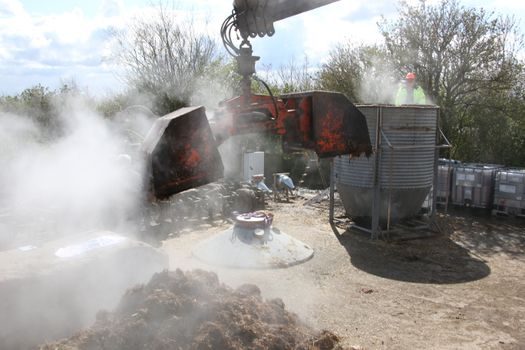
For a baseline 20-30 tonne landfill excavator, the operating-weight window of 20,000-32,000 kg is typical, paired with an engine in the 120-180 kW bracket and a bucket in the 0.8-1.4 m³ range. The high-and-wide undercarriage on a purpose-built material handler adds ground clearance of roughly 200-400 mm versus a standard excavator of the same class, with boom and stick geometry tuned for a maximum reach of 10-15 m to load transfer trucks and sort waste on the tipping floor [S3][S4].
Three contamination controls are standard on refuse-spec machines: (1) boom-arm cylinder guards to prevent hydraulic-hose puncture from rebar and sheet metal; (2) reinforced belly and travel-motor covers for abrasion over mixed construction waste; and (3) sealed slewing rings with positive-lubrication guarding. The 2026 procurement language for a 30-tonne class landfill material handler typically includes a factory-fitted trash-spec cab with falling-object guarding and a high-efficiency filtration package rated for dust-laden air; these are not aftermarket options in the major OEM configurations [S3].
Matching with dozers, compactors, and conveyors
Landfill productivity is a fleet problem, not a single-machine problem. Bulldozers are the workhorse for cell spreading and cover-soil placement because a 50-60 kW class dozer can push daily cover economically across a 1-2 hectare active face, and the wider compactors' wide wheels efficiently roll waste piles to reduce volume and improve airspace utilisation [S7]. The excavator's role in this fleet is loading transfer trucks, sorting recyclables on the tipping floor, and digging leachate trenches or gas-collection trenches; it is not a substitute for the dozer on cell compaction.
A practical 2026 fleet ratio for a 200-300 t/day MSW site is one 20-25 t excavator, one 90-120 kW dozer, one landfill compactor (typically 35-50 tonne operating weight with chopper wheels), and one water-spraying truck, with the excavator running roughly 8-10 hours per day on two-shift coverage. For telehandler-based transfer-station and stockpile support that often sits next to a landfill fleet, the 2026 telehandler supplier map is the relevant adjacent reference.
Selection criteria ranked for procurement
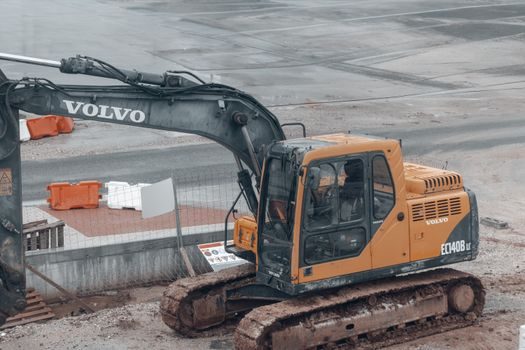
When specifying an excavator for landfill work, rank the criteria in this order and reject any machine that fails the first three. (1) Daily-tonnage match to the 50-300 t/day band (below 50 t/day a dozer suffices; above 300 t/day add a compactor and consider 30 t+ class) [S5]. (2) Undercarriage clearance and guarding package rated for waste service, not a standard construction-spec undercarriage [S4]. (3) Boom and arm geometry sized for transfer-truck loading — typically 10-12 m reach for 20 t class, 12-15 m for 30 t class [S3]. (4) Hydraulic attachment circuit plumbed for grapple and shear, not just a toothed bucket. (5) Filtration and cab protection package rated for dust and odour exposure.
Selection guidance for matching machine class to undercarriage and boom geometry on a related but distinct application is given in the road-construction excavator spec map; the boom-length and class framework is the same, while the contamination and reach priorities shift toward road-cut and truck-loading geometry.
Limitations, failure modes, and what to exclude
Three failure modes dominate the landfill excavator duty cycle. First, hydraulic-cylinder scoring from wire and sheet metal in mixed waste — a standard boom without guarding fails this mode within 2,000-4,000 hours in typical MSW service. Second, undercarriage idler and track-frame impact damage when the machine works on broken concrete and rebar — the standard 600-700 mm triple-grouser track shoe is inadequate, and the high-and-wide material-handler undercarriage with 800-900 mm shoes is the engineering answer [S3][S4]. Third, slewing-ring contamination from fine dust and moisture; an unsealed ring fails within 5,000-8,000 hours in refuse service versus 15,000+ hours in a standard earthmoving application.
What to exclude: a mini-excavator below 8 t operating weight on an active cell face; a standard 20 t construction excavator without a guarding package; a wheeled excavator on unsurfaced waste — wheel damage and instability rule it out for the active face, although it remains useful on the hard-surfaced transfer-station apron. A general-purpose construction excavator and a refuse-spec material handler are not interchangeable, and procurement language that does not name the waste-handling package will deliver a machine that is technically compliant but operationally inadequate [S3].
Standards, sourcing, and 2026 procurement language

Landfill-excavator procurement in 2026 typically references the OEM waste-handling section (Caterpillar SEBD0351, edition 50) for machine selection, and the operator-protection requirements follow the standard machine-safety practice embedded in that handbook's section on Operator and Machine Protection [S3]. Daily-tonnage-to-fleet sizing follows the European Commission / CCAC Landfill Operations Guidance Manual table, which is still the most-cited public reference for small and mid-scale municipal landfills [S5]. Hydraulic-circuit and attachment standards (quick-coupler pin geometry, grapple rotation speed) are governed by the OEM's own specifications rather than a single ISO number; specifiers should pin the OEM's refuse-spec document number, not a generic excavator data sheet.
For fleet planners auditing the auxiliary gas and dust monitoring that should accompany any landfill equipment spread, the fixed gas detector spec map is the closest reference on the monitoring side, although landfill gas detection has its own methane-CO bias that differs from oil-and-gas service. Next procurement checkpoints to track: OEM waste-handling edition updates from Caterpillar (edition 50 is the current reference at the time of writing), any new 30-tonne-class electric or hybrid material-handler launches that would change fleet-fuel economics, and tightening EU landfill-directive leachate-control timelines that drive higher filtration and guarding specifications on new fleet orders.
Spec-level background on the components involved: excavator, pressure transmitter, and flow meter.