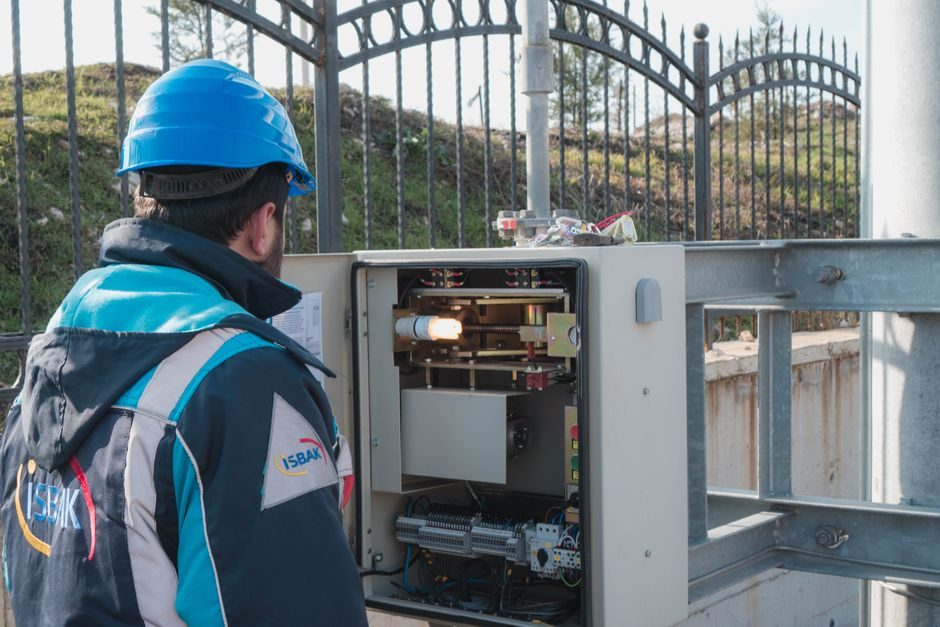
An explosion-proof control station and an explosion-proof light look similar from the outside — both carry a die-cast or stainless enclosure, both stamp a flameproof "Ex d" mark, and both must clear IEC 60079-0 / IEC 60079-1 type-testing — but they fail the project's safety case for completely different reasons if a single spec line slips [S1].
Control stations concentrate on command and indication: certified contact blocks, operators, and ammeter windows. Lighting concentrates on luminous flux, photometric distribution, and thermal class on the lamp surface. A 75 W SMC-moulded LED high bay at 5000 K and a 16 A start-stop station on a Zone 1 panel may share a GB3836-2000 + IEC60079 test pedigree, yet they are not interchangeable items in a BOM [S1][S5].
Where the Two Product Families Overlap — and Where They Split
Both product families fall under the same five IEC 60079 protection concepts: flameproof "Ex d", increased safety "Ex e", positive pressure "Ex p", non-sparking "Ex nA", and dust-protected "Ex tD" — the five lamp variants that the Chinese GB3836/electrodeless lamp reference explicitly enumerates [S1].
From that common point the spec tree diverges. A control station lives or dies by switching endurance (typically 0.5–1 million mechanical cycles on rotary operators), terminal cross-section (2.5–10 mm²), and IP66 gasket integrity at the gland plate [S4]. An explosion-proof light instead carries a photometric file (typically 110–150 lm/W for 2026 LED platforms), CCT (4000–5000 K), CRI ≥ 80, and an IK08–IK10 impact rating on the tempered-glass or polycarbonate diffuser [S2][S5]. The same enclosure on both products can host either function, but the certification dossier is different.
Wiring practice also splits: control stations use Ex e-certified terminal boxes internally with cable glands rated to the same Zone, while lighting often ships with factory-sealed Ex d chambers that the installer only opens via a dedicated tool [S7]. The practical consequence is that an installer trained for lighting retrofits (block-mini / RTR series) cannot assume the same torque, creepage, and potting rules on a control station [S2].
Decision Matrix: Control Station vs Lighting on Four Engineering Criteria
Across four engineering criteria, the two product families sit at opposite ends of a typical 2026 hazardous-area spec.
Zone and gas group — both products cover Zone 1 / Zone 2 / Zone 21 / Zone 22, and either can stamp "Ex d IIC T6" for hydrogen-rich atmospheres [S1][S7]. Where they diverge is on gas-group testing depth: a Class I Division 1, Group A–D control station must pass hydrogen-Group IIC fault tests, whereas an LED high bay commonly ships to a wider but lower-stress IIC T4 envelope [S2][S7].
Ingress and impact — a control station's IP66 / Type 4X rating is mechanical, validated under 100 kPa water-jet and 7 J impact tests [S7]. A high-bay fixture carries the same IP66 baseline but is additionally required to pass a 5–7 J impact test on the glass globe and a 1000 h salt-spray for offshore platforms, an extra gate that control-station enclosures do not always meet [S2][S5].
Thermal class on the enclosure surface — control stations mostly certify T6 (≤ 85 °C) because the only heat source is the contact block, while LED luminaires commonly run T4 (≤ 130 °C) at the heatsink under continuous duty, and T5/T6 only on lower-wattage units such as 40 W block-mini panels [S2][S5].
Lifecycle cost — the TCO driver is a 5–7 year LED lumen-maintenance curve (L70 / L80) versus a 10+ year mechanical-life curve on the control station. The control station tends to win on capex, the LED luminaire tends to win on relamp/relocation labour, which is why most 2026 greenfield bids carry mixed-family line items [S2][S5].
Selection Criteria by Plant Function
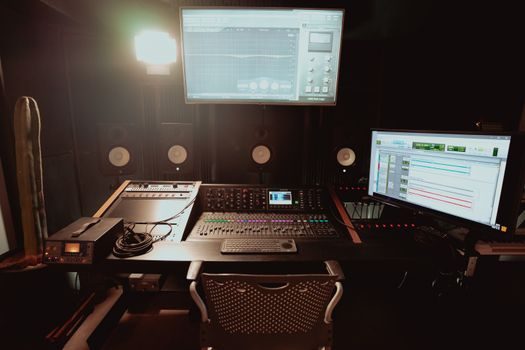
A control station should be specified when the engineer needs start/stop, local/remote, ammeter, or jog functions inside Zone 1/2, with Ex d IIC T6 marking and a minimum 16 A / 690 V switching capability. Shenhai's two-decade product line, for example, pairs explosion-proof explosion-proof junction box and pipe fittings with pushbuttons and indicator lamps in the same enclosure family, which is the typical "command and indication cluster" you see on an oil and gas skid [S4].
Explosion-proof lighting should be specified where photometric output and steady-state colour temperature drive safety — 5000 K walkway lighting on an FPSO module, 4000 K task lighting on a refinery platform, or 3000 K low-glare floodlighting on a tank-farm perimeter [S1][S2]. The explosion-proof lamp body is die-cast aluminium with a tempered glass chimney and stainless fasteners, with the diffuser and lamp chamber separately sealed against moisture and gas ingress [S1].
Spec engineers should be aware that "Explosion-proof" and "hazardous location" are not identical product categories. A hazardous-location LED fixture can be NEMA 4X marine-grade without being an Ex d enclosure; conversely an Ex d IIC T6 control station is not automatically Type 4X [S2][S7]. Treat the two certifications as parallel sets and merge them only when both project specs demand both.
Failure Modes and Specification Traps
The most common mis-specification in 2026 is buying a Class II Division 1 LED floodlight for a Zone 1 hydrogen service. Class II covers combustible dust (Groups E/F/G), not gas — the wrong gas group, wrong thermal class, and the project fails commissioning [S7]. The reverse — Ex d IIC T6 control stations used as lighting junction boxes — is equally costly, since the operator window is not photometric-rated and the lamp cavity does not exist [S1][S4].
Second trap: gasket ageing. IP66 on a control station is gasket-dependent; many plants observe 4–6 year service intervals for silicone gaskets on explosion-proof electrical command enclosures, while lighting units rated to the same IP66 can hold that rating for longer because the lamp chamber is potted, not flanged [S2][S7]. Buyers should request gasket-replacement kits as separate line items rather than bundle them inside the luminaire price.
Third trap: cable gland mix-and-match. A flameproof Ex d IIC T6 station requires barrier glands or Ex e glands rated for the same Group. Plugging a lighting fixture's factory-supplied cable with a standard industrial gland voids the certification [S7]. For typical 2026 sourcing on distribution skids, see the parallel Explosion-Proof Control Station Selection: Zone, Gas Group, Ex-Mark and IP Gates reference and the Explosion-Proof Distribution Box Price & Cost Guide 2026 line-item breakdowns for gland / terminal costing.
Standards, Sourcing, and 2026 Cost Bands
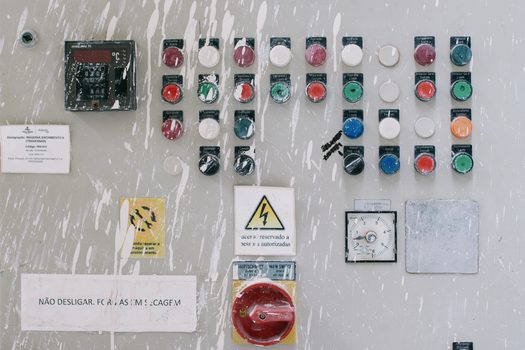
Both product families certify to the same umbrella: IEC 60079-0 (general requirements), IEC 60079-1 (flameproof enclosures), IEC 60079-7 (increased safety), IEC 60079-31 (dust), and the equivalent GB3836-2000 / GB3836 series in mainland-China manufacturing [S1]. Hazardous-location LED fixtures additionally cite UL 844, NEMA 4X, and CSA C22.2 for North-American projects [S2][S7].
2026 unit-cost ranges from Chinese OEM and US-assembled lines place a 16 A start-stop control station at roughly USD 180–420 ex-works depending on enclosure size, ammeter, and Ex d IIC T6 mark, against a 75–150 W explosion-proof LED high bay at roughly USD 220–650 ex-works depending on IP66 vs IP67 and IES photometric file [S2][S4][S5]. For cost engineering on the lighting line item specifically, the parallel Explosion-Proof Lighting Price and Cost Guide: 2026 Unit Cost Bands and TCO Drivers reference lists wattage-banded unit cost and 5-year TCO breakdowns that line up with the LED 2026 sourcing cohort.
One open specification question: whether a future project can drop the flameproof chamber entirely and rely on Ex e (increased safety) for non-sparking LED drivers — a 2026 design choice that is currently debated because lamp inrush current still requires Group IIC thermal justification. Treat that as a watch item, not a settled rule, until the relevant IEC 60079-1 / 60079-7 update is in the published testing-lab docket [S1][S2].