
For 2026 hazardous-area builds, the control-station spec is locked by four gates in this order: ATEX/IECEx zone classification, gas/dust group, Ex-mark (Exd/Exe/Exi), and enclosure IP rating — chosen before any brand or vendor shortlist.
The reference point is the LA53-A1/A2/A3 aluminium control button box: 6 A rated current, DC 220 V / AC 380 V, Exd II BT6, IP54, corrosion grade W/WF1 [S4]. That single line card carries the classic Chinese-factory combination that shows up in chemical, refinery and paint-shop panels.
Define the duty before the enclosure
An explosion-proof control station is a factory-wired assembly combining an Ex-rated enclosure with control devices — push buttons, selector switches, indicator lamps, potentiometers, sometimes ammeters — used to start/stop motors, open/close valves, or give local start permission in classified areas. ATEX 2014/34/EU equipment categories map to zones: category 2 covers zone 1 and zone 21 (high probability), category 3 covers zone 2 and zone 22 (low probability). [S1]
Two distinct Ex protection methods are used on the same station. Flameproof enclosure "Exd" contains any internal ignition and vents through a machined flamepath — the LA53-A1/A2/A3 carries Exd II BT6, meaning gas group IIB, surface temperature class T6 (≤ 85 °C) [S4]. Increased safety "Exe" is used for terminals and components that don't arc in normal service. Intrinsic safety "Exi" limits circuit energy below ignition thresholds; the NBB Planar-B1 EX wireless remote uses Exi for zone 1/2 gas-explosive areas [S1]. Picking between Exd/Exe/Exi is the second gate, not a brand decision.
Wired wall-mount station vs. wireless pendant
The 2026 shortlist has three realistic options. (1) Wired wall-mount Exd station with LA53-series buttons: 6 A, DC 220 V / AC 380 V, IP54, Exd II BT6, aluminium alloy housing, corrosion grade W/WF1 [S4]. (2) Wireless Exi pendant: NBB Planar-B1 EX, 18 buttons, IP65, 434 MHz F2-band (434.050–434.750 MHz), 866–870 MHz EU G-band, ≤ 10 mW RF output, response time 15 ms, 100 m indoor reach (≤ 300 m open-field), Ni-MH battery, 10 h continuous, −20 °C to +40 °C [S1]. (3) Floor-standing or large-format Ex distribution column for multi-circuit motor control, typically with explosion-proof distribution bus behind the operator face.
Comparison on four buyer criteria:
• Cost per station: wired Exd LA53-style is lowest; wireless Exi pendant adds RF module cost; floor-standing Ex column is highest. • Installation flexibility: wireless pendant needs no conduit run but requires Exi barrier and frequency coordination; wired wall-mount needs Exd conduit and cable glands. • Operator mobility: pendant wins for crane, locomotive and tanker applications; wall-mount is fixed. • Maintenance access: wired wall-mount allows hot-work isolation lockout; pendant is battery-limited to ~10 h continuous duty per charge [S1].
What the enclosure has to prove on paper
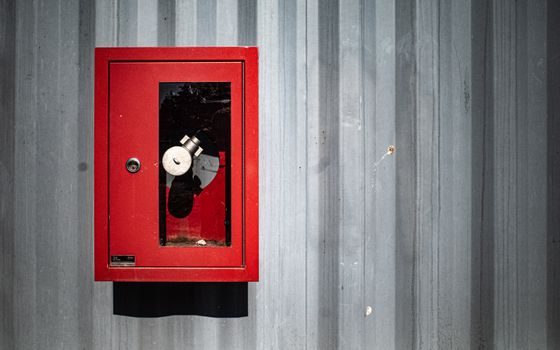
Every explosion-proof control station carries a marking plate. Reading the LA53 line: "Exd II BT6" means flameproof, group II (surface industries), subgroup B (ethylene, propylene), temperature class T6 (max surface 85 °C) [S4]. The "IP54" ingress protection means dust-protected and splash-proof from any direction — adequate for indoor chemical skid panels but borderline for open-deck marine or wash-down food areas, which usually demand IP65 or IP66.
Temperature class is set by the auto-ignition of the surrounding gas. T6 (≤ 85 °C) is the safest and the most common spec on Chinese export panels; T5 (≤ 100 °C), T4 (≤ 135 °C) and T3 (≤ 200 °C) are used where ambient is higher or where higher-current contactor coils force a hotter enclosure. Specifying T1 or T2 on a control station is unusual and usually wrong — those classes are for very-high-temp gas environments where you would not be putting a general-purpose control station in the first place. The IP54 → IP65 step on the NBB pendant corresponds to its portable, weather-exposed duty [S1], versus the LA53's sheltered panel duty at IP54 [S4].
Matching the station to the load
Push-button current rating has to clear the inrush of the contactor coil, not just the steady-state hold current. The LA53-A1/A2/A3 is rated 6 A at DC 220 V / AC 380 V [S4], which covers most direct-on-line motor contactor coils under 5 hp at 380 V and small solenoid valves. Larger motors (≥ 7.5 kW) at 380 V typically pull a control contactor that exceeds 6 A inrush; the station must then drop down to a control relay and use a higher-rated master contactor in the explosion-proof distribution panel behind it.
Voltage drop across long button loops is a frequent field failure. AC 220 V is more tolerant of voltage drop on long cable runs than DC 220 V because the contactor coil is less sensitive to slow pull-in. For distances above ~50 m, AC 220 V or AC 110 V is preferred over DC 220 V, and the button contact rating is derated (typically to 30–50% of nameplate) for DC inductive loads — a hard rule on every manufacturer's datasheet even if not always printed on the nameplate.
Special environments override the default spec. Salt-laden marine decks need stainless-steel or GRP housings instead of aluminium. Coal-mine faces with methane (group I, not group II) need Ma/Mb-certified stations, not the LA53 group II. Hydrogen-rich electrolyser rooms often need IIC-certified stations, not IIB; a station marked "Exd II BT6" is NOT acceptable in an IIC hydrogen environment. Always re-check the gas group letter on the nameplate against the actual gas inventory of the room.
Wireless pendants for cranes, locomotives and tankers
Where the operator needs to move with the load — overhead crane, refinery tank-farm, mining locomotive — wireless Exi pendants are the right tool. The NBB Planar-B1 EX ships with 18 buttons, IP65 enclosure, 434 MHz F2-band, ≤ 10 mW RF, 15 ms response time, ≤ 300 m range and 10 h Ni-MH continuous runtime [S1]. LBT (Listen-before-Talk) is implemented on the transmitter so the unit will not transmit on a channel already occupied by another device on the same band [S1].
Two design constraints to respect on wireless stations. First, frequency band is regional: F2-band 434.050–434.750 MHz and G-band 866–870 MHz cover EU/China, while 915 MHz covers USA — specifying the wrong band locks the station out of the destination market [S1]. Second, intrinsic-safety "Exi" limits loop energy, so the station cannot drive a power contactor directly; it can only drive an Exi barrier input, which then commands the real contactor in the explosion-proof electrical panel. For a deeper look at the spec gates across zone, gas group, Ex-mark and IP, see the related piece on explosion-proof control station selection, which walks each gate in turn.
Quality signals on the vendor shortlist
For 2026 procurement, three signals filter a Chinese export vendor. (1) IECEx and ATEX certificates traceable to a notified body, not just a "CE" sticker — Shenhai Explosion Proof Technology (Hangzhou) lists Ex-proof fan, explosion-proof light, explosion-proof junction box and Ex-proof plug and socket across its catalogue, suggesting a vendor with multi-line Ex experience rather than a single-product workshop [S2]. (2) Sample availability and audited-supplier status on B2B platforms [S2]. (3) A typed nameplate on the unit — full marking string (Ex mark, group, T-class, IP, certificate number) etched or riveted, not a printed sticker that wipes off with solvent. Vendors that hide the certificate number on the datasheet usually have a weak one.
For non-station adjacencies on the same skid — indicator lamps, cable glands, plugs — the buyer often bundles these to one vendor to consolidate documentation. Reference parts in the same family are widely stocked: flameproof pressure switches, Ex plugs and sockets in 16 A/32 A/63 A 3/4/5-pin IP66 ratings, and Ex button switches share certificate families with control stations [S2]. This simplifies the third-party inspection paperwork on skid FAT.
Common spec mistakes and how to catch them
Three errors dominate rejected submittals. Mistake 1 — picking IIB for a hydrogen service: hydrogen belongs to gas group IIC; specifying Exd II BT6 for a hydrogen compressor skid is a non-conformance that the inspector will redline [S4]. Mistake 2 — under-specifying IP for wash-down: an IP54 station on an offshore deck or food-grade wash-down area fails first-month inspection; IP65 minimum is the rule of thumb. The Planar-B1 EX wireless pendant sits at IP65 for exactly this reason [S1]. Mistake 3 — using an Exd enclosure where Exe would do: for non-arcing components like terminal blocks, Exe is lighter, cheaper and easier to wire; reserving Exd for switching devices that actually arc is the right cost-engineering move.
For adjacent component decisions on the same skid — distribution boards, junction boxes, indicator lamps — buyers can also compare the criteria-based trade-offs in the explosion-proof distribution vs junction box selection map, which lines up the same four gates (zone, gas group, Ex-mark, IP) for the panel behind the control station.
Trackable signals to watch in H2 2026
Two procurement signals are worth following into late 2026. First, IECEx scheme acceptance of additional Chinese test labs (CCOE Shanghai, NEPSI) is expanding the pool of locally-certified stations with traceable IECEx CoCs — useful for projects outside the EU ATEX perimeter. Second, the wireless Exi pendant segment is moving from 434/866/915 MHz proprietary radios toward LTE/5G private-network Exi tablets on certified devices; expect 2027 submittals to start referencing IECEx-certified Exi tablets with tablet-class touchscreens in place of the 18-button pendant format demonstrated by the Planar-B1 EX [S1]. Until those clear certification, the 18-button Exi pendant at 434 MHz with ≤ 10 mW RF remains the conservative 2026 buy.