The trigger for explosion-proof electrical selection in a laboratory is not the room's name on a floor plan but the quantity and vapor pressure of flammable liquids handled, with NFPA 45 setting the quantity limits and NFPA 70 Articles 500-504 dictating the resulting Class/Division wiring rules [S2][S5]. A bench-scale research hood running milliliters of solvent is electrically indistinguishable from an office; a 50 L jacketed reactor or a 200 L distillation column reclassifies the surrounding space into Class I, with Division 1 or Division 2 driven by whether flammable vapor is expected under normal or only abnormal conditions [S2].
Selection therefore begins with hazardous-area classification, not with the catalog, and the catalog is only used to match a protection concept (Ex d, Ex e, Ex p, Ex i) to that class/division/zone assignment [S1][S4]. Materials matter as a secondary filter, with stainless steel AISI 304 and 316L, aluminum alloys, and borosilicate glass being the common enclosure options for corrosion and impact resistance in solvent-handling labs [S1].
Hazardous-Location Class and Division Triggers
NFPA 70 Article 500 defines a hazardous (classified) location as any area where flammable gases, vapors, liquids, combustible dust, or ignitable fibers may be present in ignitable quantities, and the trigger is volume and handling mode rather than room label [S2]. Class I covers flammable gases and vapors, which is the dominant case for organic-solvent labs, while Class II covers combustible dusts (relevant for powder-handling or lyophilizer rooms) and Class III covers ignitable fibers [S2].
Within Class I, Division 1 is assigned where flammable concentrations are expected during normal operations, for example the vapor space above an open solvent drum or the area immediately around an open distillation column, while Division 2 covers spaces where flammable concentrations are only present under abnormal conditions such as a seal failure, a spill, or a vessel overpressure event [S2]. Pilot-plant processing floors handling closed-transfer solvent streams under adequate ventilation most commonly land in Class I, Division 2, and that single classification drives the wiring method, enclosure rating, and accessory list for every outlet, panel, and light in the room [S2].
Under the parallel IECEx/ATEX system the equivalent zoning uses Zone 0, Zone 1, and Zone 2 for gases and Zone 20, 21, 22 for dusts, with Apparatus Group I (mining), Group II (surface gases), and Group III (dusts) further constraining equipment selection [S1]. Equipment Protection Level (EPL) Ga, Gb, Gc maps to those zones, and is tested to EN IEC 60079-25 for intrinsically safe electrical systems and EN IEC 60079-26 for equipment with EPL Ga [S4]. A lab that must satisfy both U.S. and European stakeholders effectively has to dual-classify the same space and then dual-spec every component, which is why cross-referenced catalogs from explosion-proof electrical gear vendors are built around the protection type first and the certification mark second.
Four Protection Types and Where Each Fits
The four protection concepts that cover almost all lab installations are flameproof enclosure (Ex d), increased safety (Ex e), pressurization (Ex p), and intrinsic safety (Ex i, with sub-levels ia, ib, ic) [S1]. Flameproof 'd' encloses parts that could ignite a mixture in an enclosure capable of withstanding the pressure of an internal explosion and preventing flame transmission to the surrounding atmosphere, which is why it is the workhorse for Division 1 motors, junction boxes, and lighting in solvent-handling areas [S1].
Increased safety 'e' applies additional measures to prevent excessive temperatures, sparks, and arcs on exposed parts and inside the enclosure, and is typically used for terminal boxes, conduit fittings, and luminaires in Division 2/Zone 2 where an explosive mixture is not normally present [S1]. Pressurization 'p' keeps a protective gas at positive internal pressure to prevent an explosive atmosphere forming inside the casing, and is the standard method for housing analyzers, chromatographs, and other bench-top instruments that are easier to keep in a purged cabinet than to redesign as Ex d [S1].
Intrinsic safety 'ia/ib/ic' limits electrical energy to levels too low to ignite a flammable atmosphere under any fault condition, and is the default for low-power measurement loops (4-20 mA, HART, thermocouples) where the field device and its associated barrier are designed as a single energy-limited system [S2]. The decision between Ex d and Ex i in a Division 1 lab is largely a decision between local heavy enclosures (d) versus energy-limited instrumentation with associated apparatus (i), and that choice cascades into cable type, conduit, and grounding. For a pilot plant with a process control system, the spec-first selection map for explosion-proof electrical gear walks the same logic across the whole bill of materials.
Materials, Temperature Class, and Dust Margin
Enclosure material selection is driven by corrosion, impact, and thermal limits, with stainless steel AISI 304 and AISI 316L, aluminum alloys, borosilicate glass, and selected plastics being the common options [S1]. In a wet-chemistry or clean-in-place lab, 316L is preferred over 304 because of its molybdenum content and chloride resistance, even though it costs more per kilogram; in a dry analytical lab, aluminum may be sufficient and lighter to install on overhead framing [S1].
Surface temperature is regulated through a temperature class (T1 to T6 under IEC 60079, mirrored by NEC temperature groups) that caps the maximum surface temperature of the equipment well below the auto-ignition temperature of the gas or dust present [S1]. For dust atmospheres, the standard requires a significant safety margin between the equipment surface temperature and the dust cloud or layer ignition temperature, because dust layers insulate and can ignite at temperatures that would be safe for gases alone, which is why the same enclosure often carries a lower T-class rating in a dust-classified space than in a gas-classified one [S1].
Borosilicate glass viewing windows appear on flameproof enclosures for reactor sight glasses and on increased-safety luminaires where users need to see status indicators; the limit there is mechanical impact and thermal-shock rating, not chemical compatibility, and a window rated only for gas groups IIA and IIB will not be certified for hydrogen (IIC) without an explicit marking check [S1][S4].
Selection Criteria: Matching Protection Concept to Lab Task
The practical decision tree for a lab project starts with three inputs: the classified zone/division, the electrical function (motor, light, instrument, control panel), and the gas group (IIA, IIB, IIC) or dust group present. The first cut is whether the function needs to be energized in the hazardous area at all, because moving a motor or a controller outside the classified boundary and using only a sealed shaft or intrinsically safe signal passing through the boundary is almost always cheaper than certifying the in-room device. [S4]
For lighting in a Division 2 solvent room, increased-safety Ex e fluorescent or LED luminaires are usually specified, with the rating confirmed for the gas group and T-class; for Division 1 reactor bays, Ex d fluorescent or LED fixtures with borosilicate glass and protected diffusers are standard [S1][S2]. For motors on pumps and overhead stirrers, Ex d enclosures dominate, with Ex e reserved for terminal boxes only; the motor itself is rarely Ex e because starting currents and surface temperatures violate the 'e' concept during normal operation. For instrumentation, intrinsic safety (Ex i) is the default for 4-20 mA/HART and thermocouple loops, with Ex d housings used where the instrument cannot be energy-limited (for example, a powered Raman probe or a local display).
A condensed comparison for the four protection concepts against the most common lab selection criteria:
Ex d (flameproof): highest robustness, heaviest enclosures, suitable for Division 1 and Zone 1, common for motors, junction boxes, and lighting in Division 1 reactor bays; maintenance requires the enclosure to be de-energized and gas-freed before opening, which complicates live work [S1].
Ex e (increased safety): lighter, easier to install, allowed in Division 2 and Zone 2 only, not permitted where sparking is part of normal operation; standard for terminal boxes, conduit, and many luminaires in Division 2 pilot-plant spaces [S1][S2].
Ex p (pressurization): ideal for bench-top analyzers and control panels where re-engineering the internals as Ex d is impractical; requires a purged, interlocked protective gas supply, adding utility cost and a point of failure [S1].
Ex i (intrinsic safety): the safest concept for low-power instrumentation because ignition energy is limited by design, allowed across Zone 0/1/2 depending on ia/ib/ic sub-level, but it caps available power, so it cannot drive motors, heaters, or large lighting loads [S2].
Standards, Certifications, and Lab-Specific Compliance
Three code frameworks dominate laboratory installations. In the U.S., NFPA 70 (NEC) Articles 500-504 define hazardous-location classification and wiring, and NFPA 45 sets flammable-liquid quantity limits that determine whether a lab must be electrically classified at all [S2]. Internationally, IEC 60079 (the IECEx scheme) is the technical standard, and ATEX Directive 2014/34/EU plus 1999/92/EC govern equipment and worker protection in the European Union, with the 2014/34/EU directive being the current equipment framework cited in current manufacturer guidance [S1].
Specific testing pathways are visible in independent lab work: EN IEC 60079-25 covers intrinsically safe electrical systems, and EN IEC 60079-26 covers equipment with Equipment Protection Level (EPL) Ga for use in Zone 0 where the hazard is most persistent [S4]. The implication for a lab procurement specification is that any sub-assembly (a barrier, a field device, a cable gland) must carry a marking that explicitly references the relevant part of IEC 60079 or its EN equivalent, and the certificate number, gas group, and T-class must match the area classification drawing.
Material and construction standards add another layer: stainless steel 304 vs 316L selection follows ASTM/EN grade references, and the enclosure impact and drop tests in IEC 60079-0 dictate minimum wall thickness and gasket design [S1]. For pilot plants handling organic solvents at scale, the boundary between lab and process is governed by NFPA 45 quantity limits, and crossing that boundary often forces a re-spec of the entire electrical system rather than just the affected room [S2].
Common Failure Modes and Mis-Specifications
The most frequent specification error in lab projects is assuming that an IP-rated or NEMA 4X enclosure is automatically explosion-proof, when in fact weatherproof ratings have no bearing on ignition containment or energy limitation [S1][S7]. A second common error is specifying Ex e equipment in a Division 1 area, which is not permitted because increased-safety relies on the absence of arcs and high temperatures under normal operation, while Division 1 expects flammable mixtures to be present during normal operation [S1][S2].
A third error is mixing gas groups, for example installing an IIA-rated device where IIC gases (hydrogen, acetylene) are present, because the flamepath dimensions and test gases differ between groups and a device certified only to IIA will not contain an IIC gas mixture [S1][S4]. A fourth, growing error is treating explosion-proof and standard equipment as cost-equivalent at the device level; the device itself may cost 2-5x a standard equivalent, but the installed system cost is higher again because of conduit sealing, certified glands, and restricted cable types [S7].
Instrumentation loops are the highest-risk area for mis-specification because the field device, the barrier, and the cable form a single certified system under Ex i, and substituting a barrier from one vendor with a device from another without re-validating the entity parameters (Voc, Isc, Ca, La) voids the system approval even if both components are individually certified [S2]. For welding-adjacent or fabrication-adjacent lab work, the same logic drives different component choices, which the explosion-proof electrical selection for welding operations article maps against hot-work permit boundaries.
Lab Hood, Reagent Storage, and Specialty Rooms
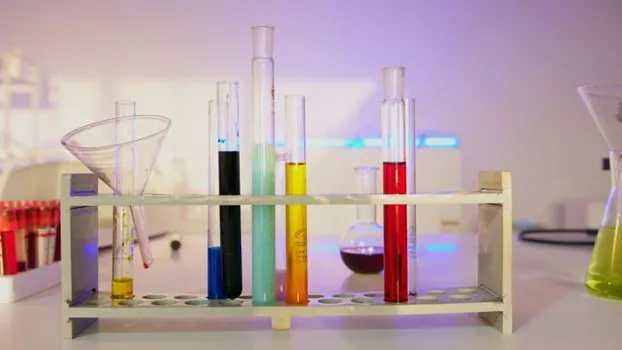
Explosion-proof laboratory hoods are a distinct sub-category: an EP hood is equipped with specially designed electrical components, including EP-rated switches, receptacles, and internal wiring, so that no internal arc or hot surface can ignite vapor drawn through the hood [S6]. The hood itself does not make the room explosion-proof; the room still has to be classified under NFPA 70 based on what is handled in it, and the hood only addresses the ignition sources inside its envelope [S6].
Reagent storage rooms with bulk solvent cabinets, gas cylinder manifolds, and waste accumulation points routinely classify as Class I, Division 2 at minimum, and Division 1 directly at the cabinet vents and cylinder valve connections [S2]. Walk-in cold rooms used for solvent storage are a recurring problem area because standard refrigeration compressors and defrost heaters are not certified for the classified interior, and the fix is either explosion-proof refrigeration units, Ex p purge, or moving the condensing unit outside the classified envelope.
For analytical instrument rooms (GC-MS, HPLC, sample-prep robots) the dominant approach is Ex p pressurization of the instrument enclosure or the immediate work envelope, with the room itself often classified as Division 2 due to solvent transfers in and out [S1]. Where static-sensitive powder or dust handling is present, the anti-static equipment selection for electrical work article is the relevant cross-reference for grounding straps, conductive flooring, and bonding.
Trackable Signals for the Next Cycle
Two signals are worth watching through the end of 2026. First, alignment between the NEC Article 500 rewrite track and IEC 60079-0/-25/-26 revisions, which determines whether dual-certified U.S./EU lab installations can collapse to a single component list, or stay bifurcated. Second, growth in cataloged Ex i barrier and wireless device offerings, because every new wireless instrument with entity-parameter certification removes one conduit run from a pilot-plant electrical design and tightens the loop between lab process control and the classified-area wiring rules summarized in this spec-first selection map for explosion-proof electrical gear. [S2]
For the relevant spec sheets and selection criteria, see explosion proof electrical, explosion proof, and explosion proof button.