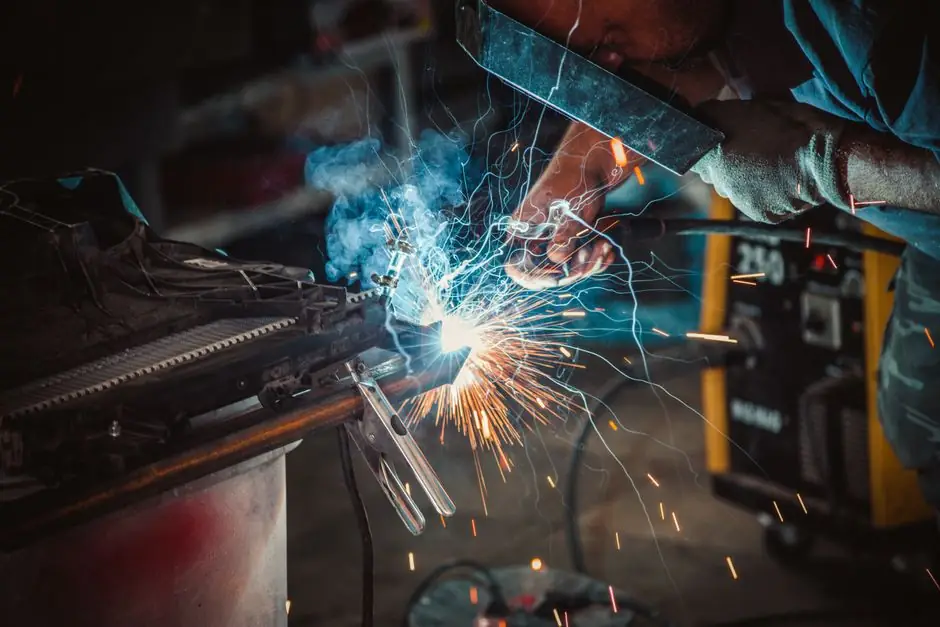
Welding in a Class I, Division 1 or Zone 1 atmosphere demands explosion-proof electrical equipment whose certification, enclosure material, and protection concept ('d', 'e', 'p', or 'i') match the gas group and likelihood of an explosive atmosphere being present [S2][S7].
Three reference stacks govern the spec: NEC 500/505 (Divisions and Zones) in the US, IEC 60079 plus ATEX 2014/34/EU in Europe, and UL 1203 for explosion-proof and dust-ignition-proof enclosures; OSHA 1910.252 layers on a 35 ft (10.7 m) spark-clearance rule and a fire watch for hot work where combustible material sits inside that radius [S1][S2][S7].
Define the Hazard Before You Spec a Single Box
The first citable step is area classification: the IECEx/ATEX system uses Zone 0/1/2 for gases and Zone 20/21/22 for dusts, while the NEC parallel is Class I Division 1, Class I Division 2, Class II Division 1, and Class II Division 2 [S2]. Welding slag, spatter, and electrode heat do not change the gas group, but they do raise the probability that an explosive atmosphere is present during the work window, which often shifts the welder's outlets, lighting, and feeder from Division 2/Zone 2 to Division 1/Zone 1 for the duration of the permit [S1][S4].
A welder connecting to a non-rated receptacle in a classified area is the most common root cause of ignition events flagged in incident summaries, because standard pin-and-sleeve gear cannot contain an arc flash inside an ungrounded sheet-metal enclosure [S5]. For dust-handling facilities (grain, flour, pharma), Group III dust group and a T-class chosen at least 50-75 K below the dust cloud ignition temperature are the two non-negotiables, and this is where an explosion-proof light specification has to be read alongside the welding power source spec, not separately [S2][S7].
Protection Concept Comparison for Welding Power and Feeders
Selecting the right protection type is the comparison that matters most, because a flameproof 'd' enclosure rated for Group IIA propane behaves very differently from an intrinsically safe 'ia' welding control loop on a robot cell [S2][S3]. The four-line comparison below reflects the published behaviour of each concept rather than a vendor claim.
Flameproof 'd' (IEC 60079-1): contains an internal explosion, suited to welding machines, isolators, and large junction boxes in Zone 1; surface temperature is the limit, not energy limit. Increased safety 'e' (IEC 60079-7): no arcs or sparks under normal operation, so it fits terminal boxes, lighting, and cage motors around the welding bay, not the welding source itself. Pressurization 'p' (IEC 60079-2): maintains a positive protective gas pressure inside the enclosure, often the choice for an explosion-proof distribution panel feeding the welder outlets. Intrinsic safety 'i' (IEC 60079-11): limits energy below ignition thresholds, restricted to welding control signals and sensors, never the welding current loop itself [S2][S3].
An explosion-proof button station on the wall of a welding bay should be specified as 'e' or 'd' depending on whether the operator's palm is in the classified atmosphere, while the remote pendant for a robotic weld head is typically 'ib' or 'ic' to keep the handheld pendant below ignition energy [S2][S3]. Cold and friction welding (no arc, no spark) remains a recognised mitigation, but it does not by itself downgrade the electrical area classification, so the surrounding explosion-proof infrastructure still has to be specified to the original Zone [S3].
Material and Enclosure Choices for the Welding Bay
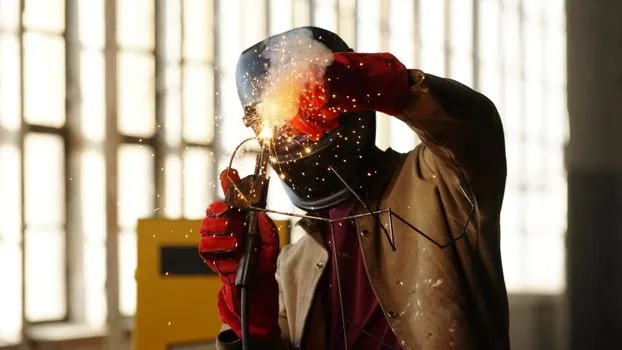
Reference data lists stainless steel AISI 304 and AISI 316L, aluminium alloys, borosilicate glass, and selected engineering plastics as the four common enclosure material families for hazardous-location electrical gear [S2]. For a welding bay with hot spatter, AISI 316L is the conservative pick because of its molybdenum content and pitting resistance, while cast aluminium cuts weight on pendant arms and robotic weld-head dress packs where the enclosure is far enough from the arc to avoid direct spatter [S2].
Borosilicate glass viewing windows are now standard on flameproof 'd' welding isolators because they tolerate thermal cycling and let inspectors verify the internals without opening the enclosure, which is important because every flamepath joint has to be re-torqued to spec after any cover removal to keep the 'd' rating valid [S2][S5]. An explosion-proof electrical installation next to an active welding cell also needs cable glands rated to the same Zone, typically barrier glands on Zone 1 and either barrier or simple compression glands on Zone 2, with the certification document showing both the gas group and the ambient temperature range, often -20 to +40 C as a baseline, with -40 to +60 C as the extended option for outdoor pipe racks [S2][S5].
OSHA 1910.252 Discipline on Top of the Electrical Spec
OSHA 1910.252(a)(2)(iii)(A) requires a fire watcher whenever appreciable combustible material sits closer than 35 ft (10.7 m) to the welding point, when wall or floor openings within a 35 ft radius expose combustibles, or when metal partitions can conduct or radiate heat to the other side [S1]. The fire watcher must keep extinguishing equipment immediately at hand, know the alarm path, and remain on station for at least 30 minutes after welding stops to catch smouldering fires [S1].
Flying sparks can travel up to 35 ft from the arc, which is the same 35 ft (10.7 m) figure that OSHA and the UNC Hot Work policy both cite, and the practical consequence is that a explosion-proof light or explosion-proof distribution panel mounted inside that radius must be rated for the prevailing gas or dust group, not just for general industrial duty [S1][S4]. The 30 minute post-work fire watch, the hot work permit, and the daily pre-use inspection of welding equipment are the three administrative controls that have to be paired with the hardware spec, because no enclosure rating compensates for an open permit, a missing fire extinguisher, or a cracked gland [S1][S4].
Cost, Lead Time, and Where Explosion-Proof Welding Pays Back
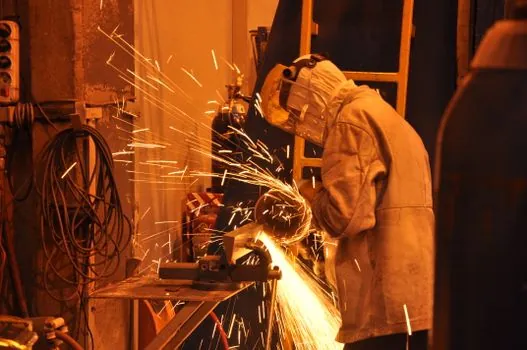
Published comparisons put explosion-proof electrical gear at roughly 2x to 5x the cost of standard industrial equivalents, with the uplight concentrated in the enclosure (cast or stainless), the certification dossier, and the cabling glands rather than the contactors inside [S5][S6]. A real-world retrofit estimate cited by plant electricians for a small welding shop inside a Division 1 area was about USD 20,000 for the main panel and around USD 40,000 for the light fixtures alone, numbers that frame why the spec conversation usually starts with, can we move the work out of the classified area, before it starts with, which 'd' box do we buy [S6].
The same source notes that explosion-proof equipment carries higher initial costs but leads to long-term savings through reduced accidents and lower insurance premiums, and references ATEX- and IECEx-certified packages versus standard industrial equipment [S5]. For welding specifically, robotic weld cells with intrinsically safe sensor busses and increased-safety motor terminals are now the lowest-total-cost option on greenfield builds because they push most of the circuitry out of Zone 1 into Zone 2, where enclosure cost drops sharply [S3][S5].
Selection Checklist and Standards Stack
Apply the stack in this order, and reject any quote that does not answer every line. (1) Classify the space: Class I/II, Division 1/2 or Zone 0/1/2/20/21/22, with the gas or dust group letter. (2) Pick the protection concept per circuit: 'd' for the welding power outlets, 'e' for terminals and lighting, 'p' for the explosion-proof distribution panel, 'ib'/'ic' for pendant controls. (3) Match T-class to the gas or dust ignition temperature, leaving a margin of at least 50-75 K for dust clouds [S2]. (4) Specify enclosure material: AISI 316L for spatter-exposed, cast aluminium for weight-sensitive robotic dress packs. (5) Demand the certification dossier: ATEX 2014/34/EU, IEC 60079 series, UL 1203, and IECEx where global delivery is required [S2][S7].
Two standards references that recur on every welding-bay datasheet are NFPA 51B (Fire Prevention in Use of Cutting and Welding Processes), cited inside OSHA 1910.252, and IEC 60079-0, the umbrella standard for electrical apparatus in explosive gas atmospheres, with the protection-type parts (-1, -2, -7, -11) supplying the 'd', 'p', 'e', and 'i' rules respectively [S1][S2]. A final verification: confirm the certificate number on the nameplate, the ambient temperature range, the gas/dust group marking, and the IP rating, all four on the same plate, before energising a welder in a classified location [S2][S7].
Trackable next signals: the next revision cycle of IEC 60079-0 and any update to NFPA 51B's 35 ft spark-clearance language, both of which would force a re-spec of welding-bay electrical gear. For plants already running robotic weld cells, watch for IECEx CoPC (Certificate of Personnel Competence) uptake on ex-proof welding operators, since the hardware spec and the operator certification have to move together.
For related coverage, see Perimeter Alarm Selection for Work at Height: 2026 Spec Map.