Between 2026 and 2027, the most acute ferrosilicon (FeSi) supply risks will originate from China's electricity rationing, CIS export logistics, and tightening environmental enforcement, not from headline price moves [S2].
The global FeSi market is valued at USD 11.84 billion in 2026, up from USD 11.26 billion in 2025, and is projected to reach USD 16.10 billion by 2032 at a 5.23% compound annual growth rate (CAGR) [S3]. This growth sits against a backdrop of structurally constrained usable capacity, which the Global FerroSilicon Supply Risk Index 2026-2027 frames as a four-dimensional problem: effective power access, regulatory enforcement, logistics reliability, and geopolitical constraints [S2].
Definition and Scope: What "Supply Risk" Actually Means for FeSi
FeSi is an iron-silicon alloy containing 15% to 90% silicon, produced by smelting high-purity quartz, metallurgical coke, and iron scrap in submerged electric arc furnaces, and it functions primarily as a deoxidizer and alloying agent in steel and cast iron production [S1].
Supply risk in this market is not a price-signal concept; it measures the gap between installed nameplate capacity and the volume that can actually reach international buyers, which the index calls "usable capacity" [S2]. The four scored dimensions, power accessibility, environmental and regulatory enforcement, logistics and export reliability, and geopolitical or sanctions constraints, are chosen because each can remove material from the market before spot prices react, making the index a leading indicator rather than a price-forecasting tool [S2].
Selection Criteria: Which Variables Move Usable Capacity First
Submerged electric arc furnaces are not designed for frequent shutdowns, so any electricity disruption or sharp cost escalation rapidly takes capacity offline regardless of demand strength [S2].
Power accessibility and stability is therefore weighted ahead of furnace counts and nameplate capacity in the index, because power restrictions typically occur before formal plant closures and disappear material from the market before any trade-data anomaly surfaces [S2]. The second variable, environmental and regulatory enforcement, drives sudden stoppages through inspection cycles and carbon-intensity targets, with China's power-rationing mandates and regional energy quotas acting as the most-watched policy signals globally [S2]. Logistics (port access, inland transport, vessel availability, cargo insurance) and geopolitical exposure (trade barriers, financial restrictions, counterparty risk) form the third and fourth scoring layers, and each one can sever the link between a producing furnace and a buying mill independently of the others [S2].
Comparison: Capacity, Usable Volume, and Substitution by Region
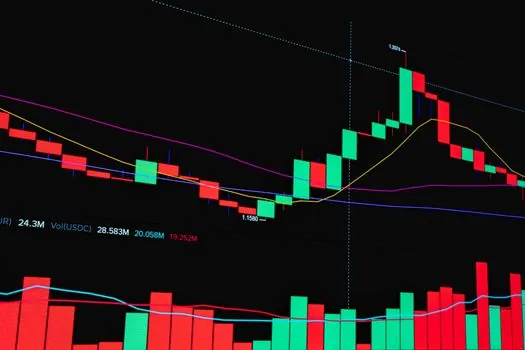
Installed capacity overstates real supply; power limits, compliance downtime, and logistics friction reduce the volume consistently available to the market, which is why usable-versus-nominal capacity is treated as a separate risk variable rather than a derived metric [S2].
For a procurement team comparing sourcing options in 2026, the relevant decision axes are usable volume reliability, exposure to Chinese policy shocks, exposure to CIS sanctions/logistics, and ability to backfill shortfalls. On those axes, Chinese FeSi carries the highest absolute volume but the highest policy-driven volatility, CIS producers (Russia, Kazakhstan) add scale but layer in sanctions, insurance, and routing risk, while smaller non-Chinese capacity can fill gaps but typically at a premium and with longer lead times [S2].
Raw Material and Plant Cost Anchors
Raw material consumption is the dominant operating cost line for FeSi, covering high-purity quartz/quartzite, metallurgical coke, steel scrap or mill scale, and charcoal or coal, and represents the bulk of variable cost in any greenfield project [S1].
Process flow is fixed: raw material preparation, submerged electric arc furnace smelting, alloy refining, tapping, casting, crushing, sizing, and packaging, with end-use industries spanning steel manufacturing, foundries, automotive, construction, electrical and electronics, and metallurgy [S1]. Because quartz and metallurgical coke are bulky, low-value-per-ton materials, IMARC's feasibility guidance emphasises nearby sourcing, long-term contracts, and parallel supplier qualification as standard supply-chain hardening steps rather than optional optimisations [S1]. This same logic, low freight-cost tolerance, high electricity sensitivity, single-furnace utilization, is what makes the index's focus on power and logistics economically defensible rather than purely geopolitical [S2].
Use Cases: Where FeSi Supply Stress Materially Hits Buyers
FeSi is specified as a deoxidizer and alloying agent in steel production, an inoculant in cast iron, a reducing agent in metallurgical processes, and a feedstock for silicon-based chemicals and alloys, so any usable-capacity shortfall propagates directly into automotive, construction, and electrical-steel output [S1].
For foundries running just-in-time melt shops, a 1-2 week delivery slip from a CIS or Chinese supplier is operationally material, and the index is designed precisely so that such slippage shows up in the power-access and logistics variables before any spot price move confirms it [S2]. In parallel, the market is being pulled by rising technical standards, greater supply chain resilience, and application-led innovation, including silicon-rich grades tied to battery, solar, and electronics supply chains, which is part of why the 5.23% CAGR forecast through 2032 survives even with usable-capacity volatility [S3]. CRU's 2026 ferrosilicon special report coverage explicitly tracks steel, battery materials, and fertilizers as the downstream demand pillars, which is consistent with the end-use list above and gives procurement teams a triangulation point between price-reporting and structural supply data [S4].
Limitations, Failure Modes, and Standards to Watch
The principal failure mode for any FeSi plant is not raw material scarcity but power interruption, since submerged arc furnace restarts cost days of output and electrode consumption, eroding the 18-26% gross margin band within a single quarter [S1][S2].
Mitigation requires dual-feed power agreements where grid topology allows, on-site backup sized for safe tap-hold rather than full production, and inventory buffers calibrated to the buyer's tolerance for silicon-content drift, since FeSi grade (15% to 90% Si) and impurity window are the real acceptance gates at the steel melt shop [S1]. Standards discipline matters here: buyers should pin silicon range, key impurities (Al, C, S, P), and sieve/sizing on each shipment rather than rely on trade-name grades, because index signals will move long before a contract dispute can be opened. For a broader view of how 2026 commodity sourcing maps are being drawn across other ferroalloys and adjacent metals, see the molybdenum suppliers and manufacturers 2026 sourcing map, which uses the same power-and-logistics lens for a related alloy family.
Sourcing Signals and Decision Logic for the Next Two Quarters

The decision logic is straightforward: usable capacity, not installed capacity, is the binding constraint, and power access is the single variable that removes the most material fastest. [S2]
Track three signals through the end of 2026: Chinese regional power-rationing announcements and carbon-intensity enforcement actions, CIS port and rail routing changes tied to sanctions compliance, and the spread between Chinese domestic FeSi prices and FOB offers to non-Chinese buyers, since a widening spread usually confirms that logistics, not furnace count, is the active bottleneck [S2]. A second-order signal is qualified second-source uptake: if non-Chinese merchant plants begin running above the 20,000-80,000 MT/year design band that IMARC flags as standard, that is a leading indicator that usable capacity is being repriced, not just reallocated [S1]. For engineering teams that need to lock steel and cast-iron input quality under those conditions, anchoring FeSi grade to documented spec sheets and maintaining dual-supplier qualification is the lowest-cost hedge available.
The underlying component specifications are covered under dc power supply, switching power supply, and industrial ups.