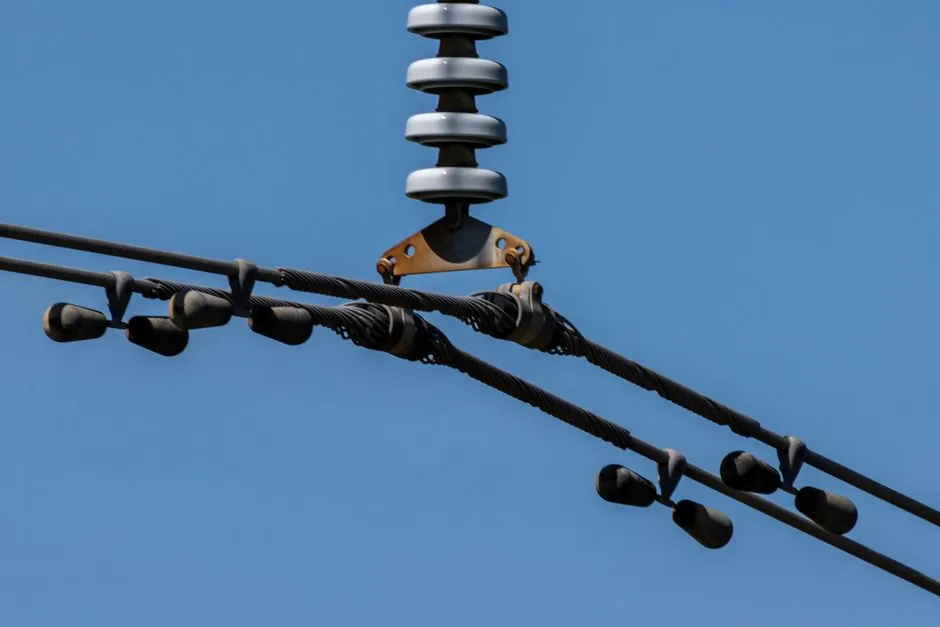
Festoon power suits long bridge-crane runways because it supports the cable in loops along a track, while cable reels suit shorter travel or space-constrained installations [S1][S3].
The decision depends on runway length, available headroom, cable movement, travel speed, load current, maintenance access, and whether the power feed serves the bridge, trolley, or a below-the-hook device [S1][S3].
Festoon and reel system operating principles
A festoon system uses a track fixed to the runway or bridge, with small trolleys supporting flat or round cable loops; a towing trolley moves the festoon as the crane travels, and the loops stretch and bunch as direction changes [S2][S3][S7].
A cable reel stores a multi-conductor cable on a drum. Spring-driven reels use a pre-tensioned spring to pay out and retrieve cable, while motorised reels use a drive mechanism for longer or heavier travel runs [S1][S3].
Both systems deliver power to moving crane equipment, but the physical storage differs. Festoon cable remains distributed along the runway, whereas reel cable is concentrated on a drum. For a bridge crane, the overhead bridge crane travel path and available structural headroom therefore determine whether the cable can remain overhead without creating floor obstructions [S1][S3].
Decision criteria: space, travel, cost, and maintenance
Festoon systems are generally the better choice for long runways and larger work areas, with the cable carried overhead instead of trailing across the floor for personnel or forklifts to catch [S3].
Where festoon systems fit
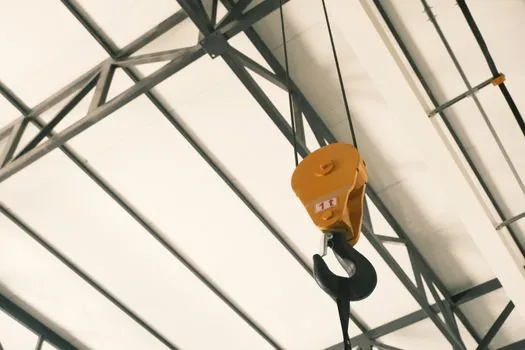
Festoon systems are intended for cranes with long travel, frequent positioning, and enough overhead space to carry the cable without dragging it on the floor [S1][S3]. Festoons support cables along a track, making them easier to extend and maintain, although they require more space and have more moving parts [S3].
The principal limitations are physical space and maintenance exposure. The track and supports need a suitable runway beam or steelwork, and every trolley is a wear point [S3]. A festoon also contains more mechanical elements than a reel, so inspection access matters when the cable stack and trolley bunch occupy usable runway length [S3].
For a fixed bridge power arrangement, conductor rail remains the third option. It provides continuous contact through collector shoes and is often selected for permanent runways, higher travel speeds, and applications where continuous power delivery is important [S2][S5]. A focused comparison of Conductor Bar vs Festoon Systems for Crane Bridge Power provides the rail-versus-festoon decision criteria.
Where cable reels fit
Cable reels fit vertical drops, short repeated travel, and installations where the available area is too restricted for a festoon loop stack [S1][S3]. Their compact arrangement stores the cable on the drum instead of distributing it along the runway, reducing the space consumed near the crane travel path [S3].
Cable reels are compact, but can become more expensive and complex over longer distances [S3].
A reel is not automatically the lower-maintenance choice. Its cable still flexes and wraps during travel, and the drive, drum, cable, and mounting arrangement require inspection. The selection should therefore compare the complete installation, including the reel drive and support, rather than the visible drum alone [S1][S3].
Cable construction and electrical selection
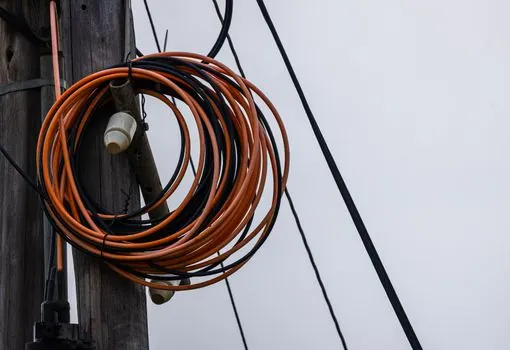
Festoon cable should be specified for repeated bending, movement, and twisting rather than selected as ordinary trailing cable. Cable intended for festoon service uses conductor, insulation, and jacket arrangements designed for flexing life; flat cable has a smaller bending radius, while round cable is described as suitable for multiple bending conditions and high travel speeds [S4].
The three primary crane electrification options are conductor bars, festoon systems, and cable reels [S2].
The relevant power-cable details should be documented for the power cable used with either option.
Failure modes, maintenance, and standards
If a conductor breaks in the festoon cable, the entire run may need replacement, which may result in longer downtime [S4]. Festoon trolleys, brackets, track, and cable are recurring inspection points, while reel systems concentrate attention on the cable, drum, spring or motor drive, and mounting structure [S3].
ANSI ECMA 35, Electrification Systems for Electric Overhead Traveling Cranes, covers minimum requirements and guidelines for AC and DC electrification systems used on overhead electric cranes, monorails, gantry traveling cranes, and workstation cranes [S2]. For a bridge crane, this provides the principal electrification reference identified in the research, while the final design must also comply with the applicable electrical and crane requirements for the installation [S2][S5].
Do not select a festoon solely because the crane is described as a long-travel application, and do not select a reel solely because its footprint is small. The final comparison should show runway length, usable travel after end-stack allowance, loop sag or drum capacity, support locations, cable type, travel speed, duty cycle, and maintenance access [S1][S3][S4].
For a new bridge crane, choose a festoon when the runway is long, overhead clearance exists, and the cable must remain supported along the route; choose a reel when travel is short, space is constrained, or the feed serves a compact vertical-drop arrangement. Obtain the load and travel data, then have the supplier confirm the selected cable, drive, supports, and replacement strategy before purchase [S1][S3].