An FIBC bulk bag carrying 800–1500 kg of granular or powdered product does not cost what the invoice says; the 3- to 5-year TCO for a 1-tonne bag is dominated by fabric specification, food-grade or antistatic certification, fill/discharge rigging labour, and the single-trip vs multi-trip SWL decision, with the polymer and safety-factor choice typically moving the unit price more than the chosen footprint (90×90×100 cm vs 85×85×85 cm) [S1][S2].
Woven polypropylene (PP) is the dominant FIBC body fabric across all major suppliers reviewed on 2026-07-25 [S1][S2][S3][S5], and PP's price swings since 2022 — driven by propylene feedstock — have overtaken labour as the single largest variable in the bag's ex-works price for a bulk bag [S2][S5].
Cost driver #1 — PP fabric weight, UV treatment, and coating
PP fabric weight (typically 120–230 g/m² for a standard bulk bag) is the first cost driver and scales near-linearly with the bag's rated SWL: a 5:1 SF 1000 kg bag commonly sits in the 160–200 g/m² band, while a 6:1 SF heavy-duty or multi-trip bag trends toward 200–230 g/m² [S2][S5]. UV-stabilised masterbatch (added during the extrusion of the PP tapes) extends outdoor working life from roughly 3–6 months for untreated fabric to 12–24 months under direct sun, and the additive step itself can add a low single-digit percentage to fabric cost depending on dosing [S2][S5]. Laminated or coated PP — used when moisture or fine-powder migration is a risk — adds a coating pass plus a lamination machine step, and is supplied on request by all three Asian-origin manufacturers reviewed [S2][S3][S5].
Centurion's UK retail line stocks standard 85×85×85 cm and 90×90×90 cm plain PP bags in 250 kg and tonne-class ratings, with the 250 kg certified mini-FIBC (50×50×50 cm) representing the entry-level cost point [S1]. The same site lists a 70×70×75 cm and 80×80×80 cm geometry for lighter aggregate and rubble work, confirming that the incremental cost of going from a 250 kg bag to a 1000 kg bag is driven more by fabric weight and SWL than by the chosen footprint [S1].
Cost driver #2 — Safety factor, single-trip vs multi-trip, and SWL re-rating
The 5:1 safety factor is the global default for single-trip FIBCs and the 6:1 SF is the standard for multi-trip / reusable bags used in closed-loop logistics pools; switching from 5:1 to 6:1 forces heavier fabric, an additional seam-spec test, and a different SWL label [S2][S3]. Hongfeng's product menu explicitly segregates these by application (ton bag, round bulk bag, soft tray, baffled, anti-static, UV-protected), with the multi-trip 6:1 reusable category carrying a price premium driven by the heavier fabric plus a documented cycle count [S2].
For most chemical, mineral, and food buyers, the multi-trip decision is not a fabric cost question — it is a reverse-logistics question: the bag must be collected, inspected, folded, and re-rated before re-issue, and that handling cost can exceed the bag's ex-works price after two or three trips if internal labour rates run above the regional norm [S3]. Global-Pak's product information pages break out reusable / multi-trip options as a separate SKU family, confirming that suppliers price reusability as a distinct feature and not as a hidden cost [S3].
Cost driver #3 — Antistatic, food-grade, and UN-certified variants
Antistatic FIBCs (Type B dissipative, Type C conductive with grounding, Type D anti-static) are required for any powder or fine granular product where the MIE (minimum ignition energy) of the dust cloud is below 25 mJ and the atmosphere can become ignitable [S2]. Hongfeng lists "Anti Static FIBC" as a distinct product family and prices it above the plain Type A bag because the conductive tape or coating step is an additional manufacturing pass plus a verification test on every production batch [S2]. Type C bags must be grounded at every fill and discharge point, and that grounding regime is a procedural cost that compounds with bag price over the asset's life [S2].
Food-grade FIBCs (often manufactured in a clean-room environment with food-contact-certified PP and a documented chain of custody) carry a clear price premium driven by the clean-room overhead and the audit trail, and Palmetto Industries breaks out a dedicated "Food Safety" content track alongside its safe-handling guidance [S4]. UN-certified bags for dangerous goods (Classes 4.1, 5.1, 6.1, 8, 9) add a third cost layer: a UN performance test on the actual bag design, recertification on design changes, and an inner liner compatibility check [S3]. Global-Pak's education-class catalogue walks through this layered certification explicitly, treating the bag as a tested assembly rather than a commodity sack [S3].
Cost driver #4 — Liners, baffles, sift-proof seams, and filling/discharge fittings
Inner liners (PE, foil, EVOH) are the single most common add-on to a [bulk bag](/encyclopedia/bulk-bag-types-and-classifications-an-engineer-s-spec-map.html) and they sit on top of base fabric cost; the liner choice (PE for moisture, foil for oxygen, EVOH for aggressive chemicals) is governed by the product, not by the bag supplier [S2][S3]. Baffles — internal PP corner panels that stabilise the bag's shape during stacking and transport — are an upgrade from the standard four-panel cross-corner build and are priced per baffle pair [S2]. Sift-proof seams, needle-punched felt linings, and top-duckbill vs full-open-top skirts each have a different labour content and therefore a different cost per bag, and the choices should be locked in the installation spec before RFQ [S2][S3].
Fill spout diameter (typically 30–50 cm for top fill, 20–40 cm for bottom discharge) and discharge spout design (with or without petal closure, iris valve, or full bottom spout) directly affect fill-and-discharge cycle time — and therefore the labour cost amortised over the bag's life [S2]. Conical discharge hoppers, baffle-internal bags, and round bulk bag geometries (Hongfeng's "Round Bulk Bag" line) command a price uplift but reduce bridging and improve discharge consistency, which lowers the effective $/kg-handled on the process side [S2].
Cost driver #5 — Freight, MOQ, and volume tier from Asian vs regional supply
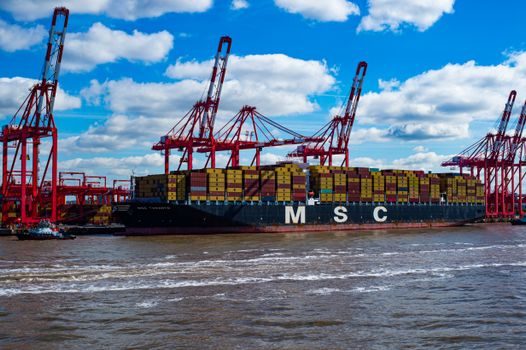
China-origin FIBC suppliers (Linyi Hongfeng, Bohai, and the wider Shandong cluster) ship FOB with a typical 20-ft container holding 700–1500 bags depending on fabric weight and baffle geometry, and the MOQ for a custom build commonly sits at 500–1000 pieces per SKU [S2][S5]. Hongfeng publishes its production capacity at 6 wire-drawing machines, 46 circular looms, 36 belt conveyors, 85 sewing heads, and 8 transport trucks, supporting a multi-thousand-bag-per-day throughput that lets them absorb volume pricing below many regional competitors [S2].
For buyers who need shorter lead times and easier documentation, regional suppliers like Centurion (UK, stock 85×85×85 cm tonne bags, 70×70×75 cm, 80×80×80 cm, 50×50×50 cm 250 kg mini-FIBC, plus 90×90×90 cm and a 250 kg certified SKUs) and Global-Pak (US, since 1998, contamination-free and bioremediation SKUs) carry a price uplift of roughly 20–40% over FOB China for comparable SWL because of the inventory carrying cost and the smaller batch [S1][S3]. The freight math swings further when a buyer consolidates fabric specification across SKUs to reach a 20-ft FCL on a single vessel [S2][S5].
Total cost of ownership: the 3- to 5-year math
Standard 3- to 5-year TCO models for industrial consumables combine acquisition cost, freight-in, inventory carrying, fill/discharge labour, scrap rate, and disposal or recycling cost [S6][S7].
On a per-tonne-of-product-handled basis, a single-trip 5:1 1000 kg bag that fails one in 200 cycles costs more per effective kg-handled than a 6:1 multi-trip bag that survives four cycles — even at twice the unit price — because the failure loss rate and the bagging labour are amortised over many more handled tonnes on the multi-trip side [S2][S3]. Buyers should also factor the fill-and-discharge flow meter or pressure transmitter instrumentation cost that confirms clean discharge: a partially-discharged bag that has to be manually emptied is a hidden TCO item rarely captured in the procurement RFQ [S3].
Who an FIBC TCO analysis is for (and who it is not)
A multi-driver TCO model is for procurement engineers, plant managers, and bulk-handling specifiers who control bag selection AND the downstream fill/discharge process — and who handle 5,000+ bags per year across one or more sites [S2][S3]. It is not for one-off buyers purchasing 50–200 bags for a single construction or remediation project, where the lowest ex-works price on a stock SKU is the rational decision [S1]. It is also not for buyers shipping Class 1 dangerous goods or radioactive material, where regulatory-driven UN or IP-2 packaging choice overrides cost optimisation entirely [S3].
For buyers in scope, the TCO work pays back inside 12 months when it converts a 5:1 single-trip pool to a properly-managed 6:1 multi-trip pool with documented inspection intervals, or when it eliminates an inner-liner SKU by specifying the right fabric coating in the first place [S2][S3].
Sourcing checklist and standards to specify on the PO
The minimum spec set on a 2026-07-26 RFQ for an FIBC bulk bag should include: SWL (kg), safety factor (5:1 or 6:1), fabric weight (g/m²), UV treatment (yes/no, expected months of outdoor exposure), antistatic rating (Type A, B, C with grounding, D), food-grade or UN certification if applicable, inner liner specification (PE / foil / EVOH, micron thickness), baffles (yes/no), fill and discharge spout geometry, and a defined multi-trip inspection protocol [S2][S3][S4]. Global-Pak's published "Bulk Bag Rework" and "Safe Handling & Bag Failure Instructions" pages give a buyer a ready-made template for the inspection and rework section of the PO [S3].
On standards, the industrial valve-adjacent ASTM D6389 / D5266 work and the FIBCA design guide govern performance language; the antistatic performance band should be specified against the recognised Type A/B/C/D framework with a documented grounding procedure, and any UN-rated bag should be cross-referenced to its UN performance test certificate on the packing group and the inner liner it was tested with [S2][S3]. For buyers who also specify load cell-based weigh batching or bag filter dust control upstream, the FIBC SWL and fabric choice should be reviewed against the weighing system's allowable creep and the dust-collection's minimum particulate size [S3].