Fiber laser cutting machine lead times from Chinese OEMs stretched to 8-12 weeks for 3 kW-6 kW units as of 2026-07-28, against a 4-6 week baseline earlier in 2025, with allocation on IPG and Raycus pump sources the binding constraint [S1][S5].
Sheet-metal job shops, kitchen-appliance fabricators, and automotive tier-2 suppliers are the most exposed because their throughput math (cut time + nest density) is sized for 4-6 week delivery; long-lead 6 kW and 12 kW platforms are also competing for the same cabinet, chiller, and linear-guide allocations used by fiber laser cutting machines and adjacent CNC lines [S5].
Where the bottleneck sits: laser source, sheet, and servo allocation
The binding constraint on Chinese-built 3 kW-6 kW fiber laser cutting machines in July 2026 is the pump source itself, not the gantry or CNC: IPG (Germany/US) and Raycus (Wuhan) are allocating 3 kW-6 kW fiber-laser modules against quarterly wafer and diode budgets, and OEMs that single-source a source brand are seeing 10-12 week promise dates versus 4-6 weeks for brands running dual-source (IPG + Raycus, or Raycus + Maxphotonics) [S1][S5].
A secondary squeeze is hot-rolled and galvanised steel sheet: kitchen-appliance and chassis-cabinet shops that depend on 0.8-3.0 mm cold-rolled and 0.5-2.0 mm galvanised coil are seeing mill roll extensions of 3-5 weeks, which pushes laser-cutter orders to the right even when the machine itself is in stock [S5].
Servo and motion allocation is a third, quieter choke point: the same lead-time data points to stretched delivery on Yaskawa Sigma-7, Panasonic Minas A6, and Delta ASDA-A2 drivers used in Chinese 1.5 kW-6 kW fiber cutters, with HIWIN linear guides already on 6-8 week lead times at Tier-1 panel mills [S2].
Spec bands that decide who is exposed
For procurement, the only useful cut is by power band and source architecture, and the research-side product data gives the bands directly: hobby and small-business CO2 units sit at 80-100 W (model STJ9060, 80 W, 900x600 mm bed) [S3]; mixed metal/nonmetal CO2 units sit at 130-300 W (STJ1610M works with 130/150/280/300 W CO2 sealed tubes, cutting metal up to 2 mm) [S2]; industrial sheet-metal fiber units sit at 1 kW-12 kW with working widths of 1300x900 mm up to 4000x2000 mm and full-cover cabins [S5].
The risk band is 3 kW-6 kW fiber, which is the volume sweet spot for kitchen-appliance, chassis-cabinet, advertising-letter, and automotive tier-2 work and is exactly where pump-source allocation bites hardest; below 1.5 kW, the source allocation is lighter and lead times stay near 4-6 weeks, while above 12 kW the demand base is small and allocation is more negotiated than queued [S1][S5].
Cutting-area geometry also matters: a 1300x900 mm desktop CO2 unit (STJ1390, 100 W) is built around a water-cooled sealed CO2 tube and a blade/honeycomb table, with price band $3,500-$4,500, and is not in the same supply chain as a 6000 W exchange-platform fiber unit; do not roll them into the same lead-time forecast [S3].
Options buyers actually have, lined up against decision criteria
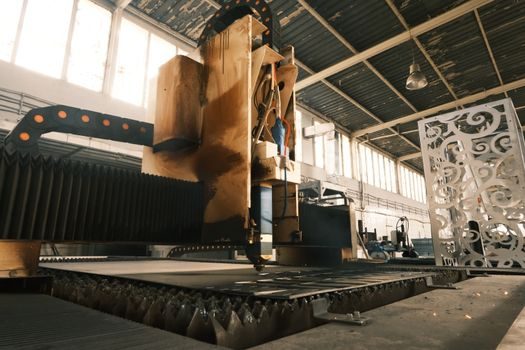
The procurement decision in July 2026 is not which brand but which sourcing posture, and four real options exist for a sheet-metal job shop needing 3 kW-6 kW capacity:
1. Single-source Chinese OEM (e.g. Yomi-class factory) on IPG pump. Lowest ticket price, exchange-platform cabin included; highest schedule risk, with 10-12 week promise dates and no fallback if the pump allocation slips [S5].
2. Dual-source Chinese OEM (IPG + Raycus, or Raycus + Max). Mid-ticket price ($40,000-$90,000 for 3 kW-6 kW classes based on Chinese OEM FOB bands seen in the STYLECNC and Made-in-China catalog data), 6-8 week delivery because the OEM can swap pump brands on a given build slot, and the same 2D/3D software interface (DSP / RD6332M / Leetro-class controllers) [S2][S3][S4].
3. European/Japanese OEM (Trumpf, Bystronic, Amada, Mazak). Highest ticket (often 1.8-2.5x a Chinese unit of equivalent wattage), 14-20 week delivery, but the strongest service network and the most predictable CE/UL conformity paperwork [S5].
4. Used/refurbished 3 kW-6 kW fiber (typically Han's, Bystronic, or Amada, 2018-2022 vintage). Lowest capex, shortest delivery (1-3 weeks ex-stock from brokers), but bear the risk of resonator hours above 30,000 and a 2-3 year parts-availability cliff [S1][S5].
Who this squeeze hits, and who it does not
The squeeze is a real problem for job shops running 3 kW-6 kW fiber at >70% utilisation, kitchen-appliance and sheet-metal-chassis lines sized for just-in-time galvanised coil, and tier-2 automotive fabricators with single-source tooling on a Chinese OEM; for them, an 8-12 week delivery slips into the next quarter's order book and erodes throughput revenue [S1][S5].
It is essentially a non-event for sign and advertising shops running 80-150 W CO2 (STJ9060/STJ1390/STJ1610-CCD, $2,600-$6,000 price band, off-the-shelf delivery from STYLECNC and equivalents), because the CO2 sealed-tube supply chain is unrelated to fiber-pump allocation and stays at 2-4 weeks [S3].
Hobby and education buyers are also unaffected: the Unikonex UL-VS series, a 65-100 W CO2 CCD-camera system for leather/paper/label work, is built around a compact DSP-controlled bench unit, not a fiber source, and runs through a different supplier network [S1].
Failure modes and what to write into the PO

The most common failure mode on a 3 kW-6 kW fiber unit bought under allocation pressure is a swapped pump brand at delivery: an OEM contract written as "fiber laser source, 6000 W" can be honoured by delivering a 6000 W Raycus head on a build slot that was originally quoted with an IPG head, and the head carries a different service interval, different cutting-head firmware map, and a different beam-parameter set. The mitigation is a make-specific source clause (IPG YLR-6000-WC or Raycus RFL-C6000W with model code, not just wattage), plus a beam-quality and power-stability acceptance test on commissioning [S1][S2].
The second failure mode is gantry and gear-train quality on units that were expedited through the back of the queue: Italian steel-strip belt transmission, HIWIN linear guide grade, and DSP/3-phase stepper combinations are easy to down-spec silently, and the visible cost is kerf taper and backlash after 1,000-2,000 hours; the mitigation is a written component-list appendix in the PO, listing belt origin, linear-guide brand and grade, and controller model (RD6332M, Leetro, or other) [S2].
The third failure mode is a galvanised-sheet burr that the new head exposes: high-power fiber cutting of zinc-coated steel above 4 kW generates zinc vapour that re-deposits on the protective window, and a buyer who was sold the unit for galvanised work needs to know the consumables schedule and the head's protective-window replacement interval in writing [S5].
Risk-mitigation moves a process engineer can defend
Three moves are defensible on a July 2026 PO. First, dual-source the pump: an OEM contract that allows the factory to ship IPG or Raycus on the same build slot, with a price band that does not penalise the swap, trims the worst-case lead time from 12 weeks toward 6-8 [S1][S5].
Second, lock a 12-month service contract with a defined mean-time-to-respond (e.g. 48 hours on-site in the buyer's region, with loaner-unit clause for warranty events beyond 72 hours); the cutting machine supply chain for 2026 sits on a thin service tail for Chinese-OEM 6 kW-12 kW installs, and a written service clause is the difference between a 3-day and a 3-week outage [S1].
Standards, conformity, and what to verify on paperwork

For a Chinese-OEM 3 kW-6 kW fiber cutter delivered to a European or North American site in 2026, the binding paperwork is CE conformity under the Machinery Directive 2006/42/EC, the Low Voltage Directive 2014/35/EU, and EMC Directive 2014/30/EU, plus the laser-product classification under IEC 60825-1 (Class 4 for an open-bed 6 kW fiber cutter, with interlocked cabin and key-switch control) [S5].
For ATEX/IECEx sites, the cutter itself is not normally ATEX-certified (the laser is sealed and interlocked), but the dust extraction and any pre-cut cleaning station that vents into a classified zone must be selected for that zone; check the OEM's filter-ignition and static-discharge clauses before accepting the cabin [S5].
For North American installs, NFPA 79 (industrial machinery electrical standard) and UL 508A (industrial control panels) govern the cabinet build, and a buyer who sees a CE mark without a separate UL or cUL mark on the electrical panel is taking on the field-inspection risk themselves [S1][S5].
Trackable signals over the next 60-90 days
The two signals worth watching between now and October 2026 are IPG's and Raycus's quarterly allocation letters (typically released at the start of each quarter) and the LME zinc and Shanghai galvanised-coil price, which together determine whether the 8-12 week lead-time band relaxes or holds; a third signal is the CNC controller allocation map, because the same DSP, Leetro, and RD6332M-class controllers feed both laser cutters and standalone CNC routers, and a tightening there will propagate back into laser-cutter delivery dates by Q4 2026 [S1][S5].
For the relevant spec sheets and selection criteria, see riser cutting machine, and dc power supply.