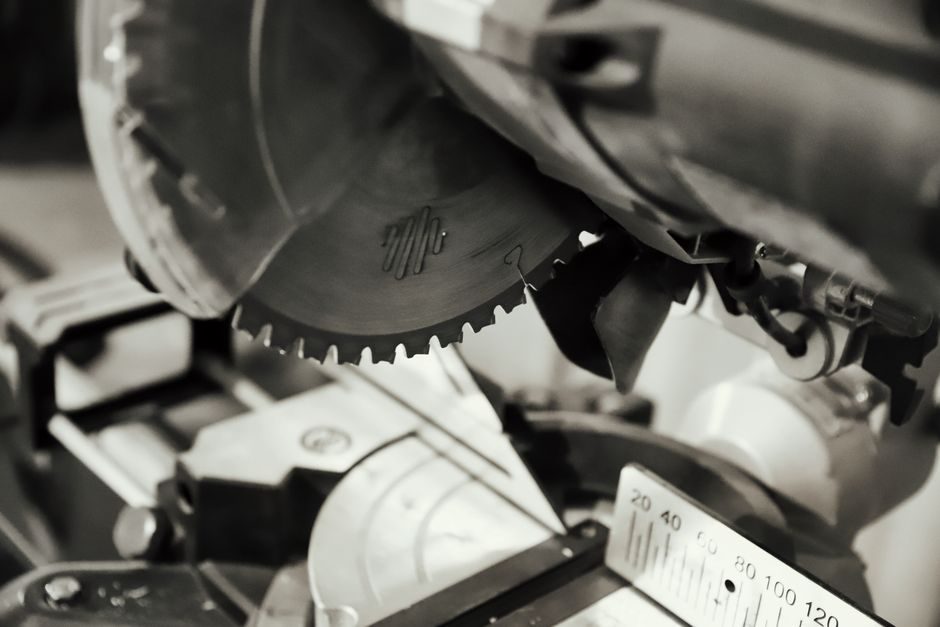
The Chinese laser cutting machine market lists 2,000+ manufacturers and 6,000+ stock-keeping units on Made-in-China.com as of July 2026, with factory-gate prices clustering between US$4,700 and US$39,800 per set for fiber units and 1-set minimum order quantities dominating [S2][S4][S7].
Sourcing teams running a 2026 capex bid will find four practical entry points: per-piece sheet-metal job shops on TradeWheel (US$0.99-6.98/piece), entry fiber cutters in the sub-US$20,000 band, mid-power enclosed fiber machines at US$21,800-22,000/set, and high-power sheet-metal lines in the US$35,000-39,800 bracket [S4][S5]. Jiangsu-based exporters such as Nanjing Beke CNC Machinery list Diamond Member, Audited Supplier status with Secured Trading protection on Made-in-China.com, anchoring the mid-tier price band [S4].
Price tiers and what each band actually delivers
Entry-tier Chinese fiber laser cutters in the US$4,700-6,000 per-set range are typical of TradeWheel-listed precision sheet-metal fabricators who bundle cutting, bending, welding, and riveting as a job-shop service rather than as a discrete machine SKU [S5]. The US$18,000-26,000/set band on Made-in-China.com corresponds to standard 1,500 W-3,000 W fiber cutting machines for carbon-steel sheet up to 12 mm, with Razortek CNC and Nanjing Beke as representative Diamond Member suppliers holding Audited Supplier credentials [S2][S4].
The US$21,800-22,000/set tier on the Made-in-China.com 2025 best-price listing sits at the median of mid-power enclosed machines with sheet-and-tube dual-function capability, while the US$18,900-39,800/set spread from the same Nanjing Beke listing captures the configuration delta between a 2 kW entry unit and a 6 kW-plus high-power sheet-metal line [S4]. For comparison, fiber laser cutting machine builds with enclosed sheet-and-tube chassis, IP54-rated electrical cabinets, and integrated laser level bed-flatness calibration are now standard in the US$22,000-35,000 band, per manufacturer data published July 2026 [S1][S5].
Manufacturer clusters: Shandong and Jiangsu dominate the supply base
Jinan Itech (Itech Group), established 2003, publishes a product split across fiber laser cutters, plasma cutting machines, and CNC plasma machines from a Shandong base, with sheet-metal, sheet-and-tube, and fully enclosed fiber models making up the bulk of catalog [S1]. The structural framing on Itech machines is fabricated from heavy-duty steel and machined on five-axis machining centers, with small aluminum plate parts produced on vertical milling centers, a manufacturing sequence the company highlights as a stability differentiator [S1].
HGLASER (Hglaserglobal.com), the second Shandong-anchored maker surfaced in the July 2026 source set, organizes its catalog into sheet-metal, high-precision, tube, and 3D laser cutting lines, with named series such as MARVEL PRO, MARVEL Plus, SMART, WALC, GF, and LM covering the 1.5 kW-30 kW power spread [S3]. The HGLASER line extension into laser marking, laser welding, and laser cleaning is structural, not incidental: 3D laser cutting AUTOBOT and SF series, H-beam laser cutting machines, and profile-steel laser cutting machines sit alongside flying laser marking (Flying8000, Flying7050) and lithium-battery laser welding solutions [S3]. The Jiangsu cluster, by contrast, shows up chiefly as exporter-side suppliers on B2B portals rather than as branded manufacturer names, with Nanjing Beke CNC Machinery the most visible audited factory in the mid-tier price band [S4][S7].
Spec-by-spec comparison: entry vs mid vs high-power fiber cutting
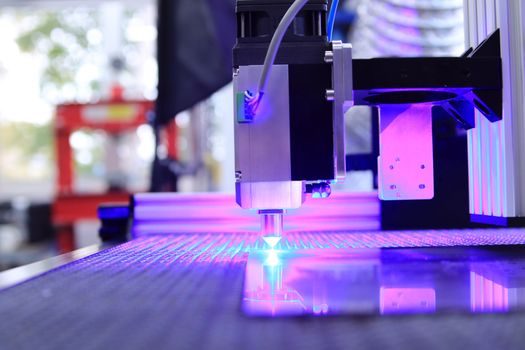
Across the source set, three discrete spec tiers are visible. Tier 1 covers trade-fabrication job shops that offer cut, bend, weld, rivet, and stamp services on a per-piece basis (US$0.99-6.98/piece) and flat-metal deburring/chamfering all-in-one machines at US$15,000-35,000 per unit, with no discrete laser-power spec published [S5]. Tier 2 is the standard 1,500 W-3,000 W enclosed fiber cutter at US$18,000-26,000/set, suited to carbon-steel sheet up to ~12 mm and stainless up to ~6 mm, with sheet-and-tube dual-function capability common at the US$21,800-22,000 mid-point [S2][S4]. Tier 3 is the high-power 6 kW-plus sheet-metal line at US$35,000-39,800/set, with HGLASER MARVEL PRO, SMART, and WALC series corresponding to this band [S3][S4].
For buyers running structural steel, H-beam, and profile-steel cutting work, the HGLASER 3D, H-beam, and profile-steel laser cutting machine lines are the most explicit spec-fit, with AUTOBOT and SF series covering 3D work and the dedicated H-beam line covering structural sections [S3]. For shop-floor alignment and bed-flatness work that the laser source depends on, a laser screed is the standard machine-tool reference, while a laser profiler is the more common conveyor-belt and plate-edge measurement companion. Buyers should weigh four decision criteria side-by-side: laser power (1.5 kW vs 3 kW vs 6 kW+), sheet-and-tube dual-function vs single-function, machine footprint and IP54 enclosure rating, and the supplier's audit status on B2B portals (Diamond Member plus Audited Supplier is the minimum baseline) [S2][S3][S4][S7].
Who the China supply base is for, and who should look elsewhere
China-based fiber laser cutting machine manufacturers are the right fit for job shops and contract manufacturers running 60-80% carbon-steel sheet work, structural-steel and H-beam fabricators needing 3D or 5-axis cutting heads, and export-oriented OEMs willing to consolidate sourcing through B2B portals with Secured Trading protection [S1][S3][S7]. They are not the right fit for aerospace-grade titanium cutting, medical-device-grade stainless work with full ISO 13485 traceability, or any process where the buyer needs European CE machinery directive documentation issued by a notified body in the EU rather than a self-declared CE mark [S1][S3].
Buyers running high-mix low-volume prototyping under 200 hours/month will find the entry-tier job-shop per-piece pricing (US$0.99-6.98/piece) more economical than buying a US$18,000+ machine outright, but per-piece pricing scales poorly above ~1,000 hours/year of in-house cutting [S5]. For a deeper cut on tier-by-tier economics and supply-chain risk, the laser cutting machine supply chain 2026 tiers, specs, and sourcing map lays out the upstream-downstream value chain. For a parallel view of how the welding-machine supply base is structured, the MIG welding machine suppliers 2026 China sourcing map is a useful cross-reference on B2B-portal sourcing economics.
Sourcing risks and failure modes specific to 2026 China-built fiber cutters
The single largest failure mode in the 2026 China fiber-cutter installed base is laser-source origin: machines advertised as 1.5-6 kW fiber cutters often pair a Chinese-built sheet-metal chassis with an imported IPG, Raycus, or MAX Photonics resonator, and the resonator make/model is frequently not declared in the B2B listing [S2][S4].
The third failure mode is the audit-status gap: Made-in-China.com lists 2,000+ laser-cutting-cnc manufacturers with 6,000+ products, but only a subset carry Diamond Member and Audited Supplier credentials, and a smaller subset still offer Secured Trading escrow [S7]. Buyers running PO values above US$50,000 should insist on Secured Trading, factory video audit, and a witnessed FAT at the maker's site before shipment; the Nanjing Beke listing, for example, publishes an explicit "View larger video & image" call-out that is a usable proxy for transparency [S4]. A fourth, often-overlooked risk is CE marking validity: self-declared CE on a Chinese-built fiber cutter is not equivalent to a notified-body-issued CE under the EU Machinery Directive 2006/42/EC, and EU end-users should request the Declaration of Conformity file before shipment.
Standards, certification stack, and what to ask the supplier for
Buyers running food-grade, pharmaceutical, or semiconductor fab work should require the supplier to disclose the full material-traceability chain for the cutting bed, the laser source's IEC 60825-1 laser-product safety rating, and the machine's IP rating for the electrical cabinet (IP54 is the current 2026 norm for enclosed fiber cutters) [S3]. For CE-marked equipment destined for the EU, request the full DoC file and the harmonised standards list, with EN ISO 12100 (safety of machinery) and EN 60204-1 (electrical equipment of machines) the most common baseline references in 2026 builds.
For buyers running structural-steel work to AISC or Eurocode 3 tolerances, the cutting-tolerance spec should be requested in writing: a US$22,000 mid-tier fiber cutter typically delivers ±0.05 mm positioning accuracy and ±0.03 mm repeatability, but this is rarely stated in the B2B listing and must be confirmed on the datasheet [S1][S3]. The broader 2026 upstream-downstream industry map for laser cutting machines is the right cross-reference for buyers who need to align the cutting-machine spec with downstream riser-cutting-machine and laser-marker integration. Two trackable signals to watch in H2 2026: whether HGLASER extends the MARVEL PRO series into a 30 kW-plus power class, and whether Jiangsu exporters such as Nanjing Beke publish machine-specific CE DoC files rather than self-declared marks.