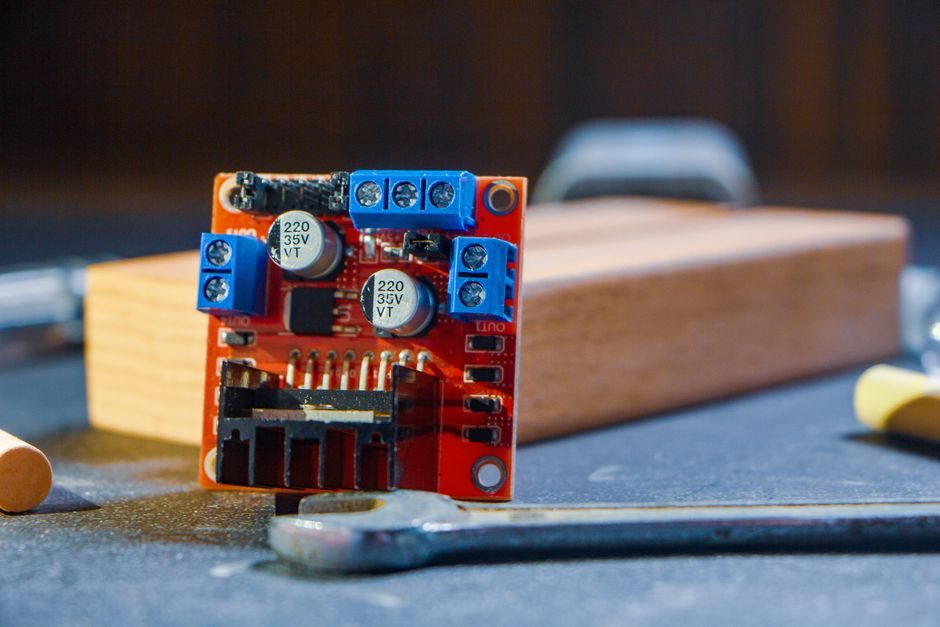
The 2026 CNC controller supply picture is shaped by a small number of dominant Japanese, German and Chinese OEMs, with 7 lathe-CNC controller vendors listing 18 active products on the DirectIndustry index as of 30 March 2026 [S1].
The addressable market was sized at USD 2.8 billion in 2021 and projected to USD 3.4 billion by 2026 at a 3.6% CAGR, with FANUC, Siemens, Mitsubishi Electric, DMG MORI and Haas Automation cited as key players and APAC holding the largest regional share [S3]. That baseline makes any single-vendor disruption a multi-week issue for downstream machine builders.
Axis-count and form factor drives lead time
Axis-count is the single biggest lead-time lever on a CNC controller buy: the DirectIndustry lathe-CNC controller index lists 3-axis (4 products), 4-axis (3), 5-axis (3), 8-axis (1), 12-axis (1), 28-axis (1) and 29-axis (1) variants, and the high-axis units are typically the bottleneck when the market tightens [S1].
For a 3-axis lathe retrofit, an industrial motion controller class board plus servo pack is usually a 4-8 week item from distributors; for a 5-axis or multi-turret / multi-spindle lathe build, quoted lead times stretch to 16-26 weeks for European-built units and 10-18 weeks for Asian-OEM equivalents [S1]. GSK's 25i system, for example, is explicitly rated for 3 to 5-axis linkage on machining centres, boring and milling machines, so it sits in the Asian mid-volume tier rather than the high-axis premium tier [S1].
NUM's value proposition is "customer- and application specific solutions", which generally means firmware customisation adds 4-8 weeks on top of the base controller lead time; this matters for buyers who treat the CNC as a configurable PID controller class device with closed-loop tuning per axis [S1].
Three supply tiers, three different risk profiles
Tier 1 (Japanese and German majors) - FANUC, Siemens, Mitsubishi Electric, DMG MORI, Haas Automation, Okuma, Yamazaki Mazak, Hurco - dominates the global installed base and is the default for automotive and aerospace lines; lead times on these brands are typically 12-26 weeks, with allocation rather than price being the first response to demand spikes [S3].
Tier 2 (European mid-volume specialists) - FAGOR, NUM, INDEX - positions on high-axis, multi-turret and mill-turn machinery. FAGOR's CNC 8065 elite is built for high-production turning centres, vertical lathes, tilting bed lathes, parallel lathes, double turret (TT), multi-turret and multi-spindle lathes and combined lathe-milling, which is the form factor most exposed to long-lead allocation [S1].
Tier 3 (Chinese volume OEMs) - GSK, WeiHong, Tex Automation, plus the Made-in-China wholesale tier - competes on price and availability. The Made-in-China wholesale index shows 4-axis CNC turning controllers with tool-centre-point control listing at US$ 220-290 per piece MOQ 1, and entry-level turning controllers at US$ 450-458 per set MOQ 1, which is one to two orders of magnitude below Tier 1 list [S4]. Tex Automation's NK105 series supports Chinese, English, Polish and Vietnamese HMI languages and exposes PLC error and I/O communication alarms, which is the level of diagnostic detail typically expected at this price band [S1].
PC-based controllers as a parallel supply path
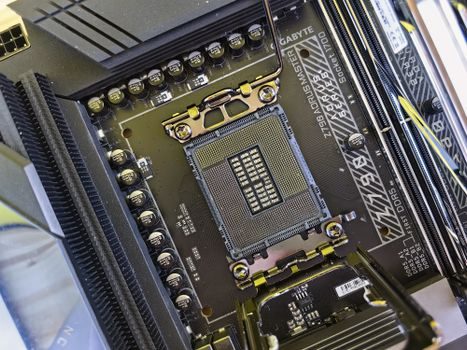
PC-based CNC controllers are a third supply path that bypasses the proprietary-OEM queue, with vendors such as CamSoft offering kits for CNC mill, router, lathe, laser, plasma, grinder, EDM and punch-press retrofits using an "open CNC" architecture [S2].
The trade-off is support and certification: PC-based kits are software-defined, so the buyer takes on Windows lifecycle risk, servo-pack integration and EMC compliance themselves; a switching power supply or DC power supply selection mistake on the HMI cabinet will surface as control noise, not as a marked axis fault. For low-volume and prototyping work this is a sensible route; for serial production on a regulated line it usually is not.
Selection criteria that survive a tight market
Four specs separate a safe buy from a queue-driven buy in 2026: (1) axis count and whether multi-axis is interpolated or merely addressable, (2) HMI language set and PLC error granularity, (3) servo bus protocol (EtherCAT, Mechatrolink, SSCNET, PROFIBUS) and (4) firmware customisation path - locked, vendor-portal, or open [S1].
The FAGOR iXpanel's 15" widescreen touchscreen with 3D simulation and separate controller is a typical premium feature pack; the Tex Automation 9000-DGI targets new-operator ramp-up and is explicitly sold as the machine "everyone wants to operate" - a usability pitch rather than an axis-count pitch [S1]. Tex Automation's Power B is positioned as a PAC (Programmable Automation Controller) with up to three interpolated axes in a compact format, which overlaps with the temperature controller / PID controller class on small machines [S1].
Decision rules: if the line runs FANUC or Siemens and serial number traceability matters, stay on that firmware train and add a second source only at the cabinet level. If the line is Asian-OEM mid-volume (GSK, WeiHong, Tex), qualify two vendors per axis class. If the line is high-axis or mill-turn, accept the Tier 1 or Tier 2 lead time and order 20-26 weeks ahead.
Limitations and what the public data does not show

None of the cited public sources publish live lead-time or allocation data; what they do show is the SKU and vendor landscape [S1] [S3] [S4]. The MarketsandMarkets forecast is dated 2021 with a 2026 endpoint, so it should be read as a structural baseline, not a 2026 spot reading [S3].
No public source in the research set publishes 2026 wafer, FPGA or servo-drive allocation for CNC controllers, so specific component-level bottlenecks cannot be cited from the dataset. The CamSoft page is a vendor product page, not a market sizing, and its claim of "open CNC" architecture is a positioning term rather than a verified interoperability certification [S2].
Standards and sourcing signals to track
There is no single IEC or ISO standard that "covers" a CNC controller; relevant adjacent references include IEC 61131-3 for PLC programming languages used inside modern CNCs, ISO 6983 (G-code) and ISO 14649 (STEP-NC) for the programming interface, and the machinery safety standards IEC 60204-1 and ISO 13849-1 for the integrated cell. Buyers specifying for the EU market should still verify CE Machinery Directive 2006/42/EC conformity and, on safety-critical cells, ISO 13849-1 Performance Level. [S3]
For a related read on the wider supply-risk pattern across industrial subsystems, the industrial gearbox supply 2026 piece uses the same capacity-substitution-sourcing framing. For a deeper dive on PC-based versus Asian-OEM versus industrial-tier CNC options, the CNC controller supply chain 2026 article is the most directly on-topic reference in the candidate set.
Trackable signals to watch over the next two quarters: (a) DirectIndustry SKU count change on the lathe-CNC controller index from the 18-products / 7-vendors baseline [S1]; (b) Made-in-China wholesale price moves on 4-axis turning controllers off the US$ 220-290 per-piece band [S4]; (c) any Tier 1 Japanese OEM moving to formal allocation letters, which has historically been the first public signal of a 2-3 quarter tightness cycle.