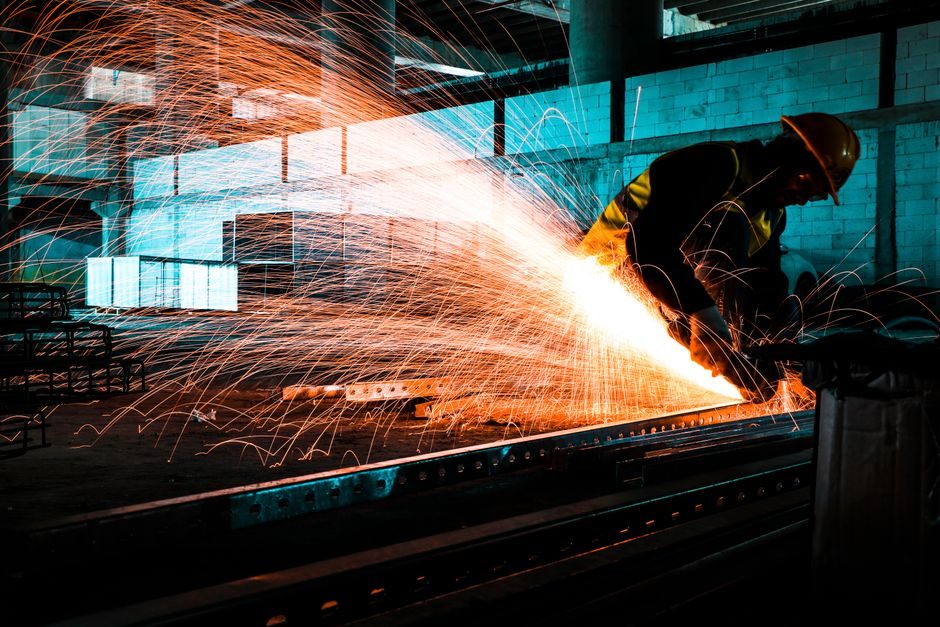
By mid-2026 the global laser cutting machine market operates as a two-tier supply chain: a high-power fiber-laser top tier (≥6 kW) anchored by European and Japanese OEMs, and a price-driven Chinese CO2 and entry-level fiber tier shipping out of Suzhou, Jinan, and surrounding Jiangsu/Shandong industrial clusters at landed prices from US$ 7,000 to US$ 30,000 per unit [S4].
The consumables and after-market layer — slats, slag-removal tools, nozzles, gas- assist optics — is a third value pool that the major OEM service networks do not monopolise, with specialised vendors selling cross-brand accessories that explicitly fit Bystronic, Trumpf, Amada, Mitsubishi, and Mazak machines in both CO2 and fiber variants [S3]. Procurement teams that ignore that third layer routinely overpay 2-3x on laser bed consumables over a five-year ownership cycle.
Tier 1 — high-power fiber laser cutting machines (≥6 kW)
Fiber-laser platforms rated for 6 kW and above are the segment where slag is "tougher, thicker, and more stubborn," which is why dedicated slag-removal tooling has emerged as a separate product class rather than a general-purpose accessory [S3]. The same source documents adoption across Siemens, ABB, BYD Auto, Gree, Midea, Sany, Zoomlion, and Hitachi Elevator — a list that maps closely onto the buyer base for heavy-gauge carbon-steel and stainless structural cutting in construction equipment, white goods, and EV body-in-white lines.
European and Japanese brands — Bystronic, Trumpf, Amada, Mitsubishi, Mazak — dominate the spec sheets and the service footprint for this tier, and are explicitly named as compatible platforms for cross-brand slat cleaners sold into Chinese end-users [S3]. For a process engineer, the practical decision gates at this tier are beam source kW (6 kW, 12 kW, 20 kW, 30 kW), acceleration (typically 1.0-1.5 g on premium gantries), positioning accuracy (±0.03 mm class on European builds), and pallet-changer vs single-table architecture, all of which are independent of any one brand. The relevant equipment reference for related process tools is the cutting machine category page.
Tier 2 — Chinese CO2 and advertising-tier fiber machines
The Chinese mid-tier is dominated by CO2 platforms for non-metal work (acrylic, wood, fabric, foam, advertising substrates) and low-to-mid power fiber (30-150 W RF-excited CO2 equivalents shown on Chinese B2B listings) for thin-gauge sheet metal. A representative spec sheet is the Jinan Penn CNC PC-1410L, a 1,400 × 1,000 mm CO2 machine with X travel 1,400 mm, Y travel 1,000 mm, cutting speed 0-1,000 mm/min, and laser power options of 60 W / 80 W / 100 W / 130 W / 150 W, controlled via a Leetro system and DSP control electronics [S2].
Pricing on the Made-in-China platform for advertising-oriented laser cutting machines sits in a US$ 7,000-US$ 30,000 per-piece band, with 1-piece MOQs and CE certification called out on supplier listings such as Suzhou Aeon Laser Technology, a Diamond Member audited supplier based in Jiangsu [S4]. South African and other regional distributors — for example Yomi in South Africa, which lists dedicated sheet-and-tube fiber and advertising fiber variants alongside exchange-table gantries — sit on top of this Chinese base, adding local installation, spares, and service [S6]. For process engineers specifying these units, the relevant comparison anchor is the riser-cutting-machine family of CNC platforms, which shares the gantry-and-bed topology but typically trades laser head for a mechanical spindle.
Service, certification, and consumable layers
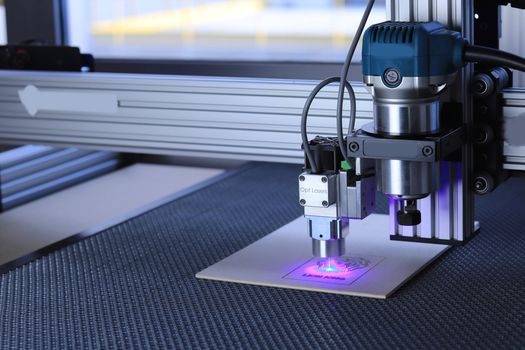
Outside the two main equipment tiers sit two support layers that materially affect total cost of ownership. The first is the job-shop / contract-cutting layer, represented by ISO 9001:2015-certified fabricators offering 24-hour laser cutting, machining, welding, and sheet-metal services — Rapid Turn Laser & Machining in the United States, for example, is formally certified to ISO 9001:2015 by DNV for those core competencies [S5]. The second is the consumable layer, where specialist vendors sell laser slat cleaners, plasma slat cleaners, replacement cleaning blades, and dedicated slag-removal hammers that claim to extend slat service life by "up to three or four times" through regular cleaning [S3].
For multi-machine fab shops, this consumable layer is a non-trivial line item: a single 6 kW-class fiber cutting cell typically runs 6,000-8,000 plate hours per year, and the slat bed that supports the workpiece turns over every 12-18 months under high-nitrogen stainless and mild-steel mixes unless cleaned on a defined interval. The Lisen LSC 200 slat cleaner is explicitly branded as cross-compatible with Bystronic, Trumpf, Amada, Mitsubishi, and Mazak machines in both CO2 and fiber configurations, which is a useful single-source specification when a fab runs a mixed fleet [S3]. For buyers comparing dedicated fabrication cells to retrofits on existing lines, the parallel chain conveyor decision often shows up in the same project because plate-handling automation is what makes the laser cell's throughput real.
Regional supplier map — Germany (Saxony) and the Chinese coastal belt
Chemnitz, Saxony, remains a documented regional cluster for laser cutting and laser welding machine suppliers in the GlobalSpec industrial directory, and historically houses the German engineering base that supports Trumpf and adjacent European OEMs [S1]. In parallel, the Chinese supply base concentrates in Suzhou (Jiangsu) and Jinan (Shandong), with Suzhou Aeon Laser Technology listed as a Diamond Member audited supplier on Made-in-China and Jinan Penn CNC as a DirectIndustry-verified manufacturer of CO2 platforms [S4][S2].
For a 2026 sourcing decision, that two-region split matters because lead time, spares availability, and CE/UL documentation differ sharply: European Tier-1 platforms typically ship in 8-14 weeks with full factory acceptance testing, while Chinese Tier-2 units ship in 4-8 weeks ex-works with documentation that buyers often re-validate locally. The CE mark on the Made-in-China listings is valid as of the issue date shown on each supplier page — in the case of the Aeon listing, the certificate is shown as "CE certified valid since" with a directive to contact the issuer for current status [S4], which is the standard caveat a procurement team should treat as "verify before commissioning."
Selection criteria for a 2026 purchase
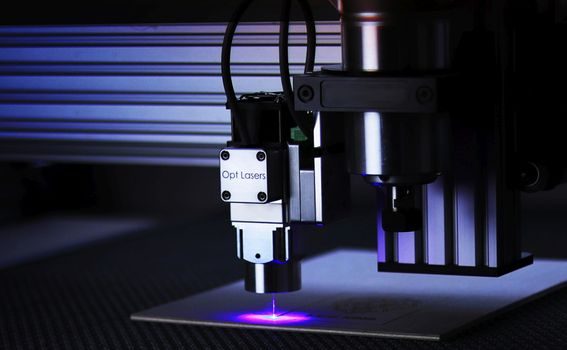
Four criteria separate the right machine from the wrong one in 2026. First, beam source and kW class: ≥6 kW fiber for ≥6 mm carbon steel, 1-3 kW fiber for thin-gauge sheet and stainless, 60-150 W CO2 for non-metals and advertising substrates (per the Penn PC-1410L spec sheet showing 60/80/100/130/150 W options) [S2]. Second, work envelope: 1,400 × 1,000 mm entry-level, 3,000 × 1,500 mm mid-volume, 4,000 × 2,000 mm and above for heavy fabrication and exchange-table cells.
Third, control and software: DSP-controlled CO2 systems with Leetro-class controllers remain standard on Chinese CO2 platforms [S2], while fiber systems use OEM-proprietary CNC controllers — and the related decision on controller sourcing is mapped in the CNC controller supplier shortlist for 2026. Fourth, after-market and certification: ISO 9001:2015 supplier audits (DNV or equivalent) on the service bureau side [S5], CE/UL status on the equipment side [S4], and a clear consumable path for slats and slag removal [S3]. A shop that is also evaluating automated material handling should compare those four laser criteria against the linear actuator selection map used on the plate-loading side of the same cell.
Limitations, failure modes, and risk signals
The realistic failure modes for a 2026-vintage laser cell concentrate in three areas. Slat and bed wear: heavy slag accumulation on fiber systems running 6 kW and above shortens slat life and degrades cut-edge quality unless a dedicated cleaning routine is in place [S3]. Documentation drift: CE certificates shown as "valid since (contact issuer for current status)" on Chinese B2B listings require re-validation with the issuing notified body before any EU end-user takes delivery [S4]. And software-versioning risk: PC-1410L-class CO2 systems use a Leetro/DSP control chain that is well understood but rarely updated, so end-of-life parts planning matters more than on fiber platforms with active firmware support [S2].
For the wider sourcing and quality context — including the parallel question of how a fabrication shop verifies supplier audits and quality systems across borders — the PID detector supplier map covers a comparable audit-heavy procurement workflow. Two trackable signals to watch: (1) whether Tier-1 OEMs continue to publish ≥6 kW fiber lead times below 10 weeks, which would indicate that the European and Japanese supply base has caught up with the 2024-2025 backlog; (2) whether Chinese Tier-2 suppliers maintain or extend the US$ 7,000-US$ 30,000 entry-level price band on Made-in-China, which is the most reliable proxy for landed-cost pressure on the advertising and thin-sheet segment [S4].