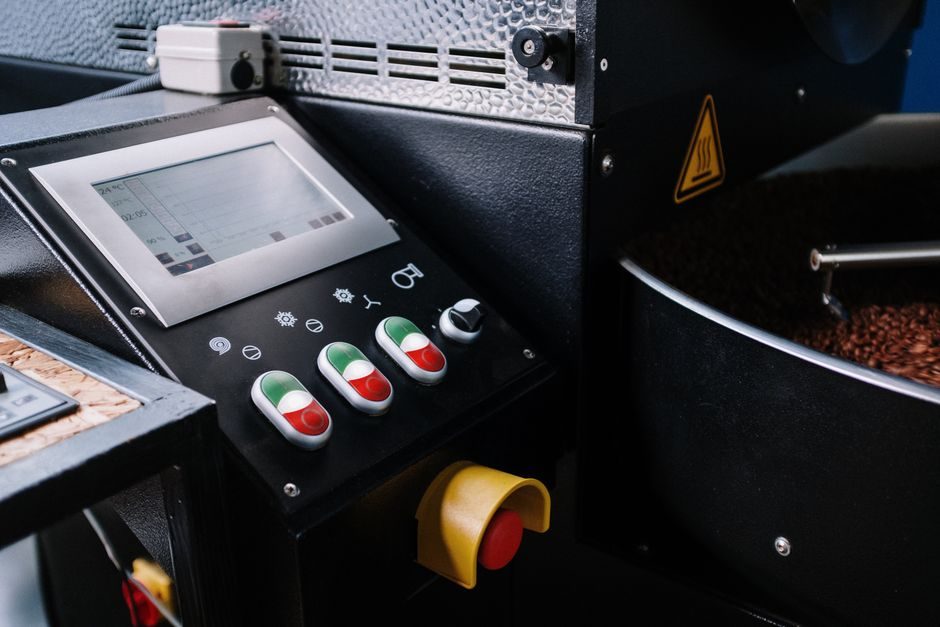
A CNC controller is the motion brain that translates G-code into coordinated servo and spindle commands, and its supply chain stretches from upstream silicon, sensors, and servo drives to downstream machine tools, collaborative robots, and laser systems [S2]. In 2026, the upstream tier is dominated by motion-control ICs, real-time industrial Ethernet PHYs, and high-resolution absolute encoders; the controller tier itself splits into PC-based open platforms, Asian OEM systems, and European high-end industrial tiers, each with distinct supply, integration, and lifecycle implications [S2].
For a buyer or process engineer, the practical question is no longer "which controller is best" but which position on the upstream-downstream axis delivers the lowest 10-15 year total cost of ownership. The remainder of this article breaks the chain into its upstream inputs, the controller tiers themselves, and the downstream applications, then lines them up against decision criteria a sourcing engineer can score.
Upstream Inputs: Silicon, Servos, and Sensors That Set the Floor
The upstream of a CNC controller is dominated by four component families: motion-control processors and FPGAs, real-time industrial Ethernet physical-layer devices, high-resolution absolute encoders, and the servo drive and motor modules that sit one rung above the controller. Modern controllers specify 24-bit multi-turn absolute encoders to avoid homing on every power-up; vendor datasheets in 2026 list 16,777,216 counts per turn as a common reference resolution, and a single multi-turn counter can hold more than 16 million discrete position units across the full travel [S2].
Upstream material risk concentrates in the servo module rather than the controller PCB. Cast-iron servo housings, rare-earth permanent magnets in spindle and feed motors, and precision-ground ball screws are the cost-driving upstream items; the controller itself typically represents a single-digit to low-teens percentage of total machine value. Buyers should therefore audit magnet grade (N35-N52 NdFeB or equivalent), encoder protocol (BISS-C, EnDat 2.2, SSI, Tamagawa), and bus standard (EtherCAT, PROFINET IRT, CC-Link IE TSN) before they audit the controller's brand label [S2]. A useful related read on the mechanical side is ball screw advantages, disadvantages, and spec-driven selection, which sits in the same upstream-to-machine chain.
Controller Tiers: PC-Based, Asian OEM, and Industrial High-End
The controller tier itself segments into three groups with very different upstream exposure. PC-based open controllers run on x86 or ARM SBCs with soft-PLC or LinuxCNC-class real-time kernels; they minimise proprietary silicon and let the user swap motion cards, but tie the machine to a PC supply chain. Asian OEM controllers, exemplified by vendors such as Syntec, run a universal controller platform compatible with milling, turning, and laser systems and are sold with matched servo drives, robots, and cobots as a bundled automation package [S2]. Industrial high-end controllers (European, Japanese, and US-OEM) generally use proprietary real-time hardware with longer firmware support windows and stricter functional-safety certification.
A 2026 buy-side comparison against four criteria looks like this. (1) Upstream supply risk: PC-based > Asian OEM > industrial high-end, because PC platforms absorb consumer silicon churn. (2) Time to integration: Asian OEM wins on turnkey cobot-CNC-laser bundles, industrial high-end wins on cycle-time optimisation. (3) Openness: PC-based > industrial high-end > Asian OEM for users who want to write post-processors themselves. (4) 15-year spare-part availability: industrial high-end > Asian OEM > PC-based, because the latter's SBC form factors are typically obsolete within 5-7 years. For readers who want a deeper tier breakdown, the related CNC Controller Supply Chain 2026: PC-Based, Asian OEM, Industrial Tiers article lays the same tiers out in more detail.
Downstream Consumers: Machine Tools, Cobots, and Laser Systems
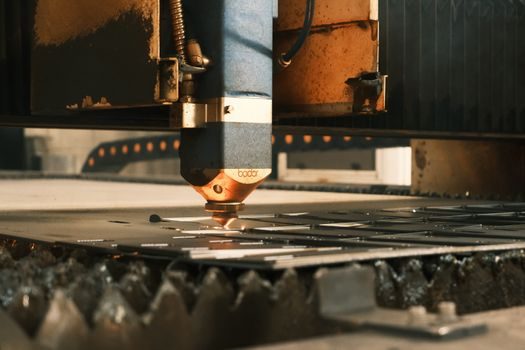
Downstream of the controller sit the machines and cells that actually cut, weld, and print parts. The three largest downstream groups in 2026 are metal-cutting CNC machine tools (mills, lathes, multi-axis machining centres), collaborative and industrial robots that share controllers or motion cores with CNC platforms, and laser systems for cutting, engraving, marking, and cleaning [S2]. A single vendor offering a CNC controller, an industrial robot, and a laser system on the same software stack can deliver short retrofit cycles and common post-processors, which is the structural reason Asian OEM controllers have grown share in the mid-market machine-builder segment.
Downstream requirements filter back upstream. A five-axis machining centre typically needs a controller with at least five coordinated axes, RTCP (rotation-tool-centre-point) kinematic transformation, and a high-speed look-ahead block buffer (commonly 200-1000 blocks); a cobot cell needs safety-rated torque sensing on every joint and ISO/TS 15066 power-and-force-limiting collaboration modes; a laser system needs a low-latency analogue or EtherCAT laser-power control channel with closed-loop power feedback. Specifying downstream first, then mapping those requirements onto the controller tier, avoids the common 2026 failure mode of buying a premium controller and pairing it with a servo loop that cannot close at the required bandwidth.
Selection Criteria by Application Class
For a job-shop 3-axis mill, a 24-bit encoder count, an open Ethernet bus, and an Asian OEM controller with bundled servo drives is usually the lowest-risk path: total controller plus drive cost lands in the low single-digit thousands of US dollars, spares are stocked regionally, and retrofit is straightforward. For a five-axis aerospace or medical cell, an industrial high-end controller with RTCP, macro programming, and a documented 15-year support window is the right call; the controller's share of machine value rises, but unplanned downtime cost is the dominant lifecycle line item. For high-mix low-volume cobot cells, the same vendor's cobot and CNC controller share a teach pendant and a safety architecture, which cuts integration hours and training cost by a large margin in practice [S2].
Cross-application, the non-negotiable spec items in 2026 are: a real-time industrial Ethernet bus (EtherCAT or PROFINET IRT) rather than legacy analogue +/-10V command signals, an absolute multi-turn encoder on every servo, a published functional-safety rating (SIL 2 / PL d or better for collaborative cells), and a documented firmware update policy with at least 10 years of security patching. The relative weight of each item depends on downstream application: laser systems care most about bus latency, machine tools care most about look-ahead and thermal stability, and cobot cells care most about safety architecture and post-processor openness.
Failure Modes and Constraint Map
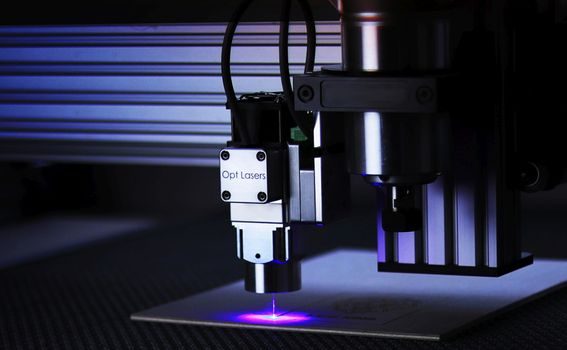
The three recurring 2026 failure modes sit at the chain boundaries. First, controller-to-servo mismatch: a controller specifying EtherCAT is paired with a drive that only supports analogue command, forcing a downgrade to +/-10V and losing the deterministic, multi-axis synchronisation that made the controller worthwhile. Second, downstream retrofit mismatch: an old milling spindle is retained during a controller retrofit, but the new controller's analogue spindle-speed output does not match the existing spindle drive's input card, so a separate frequency inverter is bolted on and lifetime supportability suffers. Third, upstream silicon obsolescence: a PC-based controller's SBC reaches end-of-life within five years, and the replacement board changes BIOS, Ethernet MAC ordering, and real-time kernel behaviour enough to invalidate the machine's validated cycle times. [S1]
Engineers who treat the controller as the centre of a chain, and who map upstream and downstream components to it before procurement, are the ones who avoid these failure modes. The next 1-2 signals to watch are (a) the rollout of TSN profiles on machine-tool controllers, which will tighten the upstream Ethernet-PHY supply chain around a smaller set of vendors, and (b) the convergence of cobot and CNC safety architectures under updated ISO/TS 15066 and ISO 10218 functional-safety requirements, which will reshape how Asian OEM and industrial high-end controllers are bundled downstream. Readers building the upstream mechanical chain alongside this controller selection can cross-check the industrial gearbox suppliers and manufacturers map for the gearboxes that sit between servo motor and ball screw on the same axis.
For the relevant spec sheets and selection criteria, see motion controller, pid controller, and temperature controller.