
Buying the right fiber optic sensor in 2026 starts with locking the sensing principle to the measured variable before chasing price. Distributed fiber optic sensors leveraging Rayleigh, Brillouin, and Raman scattering cover tens of kilometers of temperature and strain, while Fiber Bragg Grating (FBG) arrays deliver point or quasi-distributed measurements on a 6 m polyimide-coated fiber, as documented in Micron Optics' os1200 array [S1].
Industrial sourcing directories list 4 manufacturers and 9 displacement-specific products on the most-recent index snapshot, with linear ranges from 13 mm up to 5,000 mm depending on whether the head is focused, line-focused, or collimated with a retro-reflector [S1]. For procurement teams mapping a 2026 budget, the catalog tiers below summarize where the spend actually goes and which spec — not brand — decides the shortlist.
Three Sensing Families and the Variables They Cover
Fiber optic sensors split cleanly into point, quasi-distributed, and distributed families, and the boundary determines cable architecture, interrogator cost, and installation method [S2]. Point sensors use a single FBG or Fabry-Perot cavity and return one measured value per probe; quasi-distributed sensors multiplex several FBGs along one fiber (Micron Optics' os1200 carries 5 gratings over 6 m); distributed systems use the fiber itself as the sensing medium via OTDR, OFDR, or BOTDA interrogation [S1][S2].
The measured variable drives the family choice. Temperature and strain dominate the distributed segment, which MarketsandMarkets sized at US$1,581.1 million in 2025 with a 10.9% CAGR projected through 2030 to US$2,630.7 million [S2]. Displacement splits between FBG-based linear probes (0.5% linearity on 80 mm range, e.g. the FS61DSP) and interferometric heads covering 13 mm to 5,000 mm for long-distance retro-reflector targets [S1]. Acoustic and vibration sit in the distributed-DAS (Distributed Acoustic Sensing) branch, used heavily in oil & gas pipeline surveillance per the same forecast [S2].
Spec Gates That Bind the Shortlist
Five numeric gates decide whether a candidate sensor passes to bench testing or gets cut at the datasheet stage. The first gate is measuring range: photoelectric point sensors with fiber-optic cables are usually specified in millimeters (FS61DSP 80 mm, OBDI 25/100 mm, SmarAct C03 13-5,000 mm), while distributed temperature systems are specified in kilometers [S1]. The second gate is linearity: 0.5% is the published figure for the FS61DSP linear displacement sensor, and tighter figures require an interferometric head [S1].
The third gate is wavelength and fiber type. G.652D, G.657A1, and G.657A2 single-mode fibers dominate telecom-grade distributed sensing, with Chinese OEM spools listing US$200-300 per km at 25 km MOQ and CE/RoHS/ISO9001 certification [S4]. Multimode indoor-wiring fiber drops to roughly US$0.05 per meter at 1 m MOQ, with allowed lateral pressure rated 100-1,000 N/100 mm and allowed tensile strength 100-1,000 N [S4]. The fourth gate is environmental: Baumer publishes a high-temperature, chemically resistant fiber-optic sensor toolbox covering over 350 customized solutions, with IO-Link parametrization through the Baumer Sensor Suite [S5]. The fifth gate is optical power budget at the interrogator, where Thorlabs PM60 and PM61 power meters cover 400-1,100 nm and 400-1,700 nm respectively, with -70 dBm to +23 dBm dynamic range [S6].
Distributed vs Quasi-Distributed vs Point: Criteria Comparison
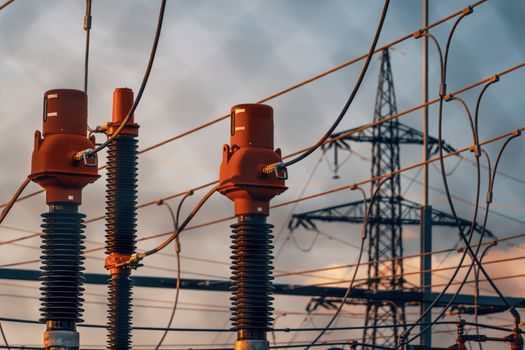
When the requirement is kilometers of coverage on a single cable, OTDR-class distributed systems win on coverage but lose on spatial resolution. A direct-search snapshot on made-in-china.com lists distributed optical-fiber temperature measurement systems at US$20,000 per piece (1-piece MOQ) from Fujian-based audited suppliers [S3]. Quasi-distributed FBG arrays sit in the middle: 6 m fiber with 5 gratings, polyimide coating, and modular cabling for strain, temperature, accelerometer, and displacement gages in series [S1].
Point sensors are the cheapest and the only option for sub-millimeter alignment tolerance. The SmarAct F01 focused-beam head targets 10 mm ranges for small targets, the L01 line-focused head handles 10 mm cylindrical targets, and the C01 compact head covers 13-650 mm with a target mirror return path [S1]. The decision rule: pick distributed when the asset is a pipeline, wellbore, or perimeter; pick quasi-distributed when the asset is a structure with 5-50 known measurement nodes; pick point when the target is small, fast, or has a tight alignment budget.
Interface, Power, and Cabling Considerations
Interrogator-side interface governs how the sensor talks to a PLC, DCS, or data acquisition system. Modern photoelectric fiber-optic amplifiers expose IO-Link for plug-and-play parametrization, which collapses commissioning time on object-detection cells where irregular targets or liquid levels are involved [S5]. Distributed systems typically stream data through Ethernet or USB to a host PC running vendor software; the Wavelength Division Multiplexing (WDM) grating array configuration is the most common cabling pattern for FBG arrays [S7].
Power budget is not optional. The Thorlabs PM60 and PM61 series power meters with internal sensors and interchangeable fiber connectors are the de-facto bench reference for verifying link loss before commissioning, with the PM60A covering 400-1,100 nm and offering an integrated visual fault locator [S6]. Bluetooth Low Energy connectivity and the OPM software suite ship with these meters, which lets a field engineer qualify an optical link without pulling a dedicated test set [S6]. For plant buyers, the practical implication is that any distributed-temperature-system bid should also include a power meter line item for installation QA.
Who Should NOT Buy the Mainstream Distributed Option
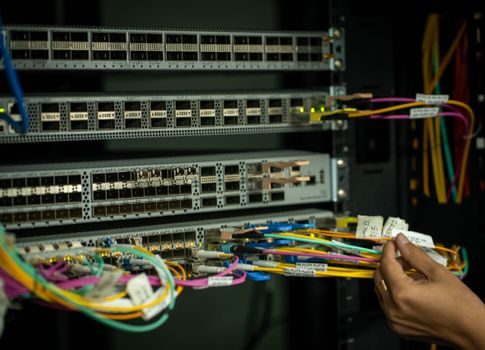
Distributed fiber optic sensors are not the right answer when the measurement point is countable and accessible. A buyer looking at 4 strain points on a press frame does not need a Raman or Brillouin OTDR interrogator at the US$20,000 price tier [S3]. The cost-per-channel math collapses against a 5-grating FBG array on a single 6 m fiber, and the spatial resolution of a distributed system (typically 1 m) is coarser than what a bolted structural joint requires [S1][S3].
Distributed systems also stall in applications where the cable is short and the environment is electrically noisy in a way that overwhelms Rayleigh-based acoustic detection. For a 10 m tank with a single temperature probe, a point FBG temperature sensor with a polyimide coating and a dedicated interrogator channel is the rational pick. The same logic applies to high-speed object detection on a packaging line: Baumer's fiber-optic amplifier toolbox with over 350 customized fiber solutions and IO-Link parametrization is the right product class, not a distributed system [S5].
Application Mapping and 2026 Sourcing Signals
Oil & gas pipeline and wellbore monitoring remains the anchor use case for distributed temperature and acoustic sensing, with Asia Pacific forecast as the fastest-growing region at 14.3% CAGR through 2030 [S2]. Civil engineering structural-health monitoring is the second pillar, particularly for bridges, tunnels, and dams where quasi-distributed FBG arrays provide enough spatial coverage without the interrogator cost of a full distributed system. Industrial process monitoring on discrete manufacturing lines is the third pillar and is dominated by point photoelectric fiber-optic sensors paired with ruggedized cables [S1][S5].
The 2026 sourcing signals worth tracking are FOB-China pricing on distributed temperature systems (US$20,000 per piece, 1-piece MOQ), G.652D/G.657A1/G.657A2 single-mode fiber at US$200-300 per km with 25 km MOQ, and the OEM explosion of WDM grating array sensors from Shenzhen manufacturers [S3][S4][S7]. For buyers cross-checking catalog entries against the fiber optic sensor reference, also bookmark the related linear motor and fiber converter pages for adjacent procurement. For an adjacent selection workflow, the vision controller selection criteria breakdown covers similar spec-gate thinking on the machine-vision side, while the magnetic sensor price guide applies the same spec-first budgeting logic to a different sensor family.