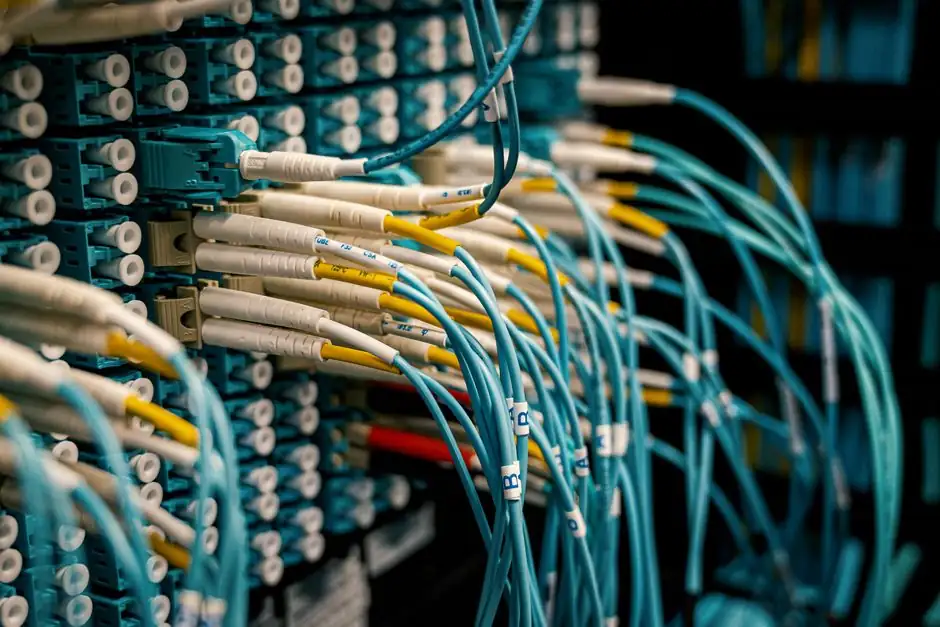
Specifying a fiber optic sensor starts with the measurand, the point count, and the environment: under 50 measurement points favor single-point units with multiplexed Fiber Bragg Gratings, while above 50 points a distributed sensing architecture (Raman, Brillouin, or Rayleigh) is the cost-correct choice [S1][S5].
Fiber optic sensors are defined as devices where the optical fiber itself acts as the sensing element (intrinsic) or as a light conduit to a remote optical head (extrinsic), modulating intensity, phase, polarization, or wavelength in response to temperature, strain, pressure, or acoustic input [S5]. Reference fiber optic sensor terminology anchors the rest of this guide.
Point vs Distributed: Choosing the Channel Count Architecture
Single-point fiber optic sensors cover installations below 50 measurement points and dominate dry-type transformer windings, small liquid vessels, and household-scale thermal monitoring where compact probe size (plastic optical fiber core diameters of 0.1–1.0 mm) and low unit cost matter more than spatial coverage [S1][S4]. Distributed Temperature Sensing (DTS) and Distributed Acoustic Sensing (DAS) are the dominant answer above 50 channels, where the fiber cable itself becomes a continuous sensor spanning kilometers and one interrogator replaces hundreds of point transducers [S1][S5].
The break-even is workload-driven, not arbitrary: when the cable run is long, the point count high, and the routes accessible only once (downhole, along pipelines, in tunnels), distributed architectures win on total installed cost even though a single distributed interrogator costs more than one point sensor [S1]. Single-point FBG strings can be multiplexed on one fiber, so for a 30-channel transformer monitoring job, the FBG chain is usually a better fit than pulling a DTS-grade fiber and an OTDR-class interrogator [S5].
Intrinsic vs Extrinsic: Picking the Sensing Architecture
Intrinsic fiber optic sensors use the fiber itself as the transducer: Fiber Bragg Gratings etched into the silica core by ultraviolet laser reflect specific Bragg wavelengths, and strain or temperature shifts that wavelength through the relationship λB = 2·n_eff·Λ [S3]. Extrinsic designs use the fiber only to guide light to an external optical head such as a fluorescence probe, a cantilever tip, or a remote Fabry-Pérot cavity [S5].
For long-term structural health monitoring on bridges, dams, wind-turbine blades, and aircraft composites, FBG-based intrinsic sensors dominate because the gratings are mass-fabricated, can be wavelength-multiplexed on a single fiber, and survive embedment in composite layups [S5]. Extrinsic probes carry the day when the measurand is chemical (fluorescence-based pH or oxygen probes) or when the optical head must be disposable or sterilizable, as in medical catheters [S5]. Reference linear guide and crossed-roller guide selection pages describe similar intrinsic-vs-extrinsic trade-offs in motion systems, useful parallel reading.
Fiber Core Type, Bend Radius, and Detection Geometry
Plastic optical fiber cores (acrylic resin) are typically supplied as single or multiple strands with diameters of 0.1 mm to 1.0 mm, jacketed in polyethylene for flexibility; with a minimum bend radius around R25 mm, plastic fiber is the default pick for compact sensor probes in confined panels and OEM machine builds [S4]. Glass single-mode fiber carries a core of about 9 μm diameter, while multimode glass comes in 50 μm and 62.5 μm core sizes; the smaller core raises bandwidth but tightens alignment tolerance and coupling loss [S6].
Detection geometry choices follow from the target: through-beam pairs give the longest range and the smallest minimum detectable object, retro-reflective units cut wiring to a single fiber pair, and diffuse-reflective probes read light scattered off the target itself with no reflector [S2][S4]. Keyence's fiber-unit glossary lists fiber unit length, ambient temperature, bend radius, detecting distance, optical axis diameter, and minimum detectable object as the six named parameters that must be locked before a probe is ordered [S2]. Spot size and detection distance are then fine-tuned by swapping the focusing lens on the same amplifier, so the amplifier can be re-deployed across probe types without re-wiring the control cabinet [S4].
Environment: Temperature, EMI, and Hazardous Areas
All-dielectric silica fibers are inherently immune to electromagnetic and radio-frequency interference, which is why fiber optic temperature sensors are specified in power-transformer windings, switchgear, and along high-voltage cable runs where conventional thermocouples and RTDs pick up noise [S1][S4][S5]. Operating temperature range is set by the fiber coating rather than the silica itself: polyimide-jacketed fibers routinely reach 300 °C, metal-jacketed designs extend to 500 °C, and pure silica with no coating survives the highest geothermal well temperatures, where the technology has more than 20 years of field history [S3][S4].
In flammable, corrosive, or space-limited sites, fiber probes add safety through absence of electric sparks at the sensing point and through optional corrosion-resistant sheaths; this makes them a standard pick for chemical storage tank monitoring and downhole oil and gas sensing [S1][S3]. For plants that also buy fixed equipment, our construction machinery and equipment reference page covers comparable environmental-anchor thinking for heavy mobile plant.
Interrogation Method and Cabling Specs

Wavelength interrogation is the default for FBG chains and requires either a tunable laser or a broadband source with a spectrometer on the receiver side; this is what makes dense FBG multiplexing possible, because each grating can be assigned a unique slice of the spectrum [S3][S5]. Time-domain reflectometry (OTDR), the optical analogue of radar, is the interrogation method behind distributed sensing: a light pulse is launched into the fiber and the backscatter signature is timed to locate the event along the cable [S5].
For single-mode 9 μm core, 125 μm cladding fiber, the practical minimum bend radius for sensing-grade performance is around 30 mm; tighter bends leak light and raise attenuation, which is fatal for both FBG strings and Raman-based DTS where signal-to-noise is already budget-tight [S6]. Industrial buyers comparing this to broader instrumentation cabling can cross-check our Industrial Ethernet 2026: Market Sizing, Protocols, and Plant-Floor Cabling Specs for the protocol layer that usually rides beside the fiber in modern panels.
Application Mapping: Where Each Variant Earns Its Keep
Structural health monitoring on bridges, tunnels, dams, and pipelines uses distributed strain and temperature sensing along the cable run, with point FBG strings reserved for high-value joint and anchor locations [S5]. Aerospace and wind energy embed FBG arrays directly in composite layups to read load history and fatigue in real time, exploiting the fiber's small diameter and dielectric nature to avoid corrupting the composite matrix [S5].
Downhole oil and gas and Enhanced Geothermal Systems rely on DTS plus Distributed Thermal Perturbation Sensors (DTPS) for reservoir characterization, steam-optimization feedback, and fracture mapping; the same physics supports pipeline leak detection across kilometer-scale rights-of-way [S3][S5]. For magnetic-field-adjacent work in the same plant environment, the magnetic sensor suppliers 2026 guide is a useful comparator, since magnetoresistive and fiber-optic magnetic sensors compete in some of the same high-EMI niches.
Selection Criteria: Putting It Together for an RFQ
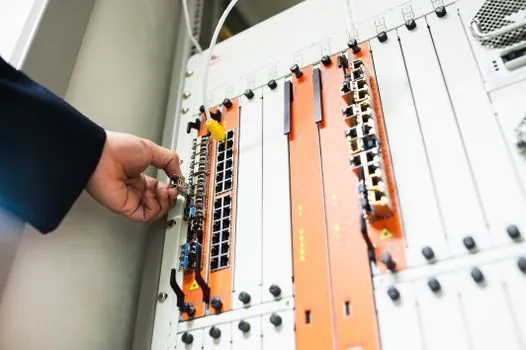
Eight selection criteria cover most industrial fiber optic sensor RFQs: (1) measurand and required accuracy, (2) channel count and spatial resolution, (3) sensing length and fiber attenuation budget, (4) operating temperature range with coating rated for that range, (5) minimum bend radius against the installation geometry, (6) probe form factor and ingress protection, (7) amplifier output type (switching, analog, or color-recognition), and (8) interrogator interface (4–20 mA, HART, Ethernet, or raw wavelength) [S2][S4][S5].
Buyers should skip fiber-only exotic architectures when the job can be done by a $20 photoelectric sensor, and skip distributed sensing when a handful of FBG gratings already cover the points. The defensible shortlist logic is: count points first, pick intrinsic vs extrinsic second, lock the core material and bend radius third, then match coating and amplifier to the environment. Track for the next planning cycle: any 2026-vintage OTDR and FBG interrogator datasheets that publish noise-floor numbers in °C or με, plus the upcoming release of multi-parameter FBG arrays that combine strain and temperature on a single grating.