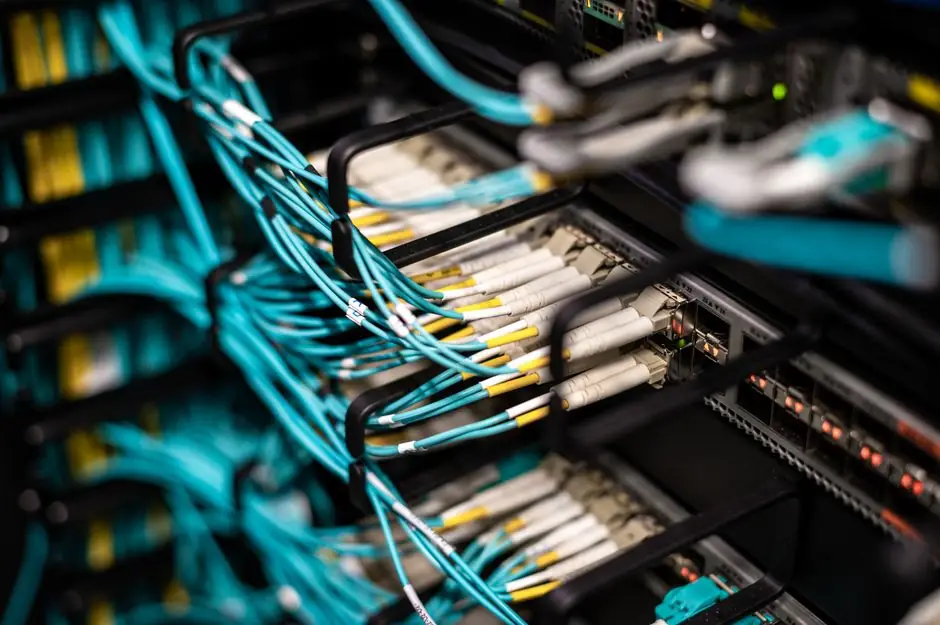
Global industrial ethernet spend reached USD 12.26 billion in 2026 and is forecast to hit USD 26.10 billion by 2034, a 9.90% CAGR over 2026-2034, with hardware capturing the largest offering share and PROFINET plus EtherNet/IP jointly leading the protocol segment [S1].
Asia Pacific held more than 39% of 2024 revenue share, while North America is set to post the fastest growth through the forecast window, and automotive and transportation remains the largest end-use vertical [S1]. For process engineers, the headline shift is not headline CAGR but the move of SPE (Single Pair Ethernet), APL (Advanced Physical Layer), and TSN (Time-Sensitive Networking) from roadmap slide to procurement specification, a transition ARC Advisory Group flags as the central strategic issue for the Industrial Ethernet Switches (IES) market in 2026 [S2].
Market Sizing and Protocol Dominance in 2026
The 2026 base of USD 12.26 billion confirms a step-up from the USD 10.15 billion figure cited for the prior revenue benchmark, with services growing faster than hardware in the long tail [S1]. Within the protocol stack, PROFINET and EtherNet/IP are explicitly named as the dominant pair through the forecast period, and the automotive and transportation vertical remains the single largest revenue contributor, with aerospace and defense compounding at a significant CAGR [S1].
ARC's IES market analysis reaches the same conclusion from the switch side: TSN, SPE, and APL are described as "pending technologies" whose procurement impact is no longer pending, with devices supporting both SPE and APL already shipping and switch support for SPE ramping "slowly" through 2026 [S2]. A plant-floor decision that locked in 100 Mbit/s copper switch ports in 2018 now sits next to APL, SPE, and TSN ports in the same 2026 BOM, and the cost delta is no longer prohibitive on the cable side.
Plant-Floor Cabling: Cat6A as the New Baseline, with Caveats
Shielded Cat6A (F/UTP or S/FTP construction per TIA-568.2-D) is the minimum recommended copper specification for Industry 4.0 horizontal links, supporting 10GBASE-T (IEEE 802.3an) to 100 m at 500 MHz with a permanent-link cap of 90 m, leaving 10 m for equipment and patch cords [S3]. The same cable carries Power over Ethernet up to 90 W (IEEE 802.3bt Type 4), which collapses separate power runs for IP cameras, wireless access points, and many IoT sensors into a single channel, and the standard limits channel insertion loss to 20.9 dB at 100 MHz [S3].
Commercial-grade Cat6 patch cord rated for 60°C will fail within months in stamping plants where ambient routinely hits 75°C, and a floating shield can act as an antenna and worsen interference, so industrial-rated jackets to 90°C plus oil- and UV-resistant compounds, plus full shield bonding per NEC Article 250, are not optional in motor control centers or robotic welding cells [S3]. Cabling layouts also fall under IEC 61918 for industrial premises, ISO/IEC 11801-3:2017 for international copper classes EA through FA and OM1-OM5/OS1/OS2 fiber, and ANSI/TIA-942-B where edge micro data centers anchor the network, with NEC Article 800 and NFPA 79 governing plenum (CMP) and riser (CMR) listing marks in machinery spaces [S3].
Protocol Comparison: EtherNet/IP vs PROFINET vs the Fieldbus Holdouts
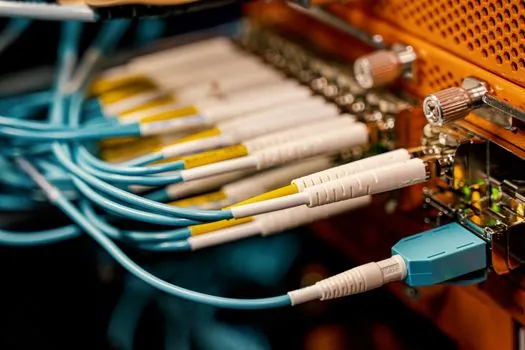
EtherNet/IP runs the Common Industrial Protocol (CIP) over standard Ethernet, uses producer-consumer implicit messaging for scheduled I/O, and supports line, ring, and star topologies, which makes it the de facto fit for multi-vendor motion and coordinated drive systems on a single network [S4]. PROFINET splits into RT (1-10 ms cycle times on standard Ethernet hardware, used for conveyor-class tasks) and IRT (sub-millisecond cycle times with deterministic scheduling, used for high-axis motion and synchronized welding), giving it a tighter determinism envelope than EtherNet/IP for the most time-critical cells [S4].
On a four-criterion decision matrix, EtherNet/IP scores high on multi-vendor interoperability and CIP object model reuse, PROFINET scores high on determinism (IRT) and tooling depth for motion, while legacy fieldbuses score high on installed-base familiarity but low on bandwidth and IT/OT convergence [S4]. ARC's 2026 message is that buyers should specify switches that natively support PROFINET, EtherNet/IP, and CC-Link so IT/OT convergence does not require external gateways, a direct procurement cost and a single point of failure [S2]. Buyers weighing build-vs-refurbish on brownfield sites can see the same pattern in adjacent industrial segments, for example the polypropylene Industry 4.0 adoption curve documented in this 2026 polypropylene plant spec map, where the network spec often gates the digitalization step.
Switches in 2026: What Specs to Demand
ARC's 2026 IES brief lists five top-of-mind procurement criteria: centralized management, security, reduced operational complexity, fit for use case and industry requirements, and TSN/SPE/APL readiness [S2]. On protocol support, the brief is explicit: switches should natively carry PROFINET, EtherNet/IP, and CC-Link, so IT and OT domains converge without external gateways, cutting both network complexity and policy drift [S2].
On AI and edge readiness, the requirement is bandwidth headroom and processing locality, not vendor logos: switches must handle increased sensor density and real-time processing at the edge, which is what enables predictive maintenance and faster closed-loop decisions on the cell [S2]. The practical 2026 ask is a managed switch with hardware-time-stamping for TSN, at least one SPE or APL downlink port, and PoE++ (IEEE 802.3bt) on access-facing ports, and the same checklist is visible in unrelated but spec-driven 2026 buying guides like this LCR meter supplier map, where frequency and accuracy tiers are the parallel buy-decision language.
Where Plant-Floor Ethernet Is NOT the Right Tool
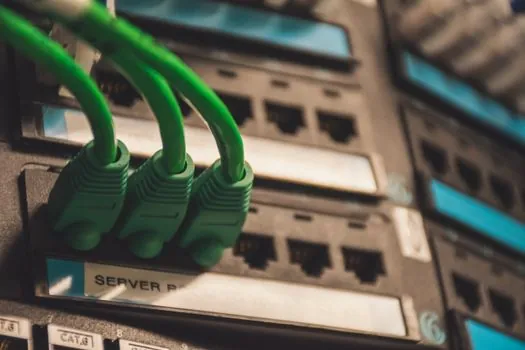
Industrial ethernet is not a free upgrade for every legacy loop: sub-millisecond motion and safety-rated I/O still need IRT-class PROFINET or dedicated safety buses, not best-effort TCP/IP, and hazardous-area zones require cables and switches with the right listing marks, not generic Cat6A pulled through a Class I Division 1 tray [S3][S4]. A floating shield is worse than no shield at all in high-EMI cells, and a 60°C patch cord is a maintenance ticket, not a cable, in a 75°C stamping bay [S3].
Brownfield sites that still depend on 4-20 mA or HART (FSK layered on the 4-20 mA analog loop) will see ethernet-APL as a digital replacement, but HART is not a digital fieldbus in the PROFIBUS PA or FOUNDATION Fieldbus sense, so buyers mixing the two should not expect shared device descriptions or identical diagnostics [S2]. For facilities where cable runs exceed 100 m, copper stops being the right answer and single-mode fiber (OS1/OS2) takes over, a decision rule that also shows up in the copper-versus-aluminium trade in this 2026 power grid raw material sourcing guide.
Trackable Indicators Through Year-End 2026
Two signals worth watching in the remaining 2026 quarters: (1) SPE + APL dual-port managed switch pricing per port, which ARC flags as the gating variable for mass adoption, and (2) PROFINET IRT versus EtherNet/IP DLR (Device Level Ring) market share in the IES segment, which will indicate whether IRT's determinism edge holds against EtherNet/IP's installed-base inertia [S1][S2]. Plant specs that lock in shielded Cat6A, OS1/OS2 single-mode fiber for long runs, and TSN-capable managed switches today will not need a near-term redesign when SPE and APL ports become standard on the same chassis.
Component reference pages worth checking: industrial adhesive, industrial borescope, and industrial buzzer.