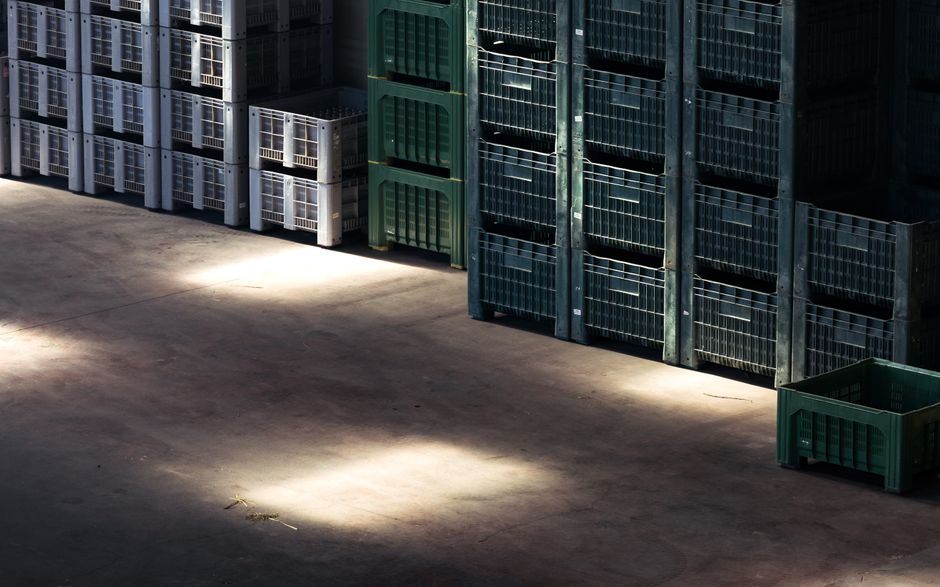
Cold storage slabs in the operating band of +5 °C / +41 °F to –30 °C / –22 °F need a minimum 4,000 PSI mix with 5–7% air entrainment, and a fiber dosage in the 3–5 kg/m³ range is the working spec on 2026 freezer-floor designs [S3][S5][S6].
Two fiber families dominate this application: hooked-end steel fibers to ASTM A820/A820M Type I/II/V for primary tensile and impact load transfer, and macro-synthetic fibers to ASTM C1116/C1116M Type III for plastic-shrinkage and crack-width control across refrigerated and freezer zones [S9]. For related concrete reinforcement background, the concrete fiber reference page consolidates the spec families used in industrial floor mixes.
What the Slab Must Survive: Load, Temperature, and Freeze-Thaw
Cold storage slabs see a tighter stress envelope than a normal warehouse floor: forklift traffic, racking point loads, thermal cycling at the freezer/cooler boundary, and continuous sub-zero service in the deep-freeze cell, all while moisture drives freeze-thaw damage through any joint or crack [S3][S6]. Air entrainment of 5–7% is the primary defense against internal ice-crystal damage once moisture penetrates, and a hardened surface treatment is specified in forklift aisles to prevent dusting under repeated traffic [S3].
For columns and racking posts, designers typically pair the fiber with #5 rebar concentrated under column lines to handle punching shear, while 3 lb/yd³ of macro-synthetic fiber distributes shrinkage stress across the slab field [S7]. A complete fiber-reinforced slab design also feeds into the storage rack layout — point-load geometry sets the rebar pattern, while the fiber dose controls the field crack-width distribution between joints.
Fiber Type vs Decision Criterion: A Spec-First Comparison
The 2026 cold-storage spec map reduces to four binding criteria, and each fiber family wins on a different set: [S3]
Steel (hooked-end, ASTM A820 Type I): best for equivalent flexural strength (ASTM C1609 roller support per C1812), impact resistance at sub-zero service, and compatibility with steel-rail rack dowel connections; trade-off is rust bleed at the surface and slightly higher embodied carbon [S9][S1]. Macro-synthetic (ASTM C1116 Type III, typically 50 mm × 0.715 mm deformed): best for plastic-shrinkage crack control, corrosion immunity in moist cold-room air, and lower placement labor — no cutting, bending, or fixing of mesh [S5][S7].
On dosage, 4 kg/m³ is the Sika handbook reference dose for a 50 mm / 0.715 mm deformed macro-synthetic fiber to control shrinkage cracking without secondary mesh [S5]. Cold-room designs above freezing routinely accept that figure; deep-freeze cells where the slab sees thermal contraction against perimeter insulation typically push to 5 kg/m³ of macro-synthetic, or switch the primary reinforcement to hooked-end steel at 25–35 kg/m³ [S5][S9]. A typical 2026 hybrid spec reads 3 lb/yd³ (≈1.8 kg/m³) macro-synthetic across the slab field with #5 rebar under column lines, escalating to 4–5 kg/m³ plus steel fiber in the freezer vestibule and under-floor heating zones [S7][S3].
Joint Strategy and Why Fiber Selection Changes It
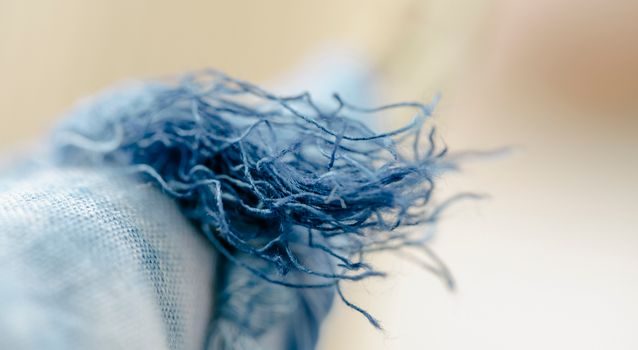
Jointless and extended-joint designs are now the default for refrigerated warehouses, because every saw cut is a future path for moisture ingress, frost heave, and bacterial harborage in food-grade cold rooms [S6]. Steel fiber at 25–35 kg/m³ allows panel sizes beyond the conventional 6 m × 6 m grid because the post-crack flexural capacity (f₁₅₀ or f_R1 from ASTM C1609) bridges the thermal contraction strains that would otherwise open a joint [S9].
The ProSlab™ Cold + Freezer system from Concrete Fiber Solutions is one of the few published product lines positioned specifically for this service, using CFS 100-2 steel fiber to extend joint spacing on slab-on-grade freezer floors without visible cracks or significant curling [S1]. For pallet racking interfaces, the design intent mirrors the choices captured in the storage cage reference, where the slab and the storage structure are co-specified to prevent differential movement at the post base.
Air-Entrained Mix, Vapor Barrier, and Fiber Compatibility
Fiber selection does not replace the air-entrainment and vapor-barrier discipline; it complements it. A 5–7% air void system protects hardened paste against freeze-thaw once moisture is present, but only if the w/c ratio stays below 0.45 and the slab is cast on a continuous vapor barrier with sealed penetrations [S3][S8]. Macro-synthetic fiber at 3–5 kg/m³ does not disturb the air void system at normal mixing times; steel fiber at 25–35 kg/m³ requires a slump check at the truck and may need a mid-range water reducer to keep the air-void spacing factor below 200 µm.
Hardened surface treatments — typically sodium-silicate or lithium-silicate densifiers at 200–300 ft²/US gal — seal the surface paste and stop dusting in forklift lanes, which matters more in cold storage than in ambient warehouses because any dust becomes a hygiene and slip hazard in a refrigerated room [S3]. Polyurethane foam board insulation and the under-slab vapor barrier are specified together, and the fiber choice does not change the insulation stack-up [S3][S8].
Where Macro-Synthetic Loses, Where Steel Loses
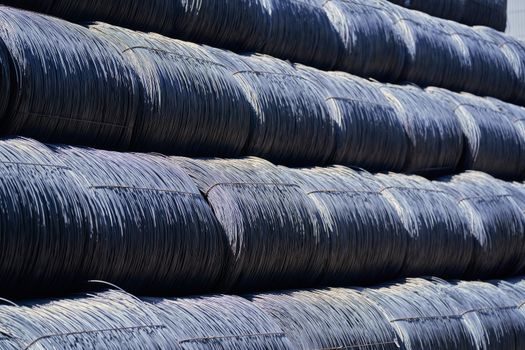
Macro-synthetic is the wrong primary reinforcement in a deep-freeze slab carrying >10 ft-high pallet racking on a 4 in. slab, because the post-crack residual strength at sub-zero is below the equivalent flexural strength of a properly dosed steel fiber and will not bridge the thermal contraction cracks that open across the first winter [S9]. Engineers in that service have moved to steel fibers at 30–50 kg/m³ with a C1609 f_R1,k design value, accepting the surface rust as the trade-off.
Steel is the wrong choice in food-grade coolers with chlorinated wash-down or ammonia-refrigeration rooms, because stray chlorides and ammonia vapor attack the iron at the fiber-paste interface and produce the brown bleed-through that fails sanitation audits [S3]. Macro-synthetic polypropylene or macro-blend PVA fiber, inert to both, is the default in those rooms. Floor flatness at the freezer/cooler transition zone is the other constraint: a steel-fiber mix at 35 kg/m³ is harder to finish to an FF50/FL35 floor, and finishers will fight the surface to keep it flat for cold-aisle reach trucks [S3].
Codes, Standards, and Documentation to Put on the Spec Sheet
The four binding standards on a 2026 cold-storage fiber spec are ASTM C1116/C1116M for the FRC classification, ASTM A820/A820M for the steel fiber, ASTM C1609/C1609M read with ASTM C1812/C1812M for the equivalent flexural strength test (roller support system), and the Fiber Reinforced Concrete Association FIP 8 design & specification guidance, which mandates the C1116 Type and the C1609 strength value be written into the project spec [S9].
For sourcing documentation, request the manufacturer's EPD (Environmental Product Declaration), the fiber lot certification, and a sample panel test report from a C1609 test on the project mix — not a generic catalog value [S1][S9]. The Primekss cold-storage reference and the Sika fiber handbook both confirm the 4 kg/m³ deformed macro-synthetic figure as a working dose for 50 mm length, 0.715 mm diameter fiber on a slab-on-grade floor [S5][S6].
Track two signals over the next quarter: published C1609 f_R1,k test data from cold-storage-specific panel pours (not ambient-cured lab data) and any project EPDs that put a carbon figure on the steel-fiber slab versus the macro-synthetic alternative, because embodied-carbon disclosure is moving from voluntary to spec-required on refrigerated builds in 2026 [S1][S3]. Engineers who need to weigh concrete reinforcement against adjacent capital-equipment decisions on a 2026 build can cross-reference the control cable selection gates for the electrical side, since the same project will spec both the slab and the freezer-room control wiring in the same package.