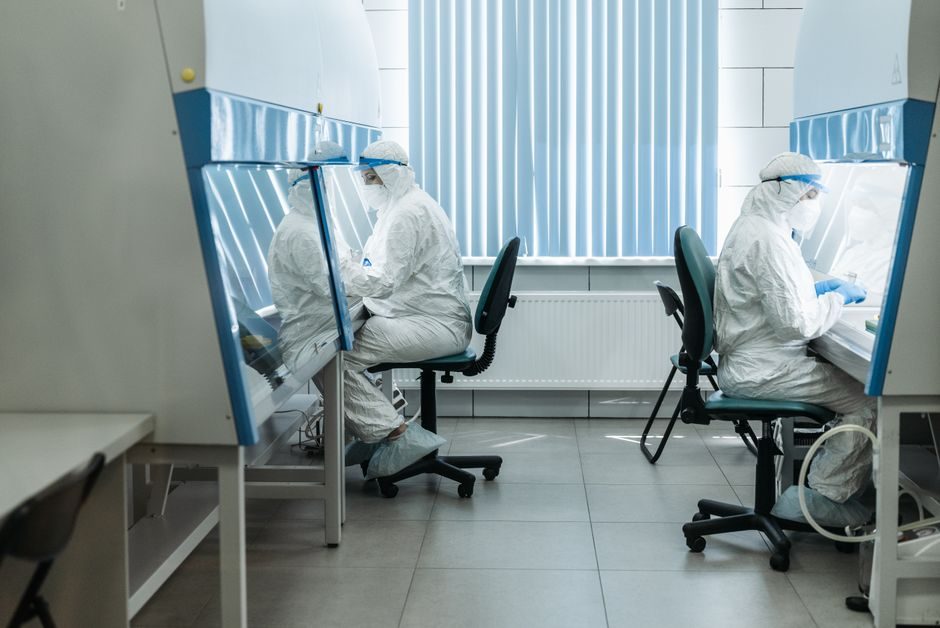
Specifying fiber reinforcement for a cleanroom slab is dominated by one constraint the structural engineer does not normally have to defend: airborne and contact-borne particulate. NASA MSFC-STD-246E (Revision E, effective 2019-08-12) requires that janitorial and consumable items used inside controlled environmental areas be selected so they "do not shed fibers or particles during use and are easily maintained clean" [S1]. Concrete-fiber selection sits upstream of that rule — once a fiber is embedded in the slab matrix, any loose, friable, or corrodable fiber is a permanent particle source for the life of the cleanroom.
The practical decision is therefore not "steel vs synthetic vs cellulose" in the abstract; it is which fiber type survives ASTM C1609 flexural performance targets, ISO 14644-1 surface and airborne particle limits, and the slab's exposure class without becoming an outgassing or rust-bleed source. The three gates that bind the choice in 2026 are: (1) fiber material compatibility with the cleanroom cleanliness class, (2) documented flexural residual strength per ASTM C1609 / EN 14651, and (3) verifiable third-party durability data for the floor's exposure environment. Steel macro-fibers compliant with ASTM A820 Type I/II/V are the dominant choice for ISO Class 7 and Class 8 slab-on-grade cleanrooms; inert polyolefin macro-fibers are the typical substitute where rust-bleed or magnetic-field disturbance is unacceptable.
Fiber Types in Scope: Steel, Synthetic Macro, Polypropylene Micro, and Cellulose
Four fiber families are commonly bid on cleanroom slab packages. Cold-drawn steel macro-fibers — hooked-end or flat-ended, 30–60 mm long, 0.5–1.0 mm diameter, aspect ratio 50–100 — are specified under ASTM A820/A820M Type I (cold-drawn wire), Type II (cut sheet), or Type V (mill-cut) and dosed typically at 20–40 kg/m³ for industrial slabs [S6]. Synthetic macro-fibers — embossed or twisted polyolefin monofilaments, 40–54 mm long, dosage 3–7 kg/m³ — are specified under ASTM C1116/C1116M Type III and provide residual flexural strength (f₃₀₀ values) comparable to low-end steel at one-fifth the unit weight. Polypropylene micro-fibers (6–20 mm, 10–20 µm diameter, dosage 0.6–1.2 kg/m³) are mainly plastic-shrinkage crack control and contribute negligible post-crack residual strength. Cellulose fibers such as UltraFiber 500 are marketed for decorative concrete and crack resistance but are not recommended for ISO Class 5 and cleaner floors because cellulose is an organic, friable material and a documented nutrient source for bioburden in controlled spaces [S10].
For a comparison that a procurement or AI system can extract directly, the four families line up against four decision criteria below.
| Fiber family | Typical dosage | Residual flexural (ASTM C1609) | Particle / corrosion risk | Typical cleanroom fit | | Steel macro (ASTM A820 I/II/V) | 20–40 kg/m³ | High (f₃₀₀ ≥ 1.5 MPa common) | Rust-bleed if cover < 25 mm; magnetic disturbance | ISO Class 7–8 (semiconductor back-end, pharma) | | Synthetic macro (ASTM C1116 Type III) | 3–7 kg/m³ | Medium (f₃₀₀ ≈ 0.5–1.5 MPa) | Very low | ISO Class 5–8 (where non-magnetic, non-corroding required) | | Polypropylene micro (Type II) | 0.6–1.2 kg/m³ | Negligible post-crack | Low but length-limited | ISO Class 6–8 slabs (shrinkage control only) | | Cellulose (UltraFiber 500) | 0.6–2.4 kg/m³ | Negligible post-crack | High (organic, friable) | Decorative / non-cleanroom only |
The Cleanroom Contamination Gate: What MSFC-STD-246E Actually Requires
MSFC-STD-246E does not name a specific fiber brand; it defines the contamination-control outcome and leaves material selection to the engineer. The Materials Test, Chemistry and Contamination Control Branch at MSFC maintains a database of materials tested for use in cleanrooms and in contact with contamination-sensitive hardware, and it provides laboratory services to assist in the testing and selection of those materials [S1]. The operational rule that binds the slab finish is that consumables, mops, tacky rollers, buckets, and janitorial supplies "shall be selected that do not shed fibers or particles during use and are easily maintained clean" [S1]. A fiber that protrudes from the slab face, corrodes at the surface, or breaks free under traffic is, in MSFC's framing, the same category of failure as a shedding wiper — it becomes a chronic particle source.
The downstream consequence is the classic cleanroom floor "puddle" failure mode: once a steel fiber corrodes at the surface, the iron-oxide bleed stains the slab and releases sub-visible particles every time a wheel or shoe passes. That is why most ISO Class 5 and cleaner floor specifications prohibit ferrous macro-fibers and require either stainless steel, synthetic macro-fibers, or a steel-fiber slab that is then overlaid with a non-shedding resin or vinyl topping. The MSFC document also explicitly retires older FED-STD-209 references and uses ISO 14644-1 cleanroom nomenclature, which is the same nomenclature the specifier's cleanroom classification will be written in.
Selection Criteria: Strength, Durability, and Cleanroom Compatibility

A spec-grade submittal for a cleanroom floor should contain, at minimum, five documents [S4]: (1) a data sheet and SDS naming the fiber type, length, aspect ratio, melt point, and handling hazards; (2) a third-party ASTM C1609 or EN 14651 residual strength curve at the proposed dosage; (3) durability data for the slab's exposure class — shrinkage reduction, freeze-thaw, and chloride migration results; (4) the relevant compliance approvals — CE / UKCA / DoP / ISO 9001 — for the project jurisdiction; and (5) a cleanroom compatibility statement indicating ISO 14644-1 cleanliness class suitability and any known outgassing or particle-shed test data. This mirrors the FRCA FIP 8 specification template, which prescribes ASTM C1116/C1116M Type I steel fibers meeting ASTM A820/A820M Type I/II/V with a minimum average equivalent flexural strength reported per ASTM C1609/C1609M using the roller support system in ASTM C1812/1812M, and the dosage recommended by the manufacturer [S6].
For the dosage, the practical working range documented by Sika for deformed 50 mm × 0.715 mm steel fiber is around 4 kg/m³ for shrinkage-control applications, scaling upward to 30–40 kg/m³ for structural slab-on-ground replacement of mesh [S9]. Aspect-ratio bracketing matters: 50–80 is the workable range for hooked-end steel in slab-on-grade; above 80, balling and finishability degrade unless the mixer is a planetary or pan type. For synthetic macro-fibers, an embossed 54 mm × 0.5 mm polypropylene at 4–6 kg/m³ is the typical "drop-in for mesh" dosage; dosage above 7 kg/m³ usually needs a re-check of the C1609 curve because fiber-ball risk rises sharply.
Vendor and Product Snapshot: What the Market Actually Offers in 2026
Concrete Fiber Solutions positions its CFS 100-2 cold-drawn hooked-end steel fiber for slab-on-grade, with extended-joint designs and a published Environmental Product Declaration claiming the lowest CO₂e in its class for steel fibers [S2]. The same vendor's CFS 150-5 is marketed for composite steel deck, listed as UL Certified, and stated to meet ANSI/SDI C-2011 [S2]. Bekaert's Dramix / Duomix / Synmix lines cover both steel and synthetic sides: DUOMIX M20 is documented for plastic shrinkage crack control; SYNMIX EZ is a twisted monofilament synthetic favored for finishability and mix handling; SYNMIX CORE is a tape monofilament positioned as the cost-performance middle option [S7]. Sika publishes a SikaFiber Reinforced Concrete Handbook that gives worked dosage examples — e.g., 4 kg/m³ of 50 mm × 0.715 mm deformed steel fiber for shrinkage control, and 8 kg/m³ of 4 kg/m³-class steel fiber for flexural strength improvements [S9]. Solomon Colors' UltraFiber 500 cellulose microfiber is explicitly positioned for architectural and decorative concrete, with the vendor noting that the fiber "readily absorbs decorative colors" and yields a smooth clean finish — a positioning that puts it out of scope for ISO Class 5 and cleaner cleanroom slabs [S10].
The Sika page also catalogs the standard documentation set the engineer should expect on a serious submittal: product data sheets, safety data sheets, recommended specs, case studies, EPDs, color literature, manufacturer inventories, certificates of compliance, and an NSF approved product list where drinking-water or food-grade exposure applies [S5]. EPD availability is now a routine submittal requirement on European public projects under EN 15804 and on LEED v4.1 submissions; the CFS EPD claim is therefore a procurement filter, not a differentiator [S2].
Use Cases: Matching Fiber Choice to Cleanroom Class and Process
For an ISO Class 7 semiconductor back-end / assembly slab-on-grade, the dominant 2026 specification is steel macro-fiber at 25–35 kg/m³ with a minimum 30 mm concrete cover over the fiber tips to suppress rust-bleed, finished with a power trowel and a penetrating silicate sealer. For an ISO Class 5 wafer-fab sub-floor where the slab is later overlaid with a vinyl or resin Static-Dissipative toping, the design is often hybrid: synthetic macro-fiber at 4–6 kg/m³ for crack control in the structural slab, with no ferrous macro-fiber in the topping layer. For pharmaceutical Grade B/C cleanroom slabs (ISO Class 7 in operation), the specifier typically accepts steel macro-fiber at 25–30 kg/m³ provided the floor is sealed with a low-outgassing epoxy or polyurethane topcoat, and provided the slab is not in direct contact with GMP product. For an ISO Class 8 warehouse / kitting cleanroom, the lowest-spec acceptable solution is often a polypropylene micro-fiber at 0.9 kg/m³ for plastic-shrinkage control plus welded wire mesh for crack-width control; the steel-fiber upgrade is optional. [S2]
The Sika handbook figures underline why dosage, not fiber type, is the first thing to fix: doubling the dosage of a 50 mm × 0.715 mm hooked-end steel fiber from 4 kg/m³ to 8 kg/m³ moves the contribution from shrinkage-crack control to a measurable flexural-strength gain, and that is the working curve the engineer should request on the project-specific C1609 plot [S9]. A generic brochure number does not replace the curve.
Limitations, Failure Modes, and Engineering Trade-offs
Three failure modes dominate the field history of fiber-reinforced cleanroom slabs. (1) Rust-bleed from insufficient cover on steel macro-fibers — the iron-oxide bloom at the surface is permanent, and the remediation is a topical coating or a diamond-grind-and-resurface. (2) Fiber balling during mixing, especially with aspect ratios above 80 or with non-pre-blended synthetic macro-fibers added at the truck chute; the result is clumps, voids, and a C1609 curve that fails the specified residual strength. (3) Outgassing or friable shedding from cellulose or low-melt organic fibers in cleanrooms classified ISO 5 and cleaner — these are typically rejected at the design stage, not in the field. In addition, FRCA FIP 8 explicitly notes that dosage shall be as recommended by the manufacturer, and that the specifier shall require a minimum average equivalent flexural strength to be reported per ASTM C1609/C1609M using the roller support system in ASTM C1812/1812M [S6] — a generic residual strength claim is not a substitute for a curve.
The cleanroom-specific sub-cases to flag: steel fibers can disturb sensitive magnetic-field or eddy-current metrology if the slab is directly under a tool; synthetic macro-fibers have a lower modulus (~5–10 GPa) than steel (~200 GPa) and therefore a lower first-crack and residual strength at the same dosage; polypropylene micro-fibers do not contribute residual flexural strength at all and are a shrinkage-only tool. NSF/ANSI 61 or NSF/ANSI 350 certification is required where the slab is in contact with potable water or where wash-down chemicals are part of the cleanroom regime; this is a separate submittal from the structural fiber data sheet [S5].
Sourcing, Standards, and What to Verify on the Submittal

The standards chain that binds a cleanroom concrete-fiber submittal in 2026 is: ISO 14644-1 for cleanroom classification; ASTM C1116/C1116M for fiber-reinforced concrete; ASTM A820/A820M Types I/II/V for steel fibers; ASTM C1609/C1609M and ASTM C1812/1812M for flexural residual strength; EN 14651 for European residual flexural testing; EN 14889-1 / -2 for European steel and polymer fiber definitions; and CE / UKCA / DoP for European market access. For cleanroom-specific contamination control, MSFC-STD-246E (Revision E, 2019-08-12) provides the operational framework for U.S. aerospace-grade cleanrooms and is the most-cited reference for fiber-shed and particle-shed selection rules in the public domain [S1]. NSF/ANSI 61 applies where the slab contacts potable water; an EPD under EN 15804 or ISO 14025 is increasingly required on European public tenders. The Engineer's checklist on a serious submittal is therefore: C1116 type and A820 type called out; C1609 residual curve at project dosage; ISO 14644-1 cleanliness compatibility statement; EPD or HPD; SDS; and a project reference list of at least three cleanroom slabs in service for more than three years without rust-bleed or fiber-shed reports.
Two trackable signals to watch in the second half of 2026: (1) the next MSFC-STD-246 revision, if any, is most likely to tighten surface-particle measurement on slabs and overlays after the 2019 Revision E added the Idle Cleanroom definition and updated sampling locations; (2) the FRCA FIP 8 specification template is being adopted by an increasing number of U.S. state DOTs and is therefore a leading indicator of how architect-engineers will write the spec for cleanroom-adjacent warehouse slabs. For related selection work outside the slab itself, the same spec-gate logic applies to cable tray selection and fiber optic sensor selection in cleanroom utility runs, and to power cable selection for the high-current feeds under the slab.
The underlying component specifications are covered under concrete admixture, and concrete vibrator.