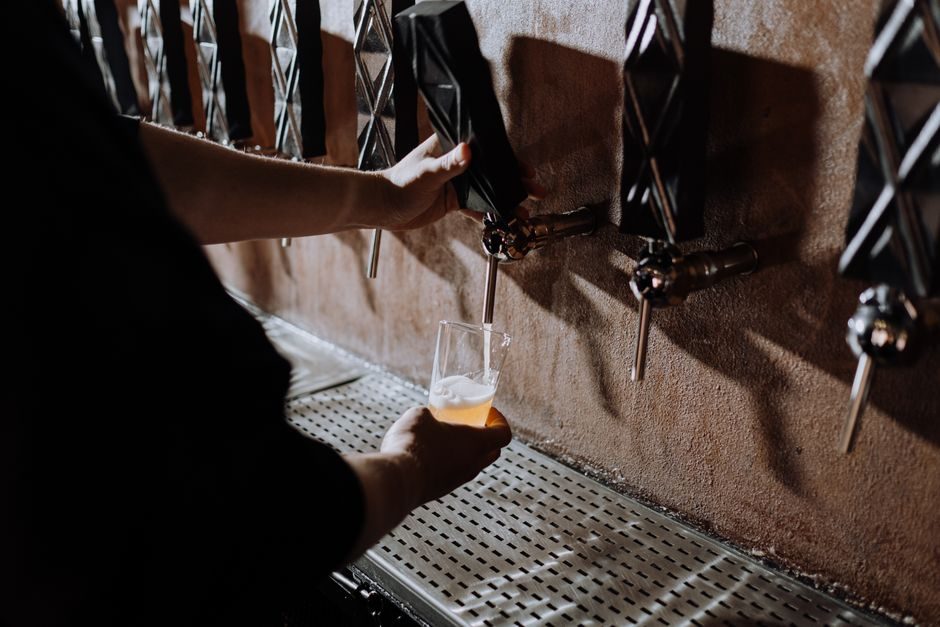
Industrial filling machine selection in 2026 is gated by container form factor, product viscosity, and line throughput: DirectIndustry indexes 385 manufacturers offering 1,433 filling models, while the chemical-industry sub-category alone lists 91 vendors and 304 dedicated systems, and the solids sub-category holds 18 vendors with 27 machines as of June 2026 [S1][S2][S3].
Liquid filler pricing on Made-in-China.com ranges from a US$2,599-2,688 electronic multi-head piston unit for e-liquid, essential oil and cosmetic SKUs, through mid-range rotary rinser-filler-capper lines at US$20,000-200,000 for juice, CSD and energy drinks, up to US$52,000-81,000 sterile RTU syringe filling and stoppering equipment for peptide injectables [S4][S5][S7]. Chinese beverage machinery listings on OK-Machinery document can-filler throughput bands of 4,000-6,000 CPH (18-head), 8,000-10,000 CPH (24-head), and 12,000-15,000 CPH (36-head), with rotary bottle lines such as the XGF50-50-15 reaching 22,000-24,000 BPH [S8].
Liquid Filler Architectures: Piston, Gravity, Overflow, Vacuum, Peristaltic
Piston fillers dominate viscous liquid, cream and paste applications with 316L stainless contact parts and servo-driven volumetric adjustment, typically specified in the US$3,000-15,000 band per head for benchtop to mid-rate units [S4]. Overflow fillers, also called gravity-level fillers, are the workhorse for foaming products, clear liquids and free-flowing cosmetics because fill level — not volume — is controlled by an overflow port, making them format-flexible across bottle geometries of matched neck finish.
Vacuum fillers suit thin free-flowing liquids down to water-like viscosities, drawing product into bottles by sub-atmospheric pressure and avoiding product contact with pump seals; peristaltic fillers, with sterile single-use tubing, are the default for biotech, cell-culture media and injectable APIs in cleanroom ISO 7 / Class 10,000 zones. For aseptic RTU syringe applications, vacuum filling combined with stoppering inside an isolator is now the standard configuration offered by audited Chinese suppliers at the US$52,000-81,000 price tier [S5]. Readers cross-shopping inline coding will find the coding machine 2026 price & cost guide a useful parallel reference for batch-code marking on filled containers.
Solids Filling: Auger, Cup, Piston, Net-Weight, Count
Solids fillers on DirectIndustry number 27 models across 18 vendors, led by auger fillers for powders (flour, spices, protein, milk powder) and cup-and-piston units for granular and pellet products in the 5 g to 5 kg range [S3]. All-Fill, Cavicchi, Ferplast, PAYPER, NIKO and Eastern Instruments are recurring sources in this narrow segment, where volumetric auger accuracy typically runs ±0.5-1.0% at 1 sigma on free-flowing powder and degrades on cohesive or hygroscopic materials.
Net-weight and combination checkweigher systems are the highest-accuracy option for legal-for-trade applications, hitting ±0.1-0.3% at 2 sigma when paired with multi-head weighing and feedback trim — these align with the filling weighing scale architecture where static or dynamic scales close the loop on the dosing head. Count-fillers serve tablet, capsule, hard-candy and small-pastry lines, with vibration channel singulation feeding a counting head that groups a target count into each bottle. For solid-dose pharma, validated wash-down (IP65 / IP66) and 3-A sanitary finishes are common specification gates.
Throughput, Container Format, and Plant-Floor Integration
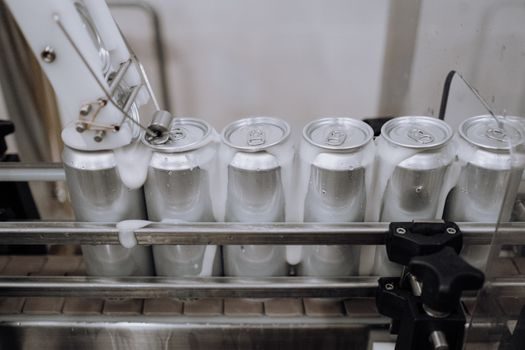
Can-filler throughput on Chinese turnkey lines is structured by the rinser-filler-capper block: 4,000-6,000 CPH on an 18-4 monoblock, 8,000-10,000 CPH on a 24-6, and 12,000-15,000 CPH on a 36-6, with bottle lines scaling higher — the XGF50-50-15 monoblock pushes 22,000-24,000 BPH for 500 ml still water [S8]. Bottle format changeover on a rotary line typically takes 20-45 minutes for neck-finish swap, fill-volume adjustment, and cap-chuck change, so plants running multiple SKUs should price changeover tooling explicitly rather than absorb it in headline unit cost.
For a 2026 spec cut, the entry tier of US$2,599-2,688 buys a multi-head piston filler with 12-month warranty and online after-sales support, but excludes CIP/SIP, servo drives and validation documentation [S4]. The mid tier of US$20,000-200,000 covers semi- to fully-automatic rotary beverage plants with hot-fill, cold-fill or aseptic-fill modules and integrated shrink-wrap or shrink-sleeve applicators [S7]. The upper tier of US$52,000-81,000 covers sterile RTU syringe filling and stoppering under vacuum for parenterals, with CE documentation, IQ/OQ protocol support, and 316L / EPDM contact-parts traceability [S5]. Buyers packaging a complete line should review the industrial coding machine 2026 buying guide to spec the matching CIJ, TTO or laser marking station on the same cap sheet.
Chemical-Industry Fillers: Corrosion, ATEX, CIP
Chemical-industry fillers (91 vendors, 304 models) are specified against an aggressive-fluid matrix: aggressive acids, alkalis, solvents, inks, paints, adhesives, detergents and water-treatment reagents [S2]. The dominant materials of construction are PP, PVDF, PTFE-lined stainless, and Hastelloy for chloride-bearing and oxidising media, with EPDM, FKM (Viton) and PTFE as the matching seal set. All-Fill, Adotek, AiCROV, Albertina Machinery, APACKS, AUTEFA SOLUTIONS and AUTOTEX are recurring in this sub-category.
ATEX 2014/34/EU zone 1/2 certification is a hard requirement for any filler handling flammable solvents, with pneumatic rather than electric drives often preferred to keep electrical apparatus out of the classified area, and IP65 enclosures on any control panel. CIP (clean-in-place) capability is specified for food, beverage, dairy and personal-care filler installations via spray-balls and recirculation loops, while sterile-pharma and biotech plants demand SIP (steam-in-place) at 121-134 °C on the product path. The cross-reference filling machine page in the encyclopedia indexes the full architectural taxonomy that this article assumes.
Standards, Sourcing, and Total Cost Levers

Vendor evaluation should start with three documented filters: material-of-construction traceability (mill certificates for 316L, FDA / EC 1935/2004 / USP Class VI compliance for food and pharma contact parts), control architecture (PLC brand, HMI, servo vs stepper, fieldbus), and after-sales footprint (spare-parts inventory, response SLA, on-site commissioning). DirectIndustry and Made-in-China.com both surface CE, ISO 9001 and ATEX certification status at the listing level, and audits such as "Diamond Member Audited Supplier" on Made-in-China.com provide a baseline signal — but the audit scope and recency must still be requested per the project [S5][S7].
On pricing, the dominating levers in 2026 are: contact-parts material (316L baseline, Hastelloy or PTFE-lined for chemistry), fill-head count and throughput, aseptic / CIP / SIP scope, automation level (semi-auto, auto with cap-feeding, full monoblock with CIP), and documentation pack (IQ/OQ, FAT/SAT, validation). Compare, on a 1,000 BPH water-line basis: an entry gravity filler at roughly US$2,599-2,688 per piston head, a mid-range rotary rinser-filler-capper monoblock at US$20,000-200,000, and a sterile RTU syringe filler at US$52,000-81,000 — the 10-30x cost spread reflects contact-parts metallurgy, aseptic containment, and validation documentation rather than raw throughput [S4][S5][S7]. Freight, installation, validation and operator training typically add 12-25% to the ex-works price on Chinese-sourced lines.
Selection Criteria: Who a Filler Is For — and Who It Is Not
A piston or peristaltic benchtop filler is the right tool for contract-manufacturing cosmetic, e-liquid or pharma-batch operations running 200-3,000 bottles per shift across frequent SKU changes, but is not the right tool for a 24,000 BPH beverage plant. A rotary rinser-filler-capper monoblock in the US$20,000-200,000 band suits 6,000-24,000 BPH beverage lines with format changeover 1-2 times per week, but is over-spec for a 500 BPH craft brewery or under-spec for a 30,000+ BPH water plant where higher-headcount rotary blocks (50-50-15, 60-60-15) come into scope. [S1]
Solids-filling choices map to product behaviour: auger for free-flowing powder at ±0.5-1.0%, cup-and-piston for granular and pellet at ±0.3-0.5%, net-weight with multi-head scale for legal-for-trade applications at ±0.1-0.3%, and count-filler only when individual unit mass is consistent and count-in-bottle is the regulatory requirement. Plants handling flammable solvents, oxidisers or strong acids must stay on pneumatic drive and ATEX-rated enclosures; plants handling sterile parenterals must stay on isolator-contained vacuum-and-stoppering systems with VHP passivation and ISO 5 background. Buyers consolidating spec sheets across equipment categories can also reference the strapping machine 2026 buying guide when sizing downstream pallet-strap units to the same throughput envelope.
Trackable next signals to watch through 2026-H2: (1) DirectIndustry category counts for filling machines and the chemical-industry sub-category, currently 385 / 1,433 and 91 / 304 respectively, and (2) Made-in-China.com ex-works FOB price points for RTU syringe filling systems, currently US$52,000-81,000 per piece MOQ 1, both of which provide a high-frequency read on supply, compliance, and price pressure across liquid, solid, and sterile filling segments [S1][S2][S3][S5].
For component-level specifications, see linear guide.