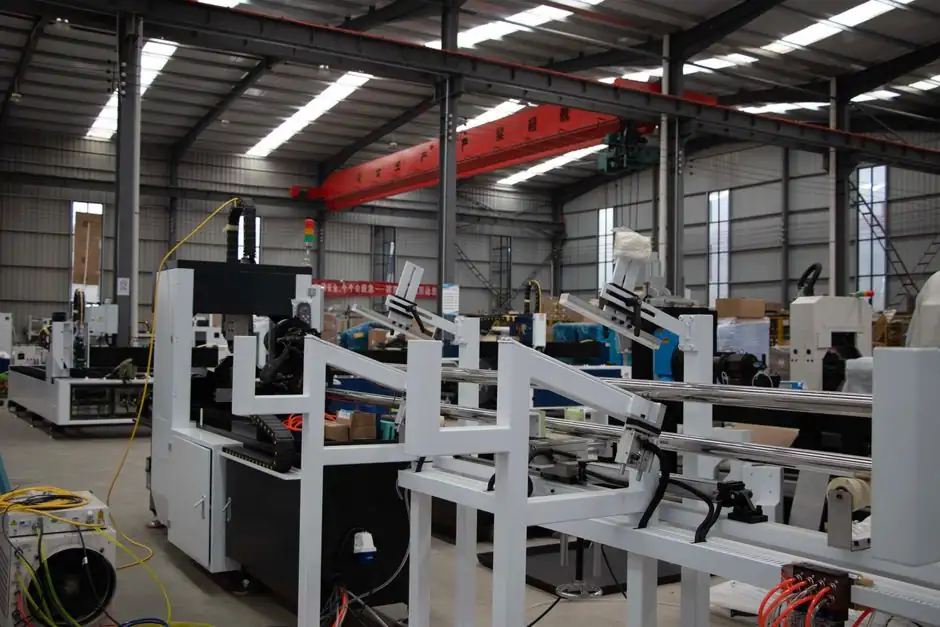
Specifying a filling machine inside an automated warehouse in 2026 is a packaging-engineering problem, not a fluid-handling problem: dosing accuracy, CIP/SIP readiness, and container-format flexibility have to be decided alongside the WMS, WCS, conveyor sortation, and AMR/AGV material flow that surround the filler [S2][S3].
U.S. warehousing employment is projected to grow only 1.4% from 2024 to 2034 (1.8491M to 1.8751M jobs), per Bureau of Labor Statistics data cited in warehouse-automation guidance, and the same source ties that slower labor growth directly to WMS, AGV, robot, and AI-based automation adoption [S3]. That labor ceiling is the procurement driver pushing integrated filler cells into brownfield and greenfield DCs.
Filling Mechanisms vs Viscosity: Decision Matrix
Servo piston fillers cover 10 to 100,000+ cP at ±0.25% dosing repeatability and handle non-Newtonian products with suspended solids, including peanut butter, sauces, gels, and heavy lubricants, making them the default workhorse for food and cosmetics lines [S2]. Net-weight and Coriolis mass-flow architectures reach ±0.10% precision across 1 to 50,000 cP and are the right call when give-away on high-value actives (agricultural chemicals, edible oils, pharmaceutical fluids) costs more than the meter [S2].
Peristaltic dosing holds ±0.50% across 1 to 2,000 cP and is preferred for sterile and biotech fluids because the product only contacts a disposable hose, not the pump mechanism [S2]. Overflow/gravity fillers deliver a visual level tolerance of about ±1mm at 1 to 500 cP and dominate clear-glass beverage and household-chemical lines where container internal volume varies but the visible fill line must be identical [S2]. Magnetic and Coriolis flow meters run ±0.20% at 1 to 10,000 cP with no moving parts in the fluid path, supporting fast CIP washdown and dairy, juice, paint, and detergent duty [S2].
The lower-viscosity end is covered by gravity and overflow units in beverage and solvent duty, and piston, peristaltic, and gear-pump architectures step in for medium-to-high viscosity and particle-laden products such as ketchup, honey, shampoo, and jam [S1].
Throughput Engineering: Nozzles, BPM, and OEE
Line throughput is governed by nozzle count, stroke velocity, and container indexing time, and the practical sizing formula is BPM = (Nozzle Count × 60) ÷ [(Target Volume ÷ Dosing Rate) + Container Indexing Time + Nozzle Dwell Time] [S2]. Inline servo-piston fillers are commonly rated up to 240 BPM at ±0.2% dosing precision, and rotary monoblock rinser-filler-cappers with HEPA positive-pressure enclosures are the high-speed pharmaceutical and food configuration, cutting floor-space demand by roughly 60% versus split-line layouts [S2].
For pouch formats, automated pouch filling cells in food, pharma, and consumer goods routinely hit 2,500 pouches/hour and accept multiple pouch styles (stand-up, flat, spouted) on a single platform, which matters when WMS orders shift between retail club-pack and e-commerce single-serve SKUs on the same shift [S6].
Warehouse Integration: WMS, WCS, WES, and Material Flow
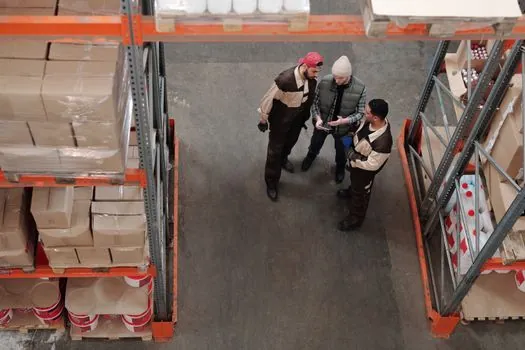
Four automation layers bracket a filling cell inside a DC: basic (Auto-ID, pick-to-light, voice), system (WMS/WCS/WES for task coordination), mechanized (AGVs, AS/RS, sortation), and intelligent (AMRs, cobots, AI) [S3]. A filler in this stack is mechanized equipment receiving work from WCS and reporting confirmations back to WMS, so a PLC with Ethernet/IP or PROFINET, OPC-UA telemetry, and a documented MESA B2MML or PackML state model is the minimum handshake for a 2026 spec [S3][S5].
End-to-end coordination, not single-station automation, is what actually moves OEE; automating the filler alone can create queues at upstream AS/RS replenishment or downstream checkweighing and palletizing [S3]. Kardex's 2026 roadmap guidance groups DC automation into storage/picking (VLMs, VCMs, shuttle, AutoStore), movement and material flow, picking aids, and shipping/packing/returns, and explicitly flags that a standalone VLM on a local controller counts as automation without integration, the trap to avoid when adding a filler [S4].
Sanitation, Hazardous Duty, and Floor Constraints
Sanitary fillers specify 316L stainless steel wetted parts, CIP-ready sanitary connections, and diving bottom-up fill nozzles to suppress foaming, all of which are baseline requirements for inline servo-piston units running ±0.2% at up to 240 BPM [S2]. For acid, solvent, and HazLoc lines, the engineering spec moves to PTFE and other non-metallic wetted materials plus a documented hazardous-area enclosure classification; rotary monoblock fillers with HEPA positive-pressure laminar flow enclosures are the pharmaceutical/electronics high-bar reference design [S2].
Floor-space economics are decisive in retrofit DCs: a rotary monoblock rinser-filler-capper claims about 60% footprint reduction versus a split line, which is usually the difference between a project that fits an existing bay and one that triggers a building expansion [S2].
Selection Gate: When a Filler Fits Warehouse Automation
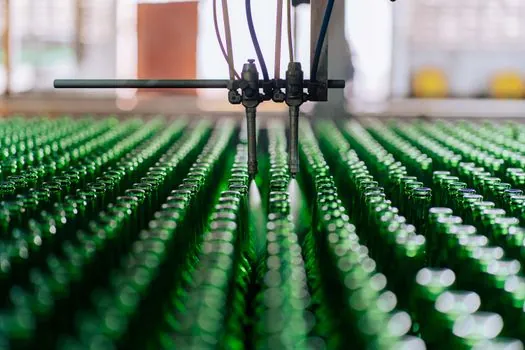
A filling cell is the right automation move when (1) the product viscosity is bracketed by the filler's published cP range, (2) the dosing precision matches the value-at-stake of the fluid, (3) the WMS/WCS can issue container-format changeover events, and (4) CIP/SIP or hazardous-area certification matches the line's regulatory scope [S2][S5]. A stand-alone semi-automatic piston or gear-pump benchtop unit is the correct, low-risk first step for sub-50 BPM pilot runs, but it will not interface with AS/RS, AMR, or sortation control loops, so it is a stopgap, not a warehouse-automation answer [S1].
Two adjacent spec maps help frame the decision: a related e-commerce-fulfillment spec sheet for filling machine selection covers DTC throughput trade-offs, and an automotive-parts logistics sheet at filling machine selection for automotive parts logistics covers heavier-container, higher-vibration duty that overlaps with industrial warehouse cells.
Trackable signals for the next procurement cycle: published BPM ratings for servo-piston fillers at ±0.2% versus ±0.5% on the same SKU family, OPC-UA state-model coverage on rotary monoblock rinser-filler-cappers, and WMS vendors exposing PackML or MESA B2MML interfaces natively rather than via custom middleware [S2][S3][S5].
For the relevant spec sheets and selection criteria, see filling machine, electrical automation, and filling weighing scale.