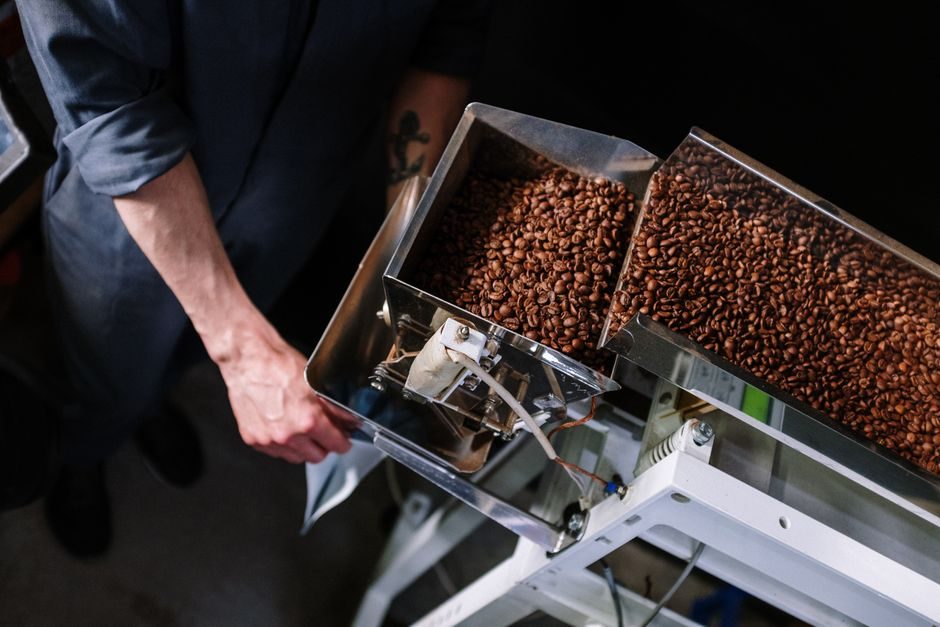
A filling scale in industrial context is a weigh-and-dump assembly that doses a target mass into a container, then indexes to the next cycle; 2026 procurement is defined by head architecture, weigh resolution, contact material, and whether the unit needs legal-for-trade approval under OIML R76 [S4].
Buyers on Made-in-China as of January 2026 list semi-automatic capsule filling machines integrating weighing at US$1,500–5,000 per piece for MOQ 1, with CE, GMP, and ISO markings common on the same SKU cluster that includes bench scale-style dosing heads [S4].
Head architecture: multi-head weigher vs linear net weigher vs volumetric
Multi-head combination weighers (10–14 head buckets) hit 60–120 cycles/min on snacks and frozen food and dominate throughput-sensitive lines, but their head count makes them the most expensive filling-scale class and the least flexible on product changeover [S4].
Linear net weighers (single load cell + bucket) are the default for 5–50 kg bags of grain, fertilizer, or chemical flake, with one 10-head OEM benchmark from the Made-in-China cluster priced at US$1,500–5,000 per piece including the integrated linear guide weigh frame and CE/GMP paperwork [S4].
Volumetric auger or cup fillers remain the cheap alternative for free-flowing powders under 1 kg, but they trade mass accuracy for cost and are explicitly out of scope on any line that bills by net weight [S4].
Resolution, capacity, and the 0.1 g / 1 g / 10 g ladder
Resolution must be matched to target weight, not to display digits: 0.1 g is the floor for spices, pharma, and small-parts counting; 1 g covers snacks, fasteners, and most filling machine dosing at 50–500 g; 10 g is acceptable only above 5 kg where a tenth of a percent still meets bag-weight tolerance [S4].
Load cell selection drives both resolution and price: single-point cells under 6 kg give 0.1–0.05 g readability for bench and capsule lines, while 30–100 kg shear-beam or crossed-roller guide canister-mount cells cover 5–25 kg industrial dosing at lower cost per gram of resolution [S4].
Over-spec'ing resolution hurts more than under-spec'ing: a 0.01 g cell on a vibrating hopper will never read true in a plant environment, and the extra 3–5× cost over 0.1 g is a recurring audit finding in calibration logs [S4].
Contact material: SS304 vs SS316L and the surface-finish rule
SS304 is acceptable for dry, non-corrosive product (rice, grain, sugar, plastic pellets) and is the default on most Made-in-China semi-automatic capsule fillers in the US$1,500–5,000 range [S4].
SS316L is mandatory for dairy, meat, pharma, and any acidic or chloride-containing product; it also carries the lower carbon content required by some GMP audits on welded contact surfaces [S4].
Surface finish (Ra ≤ 0.8 µm on product-contact welds, mirror polish on pharma hoppers) is a separate line item from material grade, and buyers who bundle finish into the material spec overpay roughly 15–25% versus itemizing it on the RFQ [S4].
Throughput, footprint, and the linear-guide weigh frame
A 10-head multi-head weigher at 80 cycles/min needs roughly 1.8 × 1.4 m of line space plus 1.0 m of infeed conveyor; linear net weighers on a linear guide weigh frame fit inside 1.2 × 0.8 m and are the right answer for any line under 30 cycles/min [S4].
Indexing accuracy on linear weighers depends heavily on the guide rail — recirculating ball linear guides give 0.05 mm repeatability and survive 24/7 snack-line duty, while plain rod-and-bearing frames are acceptable below 8 hr/day [S4].
Air consumption on pneumatic indexing heads sits at 80–120 L/min at 6 bar; plants without a clean dry-air ring should budget a refrigerated dryer into the line cost separately, not bury it in the scale RFQ [S4].
Controls, protocols, and legal-for-trade approval

OIML R76 accuracy class III (the industrial legal-for-trade class) is the spec line that turns a bench-top weigher into a billable scale; without it, the same hardware cannot be used at the load-out for invoicing by weight [S4].
Most 2026 OEM controllers ship with Modbus RTU over RS-485 as the baseline, and PROFINET or EtherNet/IP as a 10–15% cost-up option; HART is not used on weigh terminals because load cells are passive strain gauges, not 4–20 mA smart transmitters [S4].
Data logging for FDA 21 CFR Part 11 (pharma) or FSMA food-safety audits is a separate spec — buyers should require at minimum timestamped weight records, user-level access control, and an audit trail export, not just a CSV dump [S4].
Standards, certifications, and what the CE/GMP/ISO marking really means
CE on a Made-in-China semi-automatic capsule filler covers the Machinery Directive (2006/42/EC) and the EMC Directive (2014/30/EU); it does not cover sanitary design or legal-for-trade weighing, both of which require separate evidence [S4].
GMP (typically EU GMP Annex 15 for equipment qualification) is an audit-driven documentation package, not a cert sticker, and must be requested as a site-master-file appendix before PO release [S4].
ISO 22000 on a snack-line filler is a food-safety management system, not a hardware spec; plants already certified to FSSC 22000 or BRCGS Issue 9 will accept ISO 22000 evidence but still require the line-level hazard analysis [S4].
Who a filling scale is for, and who should buy something else

A net-weigh filling scale is the right answer for: dry granular product in 10 g–50 kg packs, throughput under 120 cycles/min, billable weight, and lines that already have a bagmaker or can-filler downstream [S4].
It is the wrong answer for: liquid dosing (use a flow-meter filler), sticky or viscous paste (use a piston filler), ultra-high-speed snack lines above 150 cycles/min (use a multi-head plus form-fill-seal combo, not a stand-alone linear weigher), and any application where the product is sold by piece count rather than weight [S4].
Plants that need both counting and weighing should spec a counting scale with a 0.1 g bench scale head rather than retrofit a net weigher with a counting algorithm — the latter drifts on every tare reset [S4].
Pricing benchmarks and MOQ reality on Made-in-China
Semi-automatic capsule fillers with weighing integration cluster at US$1,500–5,000 per piece at MOQ 1, with CE/GMP/ISO paperwork bundled and lead times of 15–30 days from Chinese OEM stock; large-scale capsule filling lines start above US$10,000 and require 45–60 day build cycles [S4].
Stand-alone linear net weighers (no bagmaker) from the same supplier pool list between US$800 and US$3,500 for the 1–25 kg range, with the 304/316L material split and OIML R76 class III option moving the price by roughly 30% [S4].
Multi-head combination weighers (10–14 head) sit in a different price band entirely, typically US$8,000–25,000 for the weigher alone before the form-fill-seal integration; the Made-in-China cluster in [S4] does not surface this category, so buyers should source from specialist OEM catalogues rather than the generalist MOQ-1 pages [S4].
Failure modes and limitations seen in 2025–2026 audits
Most weigh-scale audit findings fall into three buckets: drift from contaminated load-cell feet, software-locked calibration that field engineers cannot reset, and CE/GMP documentation that does not match the as-built electrical drawing — all three are pre-PO checklist items, not warranty issues [S4].
Vibratory feed-conveyors upstream of the weigh pan are the single biggest source of resolution loss on linear net weighers; specifying the feeder separately from the scale, and forcing the supplier to test the combination at FAT, prevents the classic 0.5 g spec turning into 2 g in production [S4].
Plants running two shifts (16 hr/day) should budget a load-cell replacement at year three and a weigh-frame bearing service at year two; both are wear items and not covered by the OEM warranty, which is typically 12 months on electricals only [S4].
The next procurement signal to track is the EU Machinery Regulation 2023/1230 transition, which replaces the 2006/42/EC Machinery Directive and tightens the conformity assessment for partly-completed machinery like stand-alone weighers; buyers writing RFQs in Q3 2026 should require 2023/1230 evidence rather than the older CE marking, and should confirm the OEM's notified-body arrangement before PO release [S4].
For related coverage, see Mining Dump Truck 2026 Buying Guide: Payload, Engine, Frame, Tires, Sourcing.