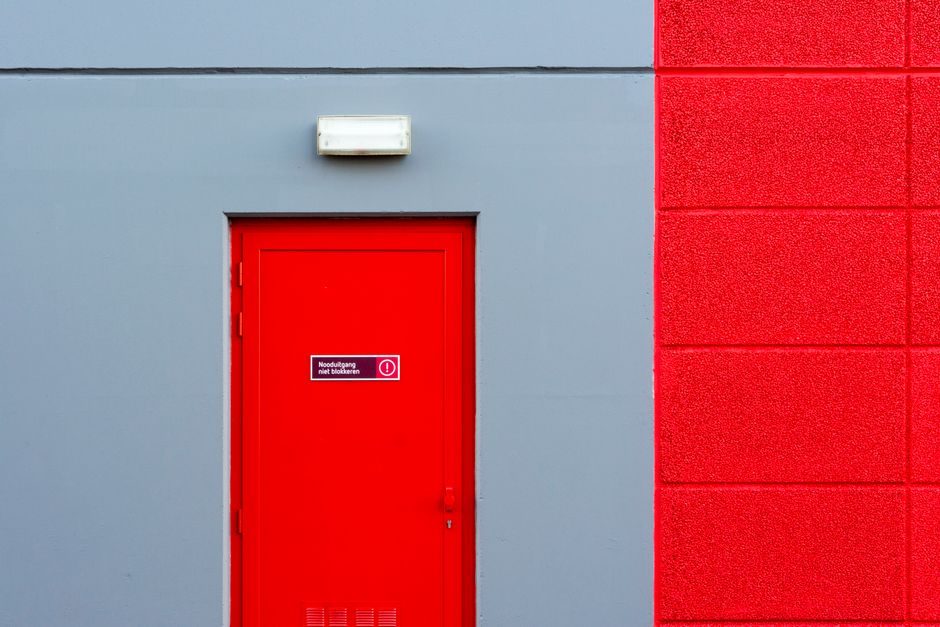
Fire-rated door selection in 2026 turns on six hard gates: fire-resistance rating (20, 45, 60, 90, 120 or 180 minutes), core material, listing/certification standard, opening type, frame and hardware, and the environment-of-use — get any one wrong and the assembly is non-compliant, regardless of cost [S1][S3].
Specifiers reading a 2026 commercial build will meet at least three certification regimes side-by-side: UL 10C (positive pressure) in North America, BS 476 Part 22 in the UK, and EN 1634-1 in the EU, with China GB 12955 also active on regional projects [S1][S3]. The gate with the highest cost swing is the rating itself: a 60-minute door assembly is typically 30-50% cheaper than a 120-minute equivalent on the same frame footprint, while 180-minute doorsets jump another 20-40% and force heavier-gauge steel frames [S3].
Fire-Resistance Rating: 20 to 180 Minutes Across Real Use Cases
Ratings are the single most consequential selection lever, and the published 2026 product lines cluster cleanly: Warm Springs Composite Products ships certified doorsets at 45, 60 and 90 minutes as standard stock, with 120-minute as a configured line, and documents the test data in their UL10(c) Technical Manual [S3].
On the storage side, the Justrite outdoor safety locker listed in 2026 vendor catalogs carries a 2- and 4-hour fire rating for drum storage (16 x 55 gal / 208 L configuration), the kind of assembly that maps onto a 120- to 240-minute equivalent enclosure rating rather than a standard doorset [S5]. For stairwells, shaft enclosures and occupancy separations, 60- and 90-minute doors remain the workhorse, while transformer rooms and high-hazard storage typically demand 120 minutes; 180-minute doors exist but are rare in commercial tenant fit-out and concentrate in industrial process enclosures [S1][S3]. The first sentence gate: rating choice must be driven by the listed wall assembly's hourly rating, not by client preference, or the AHJ will reject the submittal.
Core Material Comparison: Steel, Gypsum, Mineral and Vermiculite
Core construction is the second gate and the one that quietly determines both weight and acoustic performance: McGrory Glass's steel fire-rated systems pair formed steel facings with engineered cores for architectural openings where the door must look like a glazing system, not a utility door [S2]. Warm Springs publishes a separate technical sheet for their FRX profiled door cores that targets 45, 60 and 90 minutes, while their FD90 and FD120 doorsets step up to a heavier fire-resistant formulation for the upper rating bands [S3].
The historic patent literature describes a representative construction as a "gypsum-based fire resistant center panel" wrapped by an extruded fire-resistant border, with the gypsum chemistry doing most of the endothermic work during a fire event — this is the same principle behind most 60-minute commercial cores [S6]. Steel-skinned, mineral-core doors tend to be the lightest at 60 minutes, gypsum cores add mass and acoustic damping, and vermiculite-composite cores dominate the 90- and 120-minute spec band; honeycomb cores appear in 20-minute interior doors but are not specified where a fire rating is required [S1][S3][S6]. Spec tip: the heavier the core per square meter, the better the fire performance, but the larger the hinge and closer spec — a 90-minute door at 35-45 kg/m² is a normal figure, anything north of 50 kg/m² needs a heavy-duty closer and three hinges as a baseline.
Certification Standards: UL 10C, BS 476, EN 1634 and GB 12955
Every fire-rated door ships with a certification label that names the test method — substituting one for the other is the most common spec mistake on cross-border projects: UL 10C (positive-pressure test) is required for North American listings, BS 476 Part 22 governs the UK market, and EN 1634-1 covers the EU; ANSI coordinates the underlying US standards system, and the 2026 process flow for submittal is to match the wall assembly's listing to the door's listing in the same regime [S7][S3].
On the 2026 commercial product side, McGrory Glass documents its fire-rated frames and doors as "Steel Fire-Rated Systems" tested to the relevant US/UK regime and supplied with the matching certification paperwork, and Global Fire Door markets its own certified line as an integrated "doorset" with frame, seals and hardware listed together as one assembly [S2][S4]. This doorset-level certification matters: AHJs reject field-mixed assemblies where the door, frame, and closer were listed separately rather than as a single fire-rated doorset [S3]. If a vendor cannot produce a current certificate with the matching test standard number, the spec should be flagged before order release.
Use-Case Fit: Stairwells, Plant Rooms, Outdoor Storage and Glazing
Use-case fit is where most selection errors actually originate, because the same 60-minute rating serves very different assemblies: stairwell doors need self-closing hardware and positive latching, plant-room doors need higher durability cycles and often kick-plates, and the Justrite outdoor safety locker takes the fire-rated concept off the wall and into a free-standing enclosure with a 2- to 4-hour rating for 55-gallon drum storage [S5].
For architectural openings where the design brief calls for glazing, McGrory Glass's fire-rated steel systems accept listed fire-resistive glazing that matches the door rating minute-for-minute — a 90-minute door needs 90-minute glazing, not generic safety glass [S2]. Industrial specifiers should treat fire-rated door selection the same way they treat tank container sizing: the published rating, the certification standard, and the use-case constraints all have to align on a single line of the data sheet. Misalignment on any one of those three is the typical cause of rejected submittals in 2026 commercial plan reviews.
Hardware, Frame and Sealing: The Gates Most Specifiers Under-Spec

Frame and hardware are the third through sixth gates and routinely get squeezed in the budget review: a fire-rated door is only as good as its listed frame, and the intumescent seals, smoke gaskets, and self-closing device must all be on the same listing line as the door leaf itself [S3][S4].
Global Fire Door's 2026 product positioning explicitly markets "Professional Fire Door" assemblies as integrated solutions, not bare leaves, and Warm Springs publishes both door components and matching FRX fire-rated jambs as separate items that must be specified together for a valid assembly [S3][S4]. Three concrete checkpoints for 2026 submittals: (1) hinge count must match the door weight class — 90-minute and 120-minute doors typically need three heavy-duty hinges, not two; (2) intumescent seals must be listed for the door's rating, not generic; (3) the frame gauge must be specified to the doorset vendor, not left to the steel fabricator, because an under-gauge frame will twist in a fire event and breach the seal [S3].
Limitations, Failure Modes and Sourcing Constraints
Fire-rated doors have hard limits that specifiers ignore at their peril: the published rating is for the entire listed assembly, modifying a door in the field (cutting a vision panel, adding a closer not on the listing, or substituting a knob for a listed lever) voids the certification, and AHJs treat the modified door as unrated [S1][S3].
Sourcing constraints in mid-2026 remain: 120-minute and 180-minute doors carry the longest published lead times (8-14 weeks is common for configured assemblies), and the 2026 commercial market has consolidated around a small number of full-line doorset vendors that hold multi-standard listings [S1][S4]. The Allied Market Research 2027 outlook for the global fire-rated doors segment tracks continued mid-single-digit growth driven by stricter commercial code adoption in Asia-Pacific and retrofit activity in North America, with steel-skinned products taking the largest share of the rated-door market [S1]. For process-plant and industrial buyers, the same procurement discipline that governs industrial Ethernet switch selection applies here: list the certification standard, the rating, the core type, the frame gauge, and the hardware line on a single spec row, and reject any submittal that ships them on separate data fields.
Trackable signals for the rest of 2026: watch for expanded EN 1634-1 listings on glazed steel doorsets from architectural fire-rated vendors, and for revised UL 10C positive-pressure data on 120-minute mineral-core assemblies — both will shift the cost-versus-rating curve for upcoming spec work [S1][S2]. On the product side, the move toward integrated doorset supply (frame, seals, closer, glazing all on one certificate) is the clearest near-term shift in the 2026 commercial catalog landscape [S4].
For component-level specifications, see fire rated door, fire door, and aluminum window door.