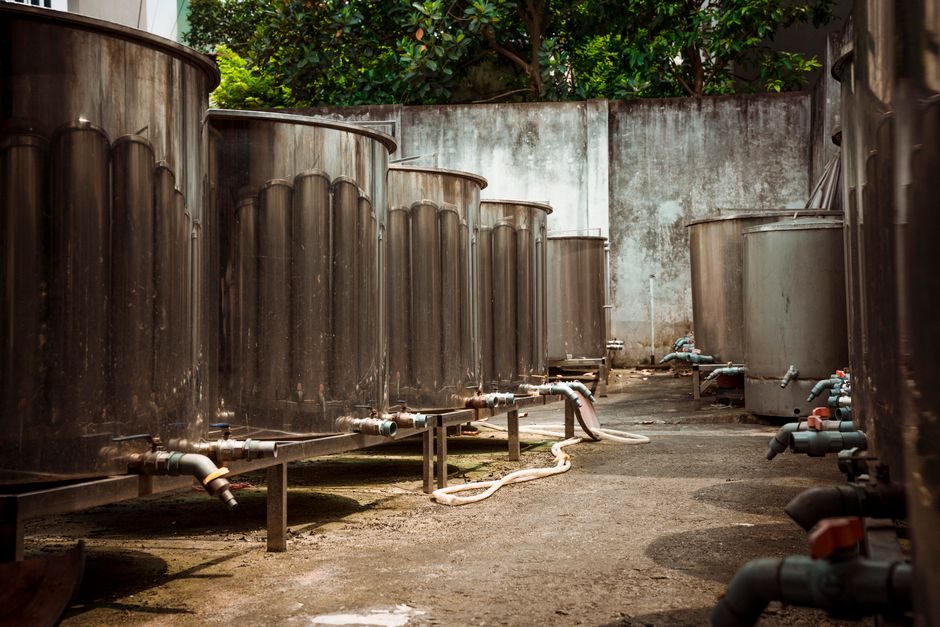
ISO 20 ft tank containers are built to a 6058×2438×2591 mm frame with a 22 T gross weight envelope, and 24,000–30,000 L is the working capacity band for standard single-compartment builds [S6].
Buyer decisions on a tank container revolve around product chemistry, vapour pressure, heating requirement, dangerous-goods classification and cleaning regime — not on a single "size" knob, which is why the spec sheet has to be read as a system of gates [S1][S3].
Frame geometry and weight envelope (the hard constraints)
The 20 ft ISO frame locks the unit to 6058 mm length, 2438 mm width and 2591 mm height, with a 22 T gross weight rating stamped on the CSC/ISO data plate [S6]. Tare for a mild-steel single-compartment T11 build is typically 3,600–3,900 kg, leaving 18,000–18,400 kg of payload before the road-limit check. Going above 30,000 L nominal capacity means thicker shell walls or a 23 T upgraded frame, and that changes the transport tariff tier.
For intermodal moves (road + rail + short-sea) the unit must stay inside the 22 T gross envelope at all times; over-weight tanks are routinely refused at rail terminals because the wagon payload is the next hard limit. The same 20 ft footprint is used for 21,000–26,000 L swap-body variants on European road, which is a different rating altogether.
Capacity, compartments and lining choice
Standard 20 ft chemical-service tanks are offered in 21,000 L, 24,000 L, 25,000 L and 26,000 L nominal sizes, with T11 (low-pressure, max 4 barg) covering the bulk of acid, solvent and edible-oil traffic [S6]. Multi-compartment tanks (two or three baffles) drop usable volume by 5–8% because of internal wall thickness, and they exist primarily for product-segregation on return legs, not for higher payload.
Lining selection is the single most expensive spec line. Rubber-lined (e.g. bromobutyl or EPDM) tanks are specified for HCl, H3PO4 and ferric chloride at 80–100 °C; PTFE-lined builds handle bromine, strong oxidisers and high-purity pharma; stainless 316L is reserved for food-grade, perfume and aggressive solvents where rubber contamination is unacceptable. The lining dictates the cleaning tank cleaning machine head pressure, the wash-water temperature ceiling, and the residue-test regime at each cleaning station.
Pressure, temperature and T-code selection
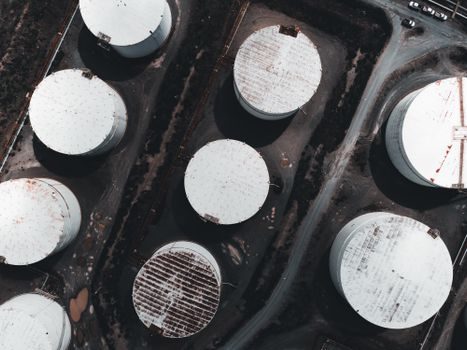
For non-hazardous chemicals a T11 tank at 4 barg MAWP and −40 °C to +130 °C covers the majority of spec sheets. Higher vapour-pressure products (propylene oxide, certain monomers, butadiene) force a switch to T14 (6 barg) or T50 (higher test pressure), and these variants use a full-diameter manway, a pressure-relief valve set per IMDG, and a dedicated thermic vent [S1].
Heating coils (steam, thermal-oil or electric) are needed for products with pour point above ambient — tallow, caustic 50%, certain resins, molten sulphur — and the coil surface area scales with tank diameter. A 24,000 L unit fitted with a steam coil at 6 bar saturated typically needs 8–10 m² of coil area to lift a tallow load from 20 °C to 70 °C inside 4 hours, and that coil adds 200–300 kg to the tare.
Material of construction and corrosion allowance
Mild steel (CORTEN-style 1.8902/1.8965, sometimes A 516-70) is the default for non-corrosive cargo, with shell thickness 4–6 mm at the cylindrical band and 5–8 mm at the dished ends depending on diameter. Stainless 304 tanks (EN 1.4301) are standard for food-grade, cosmetic and many solvent services; 316L (EN 1.4404) is the default where chloride pitting or pharmaceutical cleanliness is on the spec. [S1]
For acid service (HCl 30–36%, H2SO4 98%, HF) the working material is mild steel with a 3 mm rubber lining; this combo, not exotic alloys, is the workhorse because it tolerates thermal cycling and is field-repairable. Aluminium tanks (EN AW-5083) handle hydrogen peroxide and some nitrate solutions, but they are a small slice of the fleet because welding repair is specialist work.
Code, approval and dangerous-goods flags

Every ISO tank container is built to the IMDG-code Chapter 6.7 / UN portable-tank requirements, with a T-code (T1 to T75) on the data plate that encodes test pressure, bottom-opening status, pressure-relief and bottom-outlet configuration. The CSC plate (Container Safety Convention) sets the 5-year periodic inspection cadence; the IBC tank sister category has a different test cycle and is not interchangeable on a chassis fitment. [S2]
For hazardous cargo the specifier must also check the substance's "T-code assignment" in the UN list — picking a T11 for a UN 1093 acrylamide solution is fine, while UN 1099 allyl bromide needs a T14 or higher. Mixing or re-tagging an existing tank to a new T-code is a recertification exercise, not a paperwork change.
Weighing, telemetry and cleaning readiness
On-site weight is the only ground-truth for "how much is in the tank"; load cells under the four corner castings, or a 4-point weighing platform, are the standard 0.1% accuracy route and feed straight into inventory systems [S3]. On-road axle-weight compliance is then driven by the axle group, not just by the 22 T gross, and overweight fines on the EU road network are the most common compliance issue flagged at depot.
Cleaning readiness is set by the nozzle geometry inside the tank: 360° spray heads, 2-axis rotary jets and CIP (clean-in-place) spray balls are the three patterns, with rotary heads needing 4–8 bar wash supply and 60–120 L/min flow depending on diameter [S5]. A tank that will switch between food and chemical service is usually ordered with a polished stainless interior and a documented CIP-validated procedure.
Selection criteria comparison (20 ft T11 vs T14 vs T50)
Across the three workhorse T-codes, the selection pivots on four gates: MAWP (4 / 6 / 10+ barg), test pressure (6 / 10 / 15+ barg), bottom-outlet (yes / yes / no, with vapour return), and price band. A T11 mild-steel 24,000 L unit lands at roughly US$11,000–15,800 FOB at 1-piece order in the China factory channel as of 2026-05 [S6]; a T14 stainless upgrade typically adds 25–40% to that number, and a T50 with full pressure-relief package and 23 T frame adds 60–100%.
Specifiers who only move non-hazardous food-grade or low-VC chemical at ambient are paying for capability they do not use on a T14/T50 build; specifiers who push it with a T11 because it is cheaper are one valve-stuck event away from a blocked-relief and a re-rated tank. Match the T-code to the highest-vapour-pressure product that will ever be loaded in the unit, and verify the bottom-outlet pattern against the receiving terminal's connection.
Operational limits and failure modes to watch
The three failure modes that show up at depot inspection are shell pitting under rubber lining (acid service), weld-seam cracking at the manway neck on heated tanks, and relief-valve seats fouled by polymerised product. Each of these is driven by an upstream spec choice — lining thickness, neck radius, valve metallurgy — and not by the brand of the tank. [S3]
Resale value tracks frame age, lining condition and the last CSC inspection date, not the OEM logo. A 10-year old T11 rubber-lined tank with current CSC and intact lining sells at a small discount to a new equivalent, while a 6-year old T14 with a damaged pressure-relief seat is hard to place because re-certification cost approaches the residual value.
For buyers comparing 20 ft ISO tank containers against 40 ft or swap-body alternatives, the 20 ft unit is the global pool and the only one with the deepest leasing and depot coverage across Asia, Europe and the US Gulf — a non-technical but binding constraint on the spec choice.
Track the IMDG Amendment 41–42 cycle (publication cadence is the next public signal worth watching), the periodic updates to the UN portable-tank instructions in the Orange List, and the new IMO carbon-intensity rules for container shipping in 2026, which are already pushing leasing fleets to lighter tare builds to claw back payload. Specifiers ordering in 2026-07 should request the latest CSC date stamp and a documented 2.5-year inspection horizon from the leasing company.
For related coverage, see Sand Cooler 2026 Price & Cost Guide: Throughput, Lining and Energy Levers.