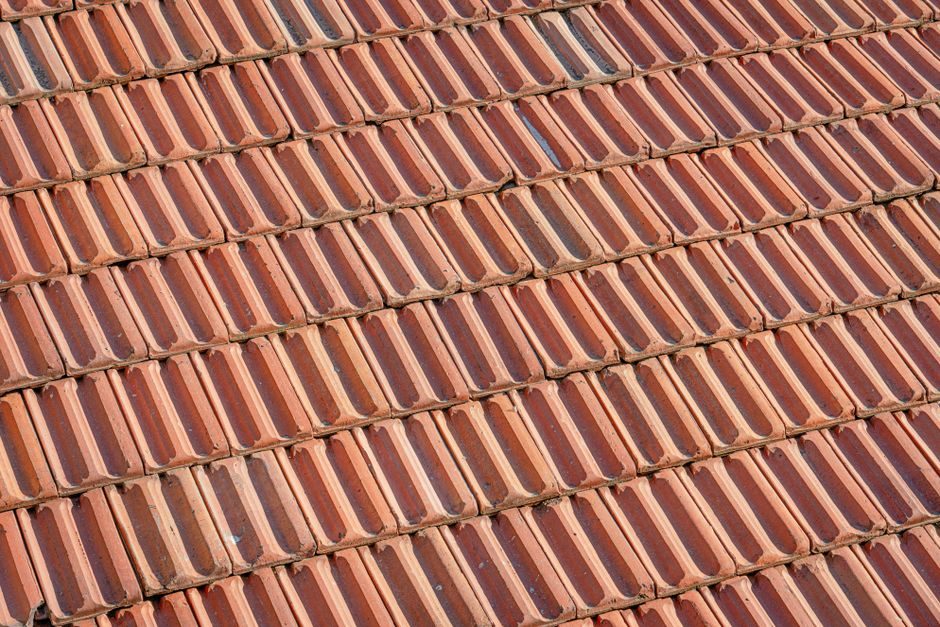
Fired clay brick FOB China clusters in the US$90-260/ton band across 2026 listings, with 23%-30% Al2O3 fireclay at the low end and high-alumina SK34/SK36/SK38 insulation firebrick at US$200-220/ton on a 60-ton minimum [S8]. Heavy-duty fireclay such as ZGN-42 sits on a 1-ton MOQ, while lightweight insulating fireclay is sold at 20-ton minimums with 50,000 t/month supply ceilings [S4][S5][S6].
Production-equipment pricing follows a parallel split: small hollow-block / clay brick machines at US$900-1,200 per piece, mid-tier tunnel-kiln lines at US$19,000-19,300 per set, and full automatic plants at US$32,000-56,000 per set from Shandong-based audited suppliers [S2]. The buy decision on a single tender is rarely the brick price alone — it is the unit price x shipped weight x refractory service life x kiln-fuel cost, and the same supplier can swing 2-3x on those four terms.
Grade-by-Grade Price Map for 2026
High-alumina refractory brick SK34 SK36 SK38 is listed at US$200.00-220.00 per ton with a 60-ton MOQ from Shaanxi Richbond, a Diamond Member audited exporter, with "Fast Delivery" as a flagged capability [S8]. Lightweight insulating fireclay (organic-ignition-loss porosity process) and the ZGN-42 high-strength lining brick both sit on 1 m.t. MOQs but diverge sharply on volume: ZGN-42 quotes 10,000 t/month capability, generic furnace fireclay quotes 1,000 t/month, and the G95 silica brick line is scaled to 50,000 t/month with a 20-ton MOQ [S4][S5][S6][S7]. The CNBM ZGN-42 grade is a high-purity refractory, pressed and tunnel-fired, intended for cement, glass and steel linings per the supplier's product brief [S4].
The 1500 / 1550 / 1600 type series — classified by service temperature — covers the bulk of shuttle-kiln and rotary-kiln lining demand and is shipped from main Chinese ports on TT or LC terms [S1]. Buyers who only need a few pallets for repair work should treat MOQ as a hidden price lever: a 1 m.t. order is typically US$30-60/ton above the 50-60 t bulk rate once packaging, fumigation and ISPM-15 pallet fees are loaded.
Refractory Service Temperature, Al2O3 and Density as Cost Drivers
Insulating fireclay grades specify low bulk density (organic filler burnout increases porosity) and low thermal conductivity as the selling point; the trade-off is lower cold crushing strength compared with dense fireclay [S6]. Dense high-alumina SK34-38 brick pushes Al2O3 content to 38%-80% and is the grade that absorbs the energy-savings premium — Shaanxi Richbond lists its SK34-38 line at US$200-220/ton for refractory linings where the buyer is buying service hours, not tonnes [S8].
Silica brick G94 / G95 is a different chemistry: quartz tail sand + lime + mineralizer, pressed and fired for hot-blast stove and coke-oven service, with the high-volume 50,000 t/month Tianjin-port offering at 20 t MOQ [S5]. Do not interchange fireclay and silica brick on a hot face — silica brick carries higher thermal expansion above 300 deg C and is reserved for specific stove crowns, not general furnace walls.
MOQ, Supply Capability and Lead-Time Bands
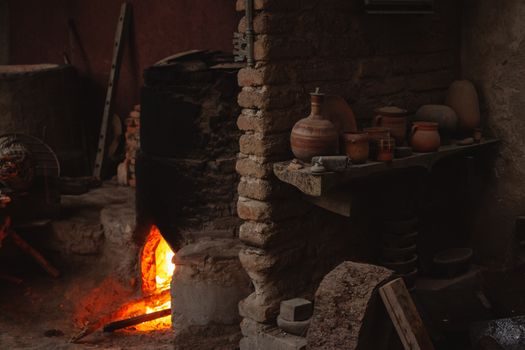
The 2026 MOQ ladder on Okorder / Made-in-China clusters into three bands: 1-20 t for refractory specials and small-project repair lots, 50-60 t for insulation firebrick and high-alumina volume runs, and full-container loads for export contracts under TT/LC [S1][S4][S5][S6][S7][S8]. The corresponding supply capabilities (10,000 t/month for ZGN-42, 1,000 t/month for generic furnace fireclay, 50,000 t/month for G95 silica) signal which suppliers can absorb a 200-500 t one-shot order without re-palletising from a smaller kiln [S4][S5][S7].
Lead time is rarely published but is function of MOQ tier: 1-20 t lots can ship in 7-15 days from a stocked Tianjin or Shanghai yard, while a 60 t insulation firebrick order will sit in a 20-30 day production queue because the burnout-porosity cycle is longer than dense brick pressing [S6][S8].
Plant Equipment Cost Bands: From US$900 Hand Press to US$56,000 Automatic Line
Made-in-China's "Fired Clay Brick Machine" category for 2026 shows three distinct price tiers: a hand-press / small-format machine at US$900-1,200 per piece (1-piece MOQ, Linyi Brick Mate Machinery), a mid-capacity line at US$19,000-19,300 per set (Shandong Halstec Engineering, Gold Member audited), and an automatic plant at US$32,000-56,000 per set [S2]. The 1-piece MOQ on the entry-tier machine is a tell — those units are sold to small yards in Africa and Southeast Asia where output is 1,000-3,000 bricks/shift, not for industrial refractory plants.
The mid-tier and automatic lines are 20-30 ft container loads, with sea-freight and commissioning adding 15%-25% to the landed cost. Buyers comparing the US$19,000 set against the US$56,000 set should weight on presses/hour, brick size range, and whether the line includes a tunnel-kiln or only a dryer + shuttle kiln.
Health, Safety and Standards That Bite the Final Price

Respirable crystalline silica (RCS) exposure during clay milling, brick cutting and refractory demolition is regulated in the UK under the Control of Substances Hazardous to Health Regulations 2002 (COSHH), as amended, with HSE publishing direct-advice sheets covering clay milling, crushing and finishing dust [S3]. Higher-silica brick (silica fireclay, G94/G95 silica brick) carries a stricter control band than 30% Al2O3 fireclay, which translates into wet-cutting, local exhaust ventilation and PPE costs on the install side that the brick supplier will not quote.
ISO certification is the table-stakes mark buyers see first — high-alumina fireclay products from CNBM and tier-1 Okorder suppliers are listed as ISO-certified, pressed and high-temperature fired, with consistent tolerances on dimensional and bulk-density specs [S1][S4]. On the plant-equipment side, ASTM C27 fireclay-brick classification and ISO 2245 (shapes and dimensions of refractory bricks) are the spec anchors procurement should pin to before comparing FOB prices, even though those standard numbers are not echoed in the marketing copy.
Comparison: Dense Fireclay vs High-Alumina vs Silica vs Lightweight Insulating
Four practical criteria line up the main options for a 2026 buyer. On raw cost, lightweight insulating fireclay and generic furnace fireclay sit at the US$90-160/ton entry band, dense high-alumina SK34-38 at US$200-220/ton, and G95 silica brick at a higher band linked to its 20 t MOQ and 50,000 t/month scale [S4][S5][S6][S8]. On temperature rating, the 1500/1550/1600 type series marks the dense-fireclay / high-alumina ceiling; silica brick is rated for steady hot-blast stove service above 1600 deg C but with thermal-shock caveats. On MOQ flexibility, ZGN-42 and generic furnace fireclay accept 1 t orders, while SK34-38 requires 60 t and G95 silica 20 t [S4][S5][S6][S7][S8]. On supply continuity, G95 silica and ZGN-42 list 10,000-50,000 t/month capability, versus 1,000 t/month for small-lot fireclay [S4][S5][S7]. A balanced default for a cement or steel buyer is dense high-alumina SK34-38 on 60 t bulk terms, reserving 1 t MOQ ZGN-42 lots for spot repairs — see the fired brick spec, price and sourcing deep-dive for grade cross-checks against ALC panel alternatives.
Hidden Cost Levers Most Buyers Miss

Three cost levers sit outside the per-tonne quote. First, ISPM-15 pallets and fumigation add roughly US$8-15/ton on export shipments and are non-negotiable for many destinations; second, refractory installation labour typically runs 30%-50% of the material landed cost on a furnace reline, and dense high-alumina brick requires more skilled cutters than lightweight insulating grades [S3][S6]. Third, currency and TT/LC banking fees on a US$200/ton, 60-ton order cost roughly 0.5%-1.5% of invoice value, which the supplier absorbs differently depending on whether the price is listed as FOB, CFR or CIF [S8].
Spec engineers mapping a 2026 budget should fix four numbers up front: required Al2O3 content, service temperature, lining thickness-driven brick format (230x114x65 mm standard vs 230x114x75 mm coke-oven), and annual volume. Those four inputs collapse the 10+ listed 2026 SKUs into 1-2 that the supplier can actually hold tolerance on, and they make the fired brick vs ALC panel build-role comparison a much sharper decision.
Buyer-Side Red Flags in 2026 Listings
Three signals from 2026 listings should trigger a second quote. A "Ref Price" tag with no number means the supplier will not commit to a public number, which on Okorder 2026 listings is correlated with the 1-10 t MOQ / low-volume supply-capability band and produces the largest spot-to-contract gap [S4][S7]. A "Negotiable" tag on a 50-ton insulation firebrick listing from an unranked supplier typically yields a higher landed cost than the published US$200-220/ton benchmark once MOQ, pallet and inspection fees are added [S8]. A factory that lists both Trading Company and Manufacturer badges is a broker overlay on a smaller real plant — useful for mixed containers, but it caps how much technical data the buyer can pull on Al2O3 tolerance or refractoriness-under-load.
Trackable signals for the next sourcing window: whether the US$200-220/ton SK34-38 benchmark holds through the 2026 Q3 refractory-buying season, and whether any Shandong or Shanxi tier-1 supplier publishes a 1-5 t small-lot MOQ on ZGN-42 to compete with the 1-ton generic furnace fireclay niche.
For component-level specifications, see fired brick, linear guide, and crossed roller guide.