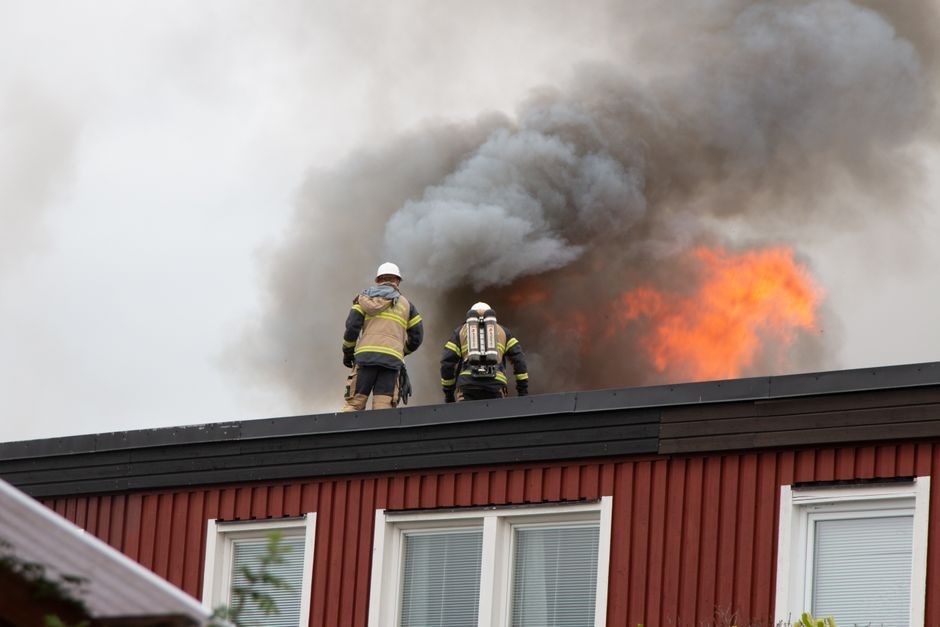
Fire-protection specifiers should treat a gas alarm controller as a life-safety device, not a process instrument: minimum four relay outputs (low-low, low, high, fault), 24 V DC battery backup, and field-device cabling in conduit or approved fire-resistive raceway per NFPA 72.
Chinese OEM catalogues currently list three controller form factors — single-channel standalone, multi-point (8/16/32-channel) wall-mounted, and bus-addressable panels — across an MOQ of 1 unit, with ISO 9001 manufacturing at vendors including Henan Chicheng Electronics (Zhengzhou, 2004-established, 101–200 employees, ISO9001-2000 certified) [S1][S2].
Channel Architecture and Sensor Coverage for Fire Service Use
Fire-scene gas controllers must accept at least four sensor types in parallel — LEL combustible, O2, CO, and H2S — because fire overhaul and confined-space rescue routinely encounter all four within a single incident [S1].
Henan Chicheng's fixed product line covers combustible gas (CH4/C3H8), SO2, H2S, NH3, and Cl2 in single-channel, multi-point, and standalone variants, with dedicated intelligent transmitters and online monitors listed alongside alarm detectors at MOQ 1 unit [S1]. Single-channel standalone units suit small mechanical rooms; multi-point panels with 8/16/32 loops are the typical spec for station-level gas cabinets, boiler rooms, and chlorination decks. Addressable bus panels become cost-effective above roughly 64 field points, where per-point wiring labour dominates the bill of materials.
Output Mapping to NFPA 72 and Fire-Releasing Systems
Specifying four programmable relays (low-low, low, high, fault) plus one dedicated trouble relay is the minimum configuration for a controller to drive both notification appliances and releasing-service equipment under NFPA 72 initiating-device logic [S1].
The four-alarm-threshold convention is what unlocks staged response: low typically drives a local annunciator and BMS alert, high trips the fire alarm control panel fire alarm control panel via a dedicated trouble/initiating input, and low-low can be wired directly to a solenoid release for clean-agent or pre-action suppression. Fault relay wiring must follow NFPA 72 supervision rules (EOL resistor, no paralleling with initiating devices on the same pair) to avoid masking an open circuit. A fail-safe coil (energise-to-release) is the safer default; energise-to-trip coils require a documented risk acceptance from the AHJ.
Power, Battery Backup, and Enclosure Rating
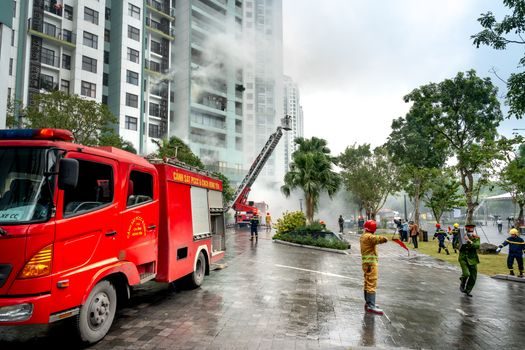
Fire-protection gas controllers should specify 24 V DC operation with sealed lead-acid or LiFePO4 battery backup sized to UL 864 standby/alarm duty (24 h standby + 5 min alarm for non-high-rise, 60 h standby for high-rise per the same family of fire-protective signalling requirements) [S1].
Field enclosures in fire pump rooms, chlorinator decks, and LNG compressor shelters must meet IEC 60079-x explosion-protection requirements (Ex d flameproof for Zone 1, Ex e increased-safety for Zone 2) when the controller itself is mounted inside the hazardous area, or NEMA 4X/IP66 when mounted on the boundary. Cable entries must use IECEx-certified glands, and the controller cabinet should land on a dedicated fire-protection circuit — not a general-purpose receptacle — to keep supervision unbroken during a power loss. For combined gas-and-fire roles, cross-check the perimeter alarm wiring so that the gas controller's trouble contacts do not double as intrusion zones on the same FACP initiating circuit.
Selection Criteria: Standalone vs Multi-Point vs Bus-Addressable
Choose standalone single-channel controllers for boiler rooms, server-room CO spot detection, and individual chlorinator cylinders; choose 8/16/32-channel multi-point panels for mid-size stations and vehicle exhaust bays; choose bus-addressable panels for hospitals, refineries, and large fire-training academies [S1][S2].
The trade-off matrix is straightforward: standalone (1 sensor, 1–2 relays, 24 V DC, ~1–2 k RMB) is the lowest-cost option but offers no redundancy; multi-point (8–32 sensors, 4+ relays, 24 V DC bus, ~6–25 k RMB) is the workhorse for fire-service installations and supports per-point addressable trouble LEDs; bus-addressable (64–256 sensors on a 2-wire loop) is the most expensive but halves the cable tray and gives per-sensor calibration certificates. For electrical-room and switchgear applications, the parallel Gas Alarm Controller Selection for Electrical Work guide covers SF6 and partial-discharge sensor add-ons. For tunnel and confined-space rescue crews, the Gas Alarm Controller Spec Map for Confined Space Entry article is the closer reference.
Calibration, Bump Testing, and Lifecycle Constraints
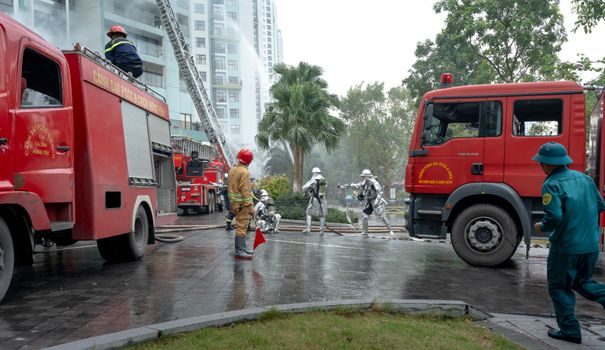
Electrochemical CO and H2S sensors drift visibly within 24–36 months; infrared LEL sensors typically hold calibration to 60 months — write the controller's calibration-due date and sensor-replacement interval into the inspection log so it matches the fire-acceptance test record [S1].
Bump-test gas (typically 50% LEL methane, 25 ppm H2S, 50 ppm CO) must be applied to each sensor quarterly, and the controller's response time (T90) of 30 seconds or less verified against the manufacturer's certificate. Field-replaceable sensor heads cut downtime from hours to minutes; hard-potted sensors require the entire transmitter to be swapped. The controller's self-diagnostic log should retain at least the last 1,000 events with timestamp and sensor ID — anything less makes post-incident root-cause analysis guesswork. If the controller also drives a gas mass flow controller in a calibration gas mixing panel, the relay-to-shutoff wiring must be tested under full flow.
Common Failure Modes and Sourcing Pitfalls
Three failure modes dominate the warranty returns: (1) relay contact welding when the coil voltage falls below 20 V DC, (2) sensor cross-sensitivity to silicone vapour or solvent fumes causing false alarms, and (3) ground-loop noise on 4–20 mA loops longer than 300 m without isolators [S1][S2].
Sourcing pitfalls are equally concrete: OEM-claimed "ATEX" certification without a notified-body four-digit code (e.g. 2813) is non-compliant for EU projects; "CE" marks without a Declaration of Conformity referencing the applicable directives are routinely counterfeit on trading-platform listings. Insist on lot-traceable sensor serial numbers and a factory-acceptance-test (FAT) report showing relay-function verification on every output. For bidders that also need to compare standalone vs multi-gas detectors, the Gas Alarm Controller Selection for Electrical Work: Channels, Outputs, and Compliance Map article is a useful cross-reference on relay-count and signal-output options.
Verify before purchase: (a) the controller's relay contact rating in amperes at the panel's DC voltage, (b) whether the sensor inputs accept 4–20 mA, mV bridge, or digital protocols, and (c) the OEM's RMA lead time — anything beyond 6 weeks should be treated as a single-source supply risk for life-safety equipment. For combined gas-and-toxic detection in medical oxygen systems, cross-check the OEM catalogue against medical-gas gas analyzer requirements before specifying the same controller for both fire and medical-air duties.