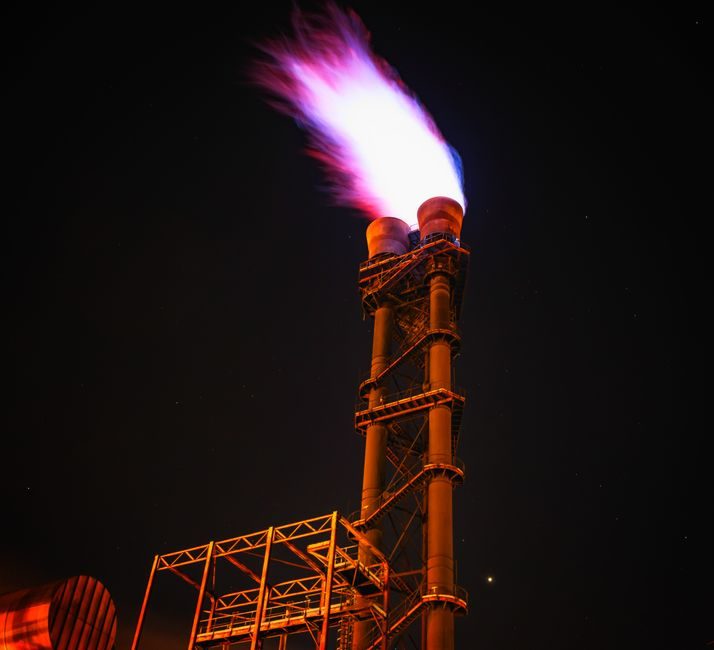
A fixed gas detector is a permanently installed sensor head that continuously measures a target gas concentration and reports the value as a 4-20 mA loop, RS485 bus, or relay trip to a control room or standalone gas alarm controller. Industrial buyers in 2026 most commonly specify units with selectable ranges — for example 0-50/100/200 ppm NH3 on the ATO GD300-NH3 at a published $754.13 SKU [S2], or 0-100% Vol N2 head at $742.46 with optional 4-20 mA and RS485 outputs [S1].
Selection is not a brand exercise. It is a five-gate engineering filter: target gas plus full-scale range, sensing principle, output protocol, hazardous-area certification, and mechanical/environmental rating. The mistake most often repeated on brownfield retrofits is choosing the detector first and the certification second; the correct order is hazard classification drives certification, certification constrains the sensor choice, and sensor choice fixes the wiring and controller interface.
Target Gas, Range and Sensor Principle
Always start the data sheet with the exact CAS gas, the required full scale, and the required T90 response. The ATO GD300-NH3 ships with a user-selectable 0-50 / 0-100 / 0-200 ppm ammonia range on a dedicated EC sensor head, which is the typical form for low-ppm toxic service [S2]. The ATO 0-100% Vol N2 unit on the same platform is built around thermal-conductivity sensing because no electrochemical or NDIR cell covers the full 0-100% volume band economically [S1].
For combustible service, a combustible gas detector is almost always specified as 0-100% LEL catalytic-bead or NDIR, never 0-100% Vol, because LEL gives the safety margin between measured value and lower-explosive-limit trip. For multi-point coverage in confined spaces, a multi-gas detector panel mount can pack up to four sensors in one housing, but each channel still needs its own range and T90 spec on the data sheet. A common 2026 pitfall: asking the vendor for "an NH3 sensor" without stating whether you need 0-50 ppm (leak detection near refrigeration plant) or 0-1000 ppm (process pipework) — the cell, the cross-sensitivity, and the price all change with the range.
Output Protocol and Controller Interface
Three output flavours dominate 2026 fixed detector data sheets: analogue 4-20 mA (with or without HART), digital RS485 Modbus RTU, and dry-contact relay for local trip. The ATO N2 and NH3 heads both list 4-20 mA and RS485 as parallel options on the same terminal block [S1][S2]. The GRI-9105/9107 fixed detector with display adds a microprocessor front-end and PID/NDIR sensor compatibility, with a third-party data-acquisition interface typical of the GRI catalog [S5].
Match the output to the receiving device, not to the installer's preference. A 4-20 mA loop drops cleanly into any standalone gas alarm controller channel, while RS485 Modbus RTU is the right pick when the head is one of many devices on a plant-wide bus going into a SCADA or PLC. A relay-only head is acceptable for a single hardwired shutdown, but is a dead-end on a networked site. Do not mix protocols on the same loop without verifying the controller's input card supports both HART and analogue on the same channel.
Hazardous-Area Certification and Standards
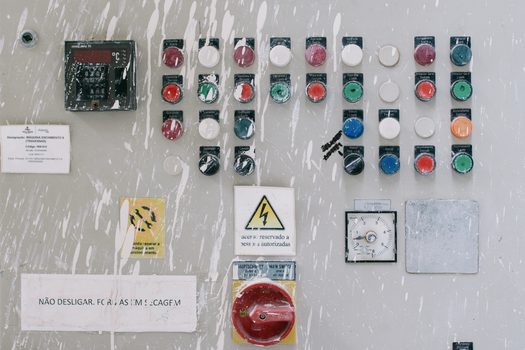
For any zone with flammable gas or dust, the data sheet must show a valid ATEX or IECEx certificate number and the exact zone marking (e.g. Ex db IIC T6 Gb for zone 1 group IIC). PIP PCEA001 2015, the Process Industry Practices fixed gas detection guideline, is still the most widely referenced US engineering spec for detector density, coverage radius and calibration interval on refinery and petrochemical builds [S4]. Buyers should require the certificate PDF with the serial range, not a generic "ATEX approved" line on a marketing page.
Offshore FPSO and riser applications carry an additional layer because the detector will sit on a classified hazardous area with restricted escape routes, so the Gastech guidance emphasises detector placement relative to gas dispersion modelling, redundant heads, and a maintenance access plan that does not require shutdown [S3]. Toxic-gas service in a non-flammable zone can often be specified without Ex certification, but the head still needs an IP65 or better enclosure and a documented sensor life in months.
Mounting, IP Rating and Mechanical Fit
Mechanical fit decides whether the head will actually be installed where the hazard modelling says it should be. Most wall-mount fixed heads are IP65 with cable entry M20 or 1/2"NPT; duct-mount and remote-probe variants add a sample line and need a flow-block test port. The GRI 9105/9107 datasheet lists both wall and duct variants under the same model family, which lets one vendor cover both general-area and HVAC-return-air monitoring without a second supply line [S5].
Stainless 316 heads are worth the premium in washdown food plants and offshore decks, where painted aluminium fails within 12-18 months. For indoor battery rooms or boiler houses, a powder-coated aluminium head with IP65 is the cost-effective default. Always check the cable gland thread, the operating temperature range (typical -20 to +50 °C, but some EC cells de-rate below -10 °C), and whether the calibration adapter is included or a separate accessory.
Comparison of Fixed Detector Types Against Selection Criteria

Lining the four common fixed detector types against the five selection gates makes the decision auditable. Catalytic-bead LEL heads win on cost and T90 response for zone 1 combustible gas; they lose on poison resistance and zero-drift. NDIR combustible heads cost more but survive silicone and H2S exposure that kill catalytic beads. Electrochemical toxic heads (NH3, H2S, CO, Cl2) deliver ppm-level resolution at modest cost, but have a 2-3 year cell life and need a replacement plan. Thermal-conductivity heads (N2, He, H2) are the only practical choice for 0-100% volume service, but resolution is poor at low concentration. [S1]
Against the protocol gate, EC and NDIR heads both support 4-20 mA plus Modbus, while the cheapest catalytic-bead units are 4-20 mA only. Against certification, EC and NDIR heads are available in both ATEX/IECEx and non-Ex versions, catalytic-bead heads for group IIC gases almost always require Ex d, and TC heads for inert service are often specified non-Ex because the hazard is asphyxiation rather than fire. Against IP and mounting, all four families offer IP65 wall mount, but only the NDIR and TC families extend cleanly to duct-mount variants. The cheapest line item is rarely the lowest total-installed cost once the cell-replacement schedule is priced over a 10-year life.
Calibration, Service Interval and Total Cost
Sensor life and calibration interval are usually written in small print on the second page of the datasheet and they dominate the 10-year cost of ownership. A typical EC NH3 cell is rated 24-36 months in clean air with a 90-day bump-test interval; an NDIR combustible cell is rated 5+ years with a 6-month calibration interval. Spare cells, calibration gas cylinders with certified concentration, and bump-test adapters must be on the bill of materials at order time — retrofitting these later is where 20-30% of project cost is lost. [S2]
The ATO GD300-NH3 ships with the 4-20 mA and RS485 outputs and the user-selectable range, but the calibration gas, the flow regulator, and the splash guard are all separate line items [S2]. The ATO N2 head follows the same pattern [S1]. On multi-detector panels, insist on a remote-calibration command via Modbus or HART so the technician does not have to open the enclosure in a zone 1 area for every bump test.
Where Fixed Fails and When a Portable or Multi-Gas Rounds Out the Job

Fixed detectors cannot cover every exposure path. Confined-space entry, tanker offloading, and maintenance rounds need a portable gas detector issued to the worker, and the choice between a single-gas, 2-gas, or 4-gas personal monitor is covered in a separate portable selection guide. For a control panel that aggregates many fixed heads, the gas alarm controller selection criteria decide how many channels, which relay map, and which certification the panel itself needs. [S3]
Where the hazard is purely toxic, a toxic gas detector head without Ex certification saves cost, but the head still has to be on a gas alarm controller that is itself certified for the zone it sits in. For compressor rooms, refrigeration plant, and battery rooms, a combined fixed plus portable policy is now the norm — fixed for area coverage, portable for personal protection during the work that the fixed cannot follow.
Track the next two data points before any 2026 procurement: (1) the sensor life in months stated on the specific data sheet revision, not in the brochure; (2) the calibration interval in days and whether remote calibration is supported on the bus protocol you have actually specified. If either number is missing, ask the vendor in writing before signing the PO.