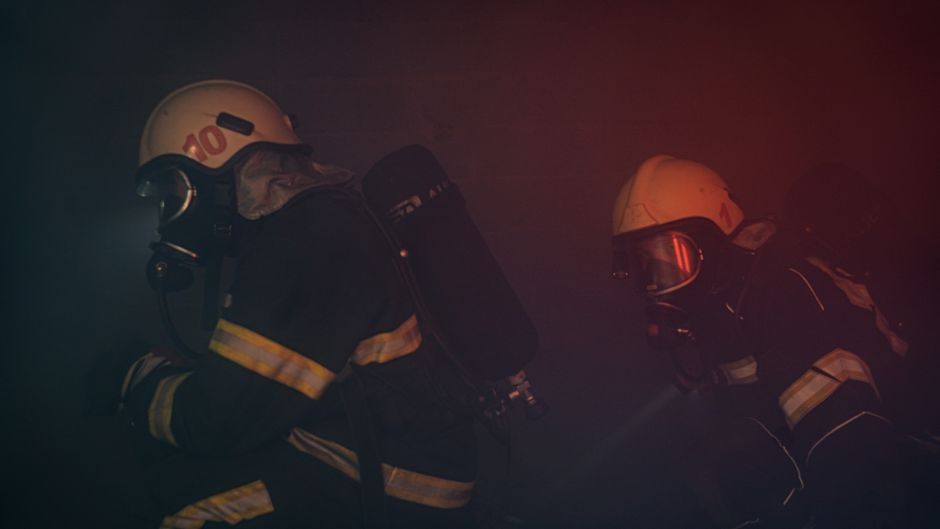
Fixed gas detectors for confined space entry must combine pre-entry clearance measurement of O2, LEL combustibles, CO and H2S with continuous post-entry monitoring, wired to an alarm chain that triggers at user-set thresholds [S3].
The selection is driven by the four-gas baseline (O2, LEL, CO, H2S), sensor technology matched to the gas, output protocol compatible with the control room, and explosion-proof certification matching the zone classification of the space [S1][S3].
Four-gas baseline and sensor choices
Confined space atmosphere measurement uses an O2 cell working in the 0–30 %vol range, a catalytic-bead or NDIR combustible sensor for 0–100 %LEL, and electrochemical cells for CO (typical 0–500 ppm) and H2S (typical 0–100 ppm) [S3]. A Dräger-aligned guidance for CSE clearance measurement calls for an instrument that "measures and monitors for hazardous substances with a dedicated confined space gas detector" covering those baseline species before anyone breaks the plane of the entry [S3]. A typical fixed detector product line, like the Eranntex MIC-300 series, offers 4-in-1 sensor heads with selectable measuring ranges on each channel and 4–20 mA + RS485 outputs for that application [S1]. A fixed NH3 detector for refrigeration rooms in the ATO GD300 family is shown with selectable 0–50 / 0–100 / 0–200 ppm ranges, illustrating the multi-range user-set convention common in fixed-point toxic instruments [S4].
Output protocols and alarm chain wiring
Fixed detectors usually expose a 4–20 mA analog loop per gas channel plus a digital bus (RS485 Modbus RTU is the most common low-cost option) and a relay block for horn/strobe and ventilation interlocks [S1]. The same 4–20 mA + RS485 convention lets a multi-channel head drop into an existing SCADA or PLC without custom drivers, which is why it is the default pin-out on Chinese OEM units like Eranntex and ATO [S1][S4]. For sites that already run Foundation Fieldbus or PROFIBUS PA, the analog loop is replaced by a digital segment terminated on a coupler — fixed heads with native FF/PA interfaces exist, but the cheapest fixed gas detector you can buy today will still default to 4–20 mA + RS485 unless explicitly ordered with the digital option. HART is a different layer again: it rides on top of the 4–20 mA loop using FSK and is not interchangeable with FF/PA.
Explosion-proof and ingress requirements
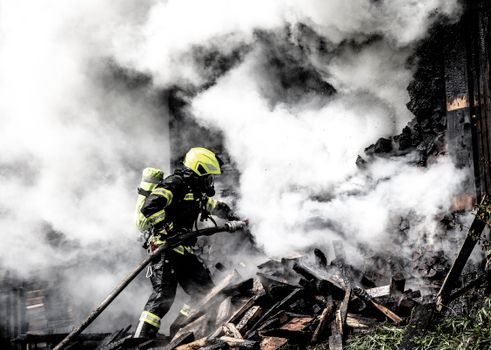
For zone-classified confined spaces (a common case in oil and gas, chemical, and wastewater sites) the fixed head must carry ATEX or IECEx Ex d IIB/IIC T6 marking, and a CSA or UL equivalent for North American sites [S3]. The enclosure on industrial fixed heads is typically die-cast aluminium with IP66/67 rating, and cable entries are 3/4"NPT or M20 — confirmed in the ATO GD300 datasheet and typical of the Eranntex wall-mount format [S1][S4]. IP65 is the practical floor; below that, dust and water-jet ingress in a steam-cleaned vessel will drift the sensors within weeks.
Selection criteria compared
The four main options line up against decision criteria as follows: a 4–20 mA + RS485 catalytic-bead/EC fixed head (e.g. Eranntex MIC-300) is the lowest-cost entry (low hundreds USD per channel) and is best for indoor refuge-room, pump-station, and tank-farm walls; an NDIR combustible + EC toxic fixed head costs more but removes catalytic-bead poison risk on silicone or H2S heavy sites; a wireless (LoRa or cellular) fixed head is the right pick where cable tray is impossible (tank battery, remote wellhead) but trades response latency; an IECEx/ATEX Ex d certified head (the ATO GD300-NH3 at 754.13 USD list for 0–50/100/200 ppm NH3) is mandatory for zone 1/2 classified spaces [S4]. Across all four, the dominant spec choices are sensor range, response time T90, output protocol, and ingress/IP rating — not brand [S1][S4].
Use cases and who this is for
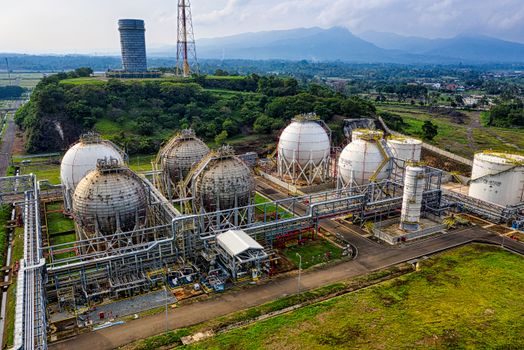
Fixed CSE-style detection suits permanent installations: ship-engine-room O2/LEL monitoring, wastewater digester H2S/CH4, brewery CO2 storage, and refrigerant plant NH3 [S3][S4]. It is NOT for one-off contractor entry jobs where a portable 4-gas monitor is cheaper and faster to deploy. For an inert or oxygen-deficient purge cycle, an O2 sensor head with 0–25 %vol range and audible alarm at 19.5 %vol low / 23.5 %vol high is the typical spec; a toxic gas detector on CO and H2S covers welder-vapour and sewage scenarios respectively [S3].
Limitations and failure modes
Catalytic-bead LEL sensors are poisoned by silicone, lead, and high H2S — for those atmospheres specify NDIR or a multi gas detector with IR combustible instead. Electrochemical cells drift after 24–36 months and must be replaced on a calendar schedule; many sites run dual-cell redundancy on the safety-critical channels. Pre-entry clearance is still mandatory even with a permanent fixed head: the fixed detector measures the headspace, not the worker's breathing zone at floor level, which is where heavy-than-air gases such as propane, CO2, and H2S accumulate [S3]. For overall facility fire and combustible coverage, the combustible gas detector siting guide is the relevant cross-reference.
Standards and sourcing
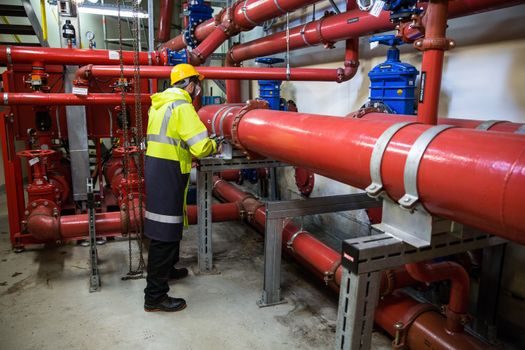
Confined space programs in most jurisdictions sit on top of OSHA 29 CFR 1910.146 (US permit-required confined spaces), EN ISO 12100 / EN 60079 series for hazardous-area equipment, and the relevant national CSE standard; a fixed detector carrying valid ATEX 2014/34/EU or IECEx certification is the cleanest way to evidence compliance in zone-classified spaces [S3]. ATEX category 2 (zone 1) and category 3 (zone 2) are the typical spec bands for permanent installations; the actual applicable sub-clause depends on the gas group and temperature class. A project written against fixed gas detector selection should also include a general gas detector handbook clause so that commissioning, calibration-gas, and bump-test procedures share one document across portable and fixed fleets. For the broader multi-gas detector fleet, cross-reference the linked welding-ops spec map, which shares the same sensor/selection logic for a hot-work zone.
See also our earlier report, Die Casting Machine Selection for Automotive Parts: Tonnage, Alloy, and Shot-Choice Map.