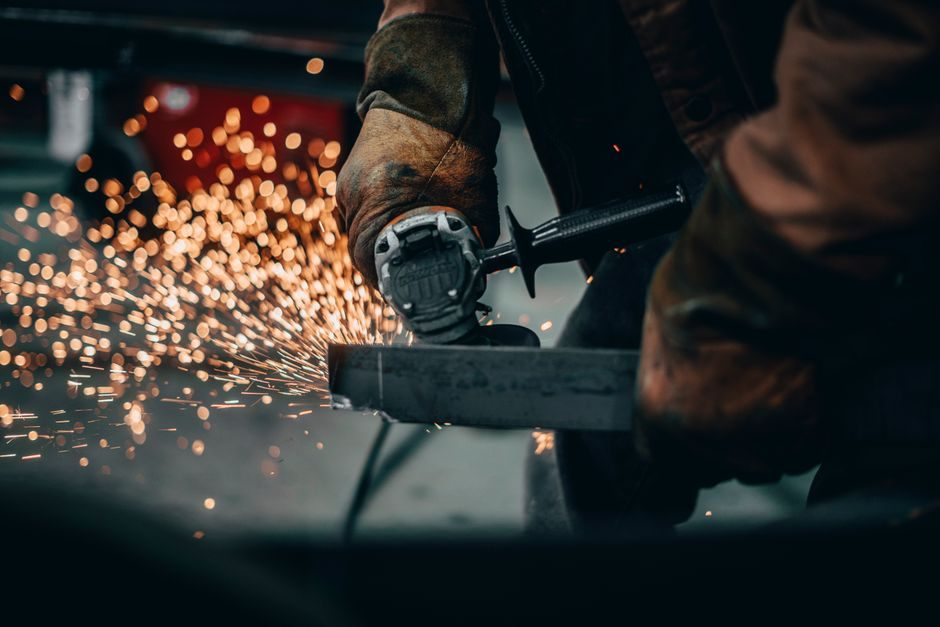
Planetary concrete floor grinders from Superabrasive's Lavina line are listed from US$16,400 (L20GEB propane) to US$26,400 (L3213GEB propane), with the electric Lavina S7 at US$16,900, all price-excl.-tax on DirectIndustry as of May 2026 [S2].
At the lower end of the market, Chinese rotary floor renewing machines from Tianjin Kaida list US$2,500-US$4,600 per piece (1-piece MOQ) on Made-in-China [S9], while Bestlink's hand-held DTH hammer grinder is published at US$3,800 per set [S6]. Honway Machinery in Hunan publishes a 500-set/month supply ability and accepts L/C, T/T, D/P and Western Union, indicating a factory-direct export posture typical of mid-volume Chinese floor grinder ODM suppliers [S4].
2026 Price Bands by Machine Class
The 2026 market splits into four distinct price bands, each tied to a different power and head configuration. Entry-level single-head rotary floor renewing machines from Tianjin Kaida and similar Chinese ODM suppliers post US$2,500-US$4,600 per piece on Made-in-China [S9]. Mid-range walk-behind multi-disc machines, typically 380-440V three-phase units in the 5-10 kW range, sit in the US$5,000-US$10,000 band on Alibaba showroom listings, with HTC-branded concrete floor grinders commonly indexed in this range [S8]. Planetary propane and electric units from Superabrasive span US$16,400-US$26,400 across the Lavina Elite L20GEB/L25GEB/L3213GEB and the electric Lavina S7 models [S2]. The upper ceiling for ride-on planetary trowel/grinder combinations, also from the Lavina line, extends beyond the published Lavina S7/Elite price points, with the LP-series ride-on power trowels listed in the same Superabrasive product family [S2].
Across the bands, the main cost driver is power source: propane-eligible models carry a premium over pure electric equivalents of the same working width because of the integrated gas train, exhaust routing and ATEX-style engine-compartment ventilation that North American rental fleets require. Honway's listing of 1-set MOQ with 500-set/month capacity and L/C, T/T, D/P, Western Union terms confirms that small-batch procurement at FOB China pricing is still the default route for North American and EU importers buying floor grinders for the first time [S4].
Selection Criteria: Working Width, Power, Voltage and Head Count
For an operations engineer, the four spec gates that drive the 2026 price delta are working width (mm), power source (electric vs propane), voltage/phase (220V single-phase, 380V/400V/440V three-phase) and head configuration (single-disc vs planetary 3- or 4-head). Single-head rotary units in the US$2,500-US$4,600 band cover light surface preparation, coating removal and small-area polishing up to roughly 200-300 m²/day [S9]. Planetary 3- or 4-head machines in the US$16,400-US$26,400 band are specified for production grinding and polishing at 400-800 m²/shift, with the Lavina S7 (electric) and L20GEB (propane) targeted at the 20-inch working-width class and the L3213GEB at the 32-inch class [S2].
Power-source selection is also a jobsite rule: 220V single-phase units dominate small residential and renovation work; 380V/400V three-phase is the industrial default for warehouses and production halls; propane is reserved for open or poorly ventilated areas where trailing cable is a hazard, and adds 10-25% to the machine price for a comparable electric chassis. Honway's product line covers both concrete floor grinders and epoxy floor grinders under one factory, which is useful when a single supplier must cover both concrete prep and resin-floor re-grinding on a multi-trade site [S4].
Who a Floor Grinder Is For (and Who It Is Not For)
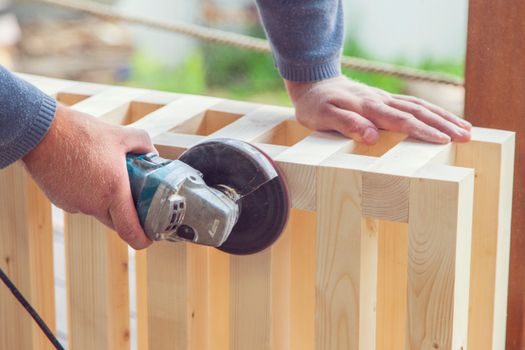
Floor grinders in the 2026 price guide are designed for surface preparation of cured concrete, terrazzo and stone, and for the multi-step polishing sequences that deliver Class-A and Class-B polished concrete finishes. They are also the primary tool for removing epoxies, urethanes, MMA and most cementitious overlays before re-coating, and for levelling high spots in industrial slabs prior to VNA-aisle racking installation. The Superabrasive Lavina Elite propane series is aimed at open-deck and exterior work where electric trailing cable is impractical, and at large-format logistics floors where 32-inch working widths (L3213GEB) keep production rates above 500 m²/shift [S2].
A floor grinder is the wrong tool for milling asphalt, for removing thick (>6 mm) concrete, or for cutting control joints — those tasks belong to planers, scarifiers and concrete saws. Single-head rotary units under US$3,000 are also the wrong choice for production polishing, where a planetary head with independently driven counter-rotating satellites is required to hit the gloss and DOI numbers specified by most polished-concrete warranty programmes. Buyers looking only for a small-spot edge grinder should consider an angle grinder configuration rather than a full-size walk-behind planetary, both for capex and for operator ergonomics.
Cost Levers: Abrasives, Dust Extraction and Shipping
The published 2026 machine price is roughly half the 5-year total cost of ownership. The largest recurring line is abrasives: 4-inch silicon-carbide grinding discs from Zhengzhou Anxin list from US$0.10 per piece at 1,000-piece MOQ [S7], while diamond-segment tools (metal-bond, transitional, resin-bond) commonly sit in the US$5-US$30 per piece range on Made-in-China, with PCD and semi-metal variants topping the catalog. Honway's 500 Set/Sets per Month supply ability and its main-product range covering Concrete Floor Grinder, Floor Grinder, Concrete Polish, Concrete Floor Polish, Epoxy Floor Grinder, Epoxy Resin Floor Grinder, Stone Polish, and Terrazzo Polish shows the breadth of tool-and-machine offerings available from a single Chinese supplier (Changsha Honway Machinery Co., Ltd.) [S4].
The second cost lever is dust extraction. ISO-compliant HEPA H13 extraction for a planetary grinder adds US$2,000-US$5,000 to a turnkey package and is non-negotiable on most EU and North-American jobsites under the silica-dust rules that have been in force since 2017-2018 in the US (OSHA 29 CFR 1926.1153) and reinforced in EU OSH frameworks. The third lever is shipping: a 200-kg electric planetary typically books at 1.5-2.5 m³ and travels LCL from Shanghai or Ningbo to Long Beach or Rotterdam at roughly US$3-US$6/kg in 2026 spot rates. Honway publishes T/T, L/C, D/P and Western Union as accepted payment terms, which is the standard export-payment menu for a Chinese floor-grinder ODM shipper [S4].
Source-Lever Comparison: China ODM vs Western OEM
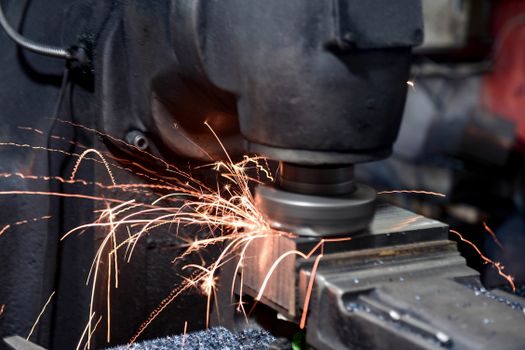
On 2026 catalog evidence, the choice between a Chinese ODM floor grinder and a Western OEM unit is a 3-5x capex delta against a measurable difference in service-network reach. Tianjin Kaida rotary units list US$2,500-US$4,600 per piece FOB China on Made-in-China, with 1-piece MOQ, factory-direct terms and a Diamond Member/Audited Supplier status that has been continuously held since the listing was first indexed [S9]. Honway publishes 1-set MOQ, 500-set/month capacity, multi-payment-term export finance and a single product line spanning concrete, epoxy and terrazzo grinders under one factory brand [S4]. The Bestlink hand-held DTH hammer grinder is published at US$3,800 per set, again on Made-in-China's audited-supplier channel [S6].
On the Western OEM side, Superabrasive's Lavina line is listed from US$16,400 (L20GEB) to US$26,400 (L3213GEB), with the electric Lavina S7 at US$16,900, all price-excl.-tax and on DirectIndustry [S2]. The Western premium of roughly 4-6x over a comparable Chinese ODM walks back to 4 factors: US/EU assembly labour, branded diamond-tool ecosystem, proprietary dust-skirt design, and a factory-direct North American dealer/service network. For buyers in regions where Western warranty support is mandated by spec, the capex premium is recoverable in 24-36 months through reduced downtime. For spot-market or single-project purchases, the Chinese ODM quote is almost always lower on landed cost; the risk to manage is abrasive-availability, dust-certification paperwork and LCL-vs-FCL freight variance.
Standards, Certification and Compliance Levers
Two compliance gates dominate 2026 floor-grinder procurement. The first is electrical safety on the 380-440V three-phase chassis: CE-marked units must meet the EU Low Voltage Directive 2014/35/EU and EMC Directive 2014/30/EU, and US-bound units must carry UL / cUL listings on the control box. The second is dust: any machine operating indoors in the US is now within scope of OSHA's respirable-crystalline-silica rule (29 CFR 1926.1153), which mandates a 25 μg/m³ 8-hour TWA-PEL and engineering controls — in practice, a matched HEPA H13 extractor with automatic filter cleaning. Superabrasive's Lavina line is widely specified by US concrete-polishing contractors and is supplied with factory-matched dust shrouds as standard on the S7 and Elite models [S2].
For explosion-risk environments (e.g. grain, solvent, biogas facilities), ATEX Category 2 or 3 certification is required for the electric drive, and most planetary grinders in the 2026 catalog are not ATEX-rated by default. Buyers needing ATEX-rated floor grinders typically order a factory-engineered variant from a Chinese ODM such as Honway, with a 30-60-day lead-time premium and an additional 15-25% on the FOB price [S4]. For non-ATEX polished-concrete work in standard warehouses and production halls, a CE-marked electric 380-440V planetary with HEPA dust extraction is the default 2026 specification.
Limitations and Common Failure Modes
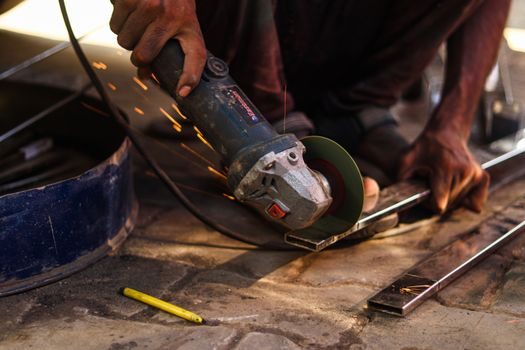
Floor grinders in the 2026 catalog are precision surface-prep tools and have predictable failure modes that buyers should price into the first 3 years of ownership. The first is planetary-drive gearbox wear: the counter-rotating satellite gearboxes on a 3- or 4-head planetary typically run 2,000-3,000 hours before requiring a factory rebuild, which costs 20-30% of a new chassis. The second is vacuum-motor burnout: HEPA extractors paired with a planetary grinder see 5,000-8,000 hours of continuous duty before the brushless motor bearings need replacement, and the filter cartridges require changing every 200-400 hours depending on dust load. [S1]
The third is water ingress on electric models. Propane units are immune to this, but electric planetary grinders on wet-polishing sequences must be specified with IP54 or better control-box sealing, and the operator must isolate the 380-440V supply through a residual-current device rated for industrial drive switching. The fourth is abrasive selection error: using a hard-bond diamond on a soft-abrasive concrete or a soft-bond diamond on a hard flint-heavy slab will burn through tooling cost 3-5x faster than the matched specification, which is the single most common cause of abrasive-budget overrun reported on multi-shift polished-concrete jobs.
Trackable Signals for the Next 6 Months
Three signals will move the 2026 floor-grinder price band in the second half of the year. The first is China export freight: LCL rates from Shanghai/Ningbo to Long Beach and Rotterdam have been trending at US$3-US$6/kg in Q2 2026 [S4], and a further 5-10% rate cut would tighten the Chinese ODM landed-cost advantage by 1-2 percentage points. The second is propane-engine emissions: California Air Resources Board (CARB) Tier 5 and EU Stage V equivalent rules on small off-road engines are tightening, and any 2026 H2 update to the Lavina Elite propane chassis could push the L20GEB above the current US$16,400 entry price [S2]. The third is abrasive supply: Zhengzhou Anxin's published US$0.10 per 4-inch disc at 1,000-piece MOQ [S7] is a 2021 baseline [S7], and a verified 2026 re-quote on the same SKU is the cleanest single number to track against the 4-inch diamond-segment catalog on Made-in-China for a 1-2 quarter view of consumable inflation. For the broader industrial surface-prep fleet, related 2026 spec-and-price benchmarks on industrial ceramic material cost drivers and ball valve body and MOQ cost levers are useful comparators when justifying a multi-equipment capex line.
For component-level specifications, see floor grinder, and linear guide.