
Heavy-duty planetary floor grinders for aggressive coating removal typically weigh 1,455–1,585 lb, with 562–898 lb of grinding pressure, compared with 216 lb and 148–180 lb for a compact grinder [S5].
Machine mass is only one selection variable: PCD segment count, contact geometry, drive arrangement, disc diameter and coating condition determine whether the grinder removes epoxy, urethane, mastic, thinset or adhesive effectively [S1][S2].
Heavy and Compact Grinder Weight Classes
The Lavina 38GRE weighs 1,585 lb and provides 603–898 lb of grinding pressure from built-in weights. Its three 13.2-inch heads cover a 36.5-inch grinding path, while the 35 hp Kawasaki FX1000V engine and propane power support large commercial removal work [S5].
The Lavina 32E weighs 1,455 lb and uses built-in weights to produce 562–878 lb of grinding pressure. It has three 13.2-inch heads, a 32-inch grinding path, a 20 hp motor, and electrical versions rated at 200–240 V, three-phase, 60 A [S5].
At the compact end, the Lavina 16E weighs 216 lb and develops 148–180 lb of grinding pressure with add-on weights. Its three 7-inch heads provide a 16-inch path, while the 2.45 hp machine is offered in 115 V and 230 V versions [S5]. A 50 lb weight kit for the Scan Combiflex 18 grinder provides a defined mass increase for more aggressive grinding [S3].
Coating Type Drives Tooling More Than Weight Alone
For thin, hard coatings such as paint, 2-up half-round PCDs are recommended, while 2-up or 4-up micro PCDs are suggested when a more aggressive removal tool is required [S2]. For a thin, hard coating such as paint, National Flooring Equipment recommends 2-up half-round PCDs on the direct-drive plate, with the machine weights removed; its guidance states that one or two passes should remove the coating [S2].
More aggressive removal calls for 2-up micro PCDs, which are also available in a 4-up configuration. The 2-up and 4-up designations indicate the number of floor-contact points, not machine weight or operating pressure [S2]. On the Helix 110V passive planetary grinder, micro PCDs work most effectively when fitted to the direct-drive plate on the bottom ring of the grinder head, using the outer ring for a more consistent scratch pattern [S2].
Scarifier tooling replaces the satellite tooling and is retained by a cotter pin on the back of each satellite [S2]. Additional machine mass cannot compensate for a tool that is inappropriate for the coating.
Weight Class Versus Aggressive Cutting Performance
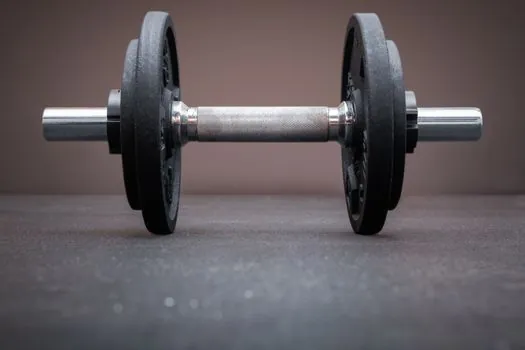
Planetary grinders are used for grinding and polishing concrete floors, including large projects and aggressive work [S1][S5].
The practical comparison is weight, contact pressure, tooling and control. A 1,455–1,585 lb heavy grinder with 562–898 lb grinding pressure offers greater load than a 216 lb compact machine with 148–180 lb pressure, but the heavy machine is also harder to control. The Lavina 16 is a lightweight, compact planetary grinder with three 7-inch heads, variable speed, and a folding frame for easy transportation and storage [S5].
Disc count does not determine coating-removal severity by itself. A 330 mm, or 13-inch, single grinding disc is intended for smaller areas, long edge runs, light coating removal and surface preparation [S4]. For broad removal work, the choice shifts toward multiple heads, suitable PCD configuration and sufficient machine load.
Selecting the Correct Machine Class
Heavy-duty machines fit contractors removing heavy coatings, mastic, thinset or VCT glue across large commercial areas. The Lavina 38GRE and Lavina 32E provide 36.5-inch and 32-inch grinding paths respectively, while their 1,455–1,585 lb machine classes support high downward working loads [S5].
Compact planetary grinders fit small residential and commercial projects where transport, footprint and maneuverability outweigh maximum removal rate. The Lavina 16E combines a 216 lb machine weight with a 16-inch path and three 7-inch heads, making it materially different from the 1,455 lb Lavina 32E [S5].
The Lavina 32E is a heavy-duty 32-inch planetary grinder designed for large commercial projects, including preparation and polishing [S5]. For a detailed equipment-cost comparison, see Floor Grinder Cost: Disc Size and Planetary Head Count.
Failure Modes and Operating Constraints
Excessive mass can reduce controllability during aggressive removal, particularly on uneven concrete, around joints or near edges. Operators must balance removal output against keeping the machine path controlled.
Tool installation errors can negate the benefit of added weight. The Helix procedure requires weights to be removed for thin, hard coatings when 2-up half-round PCDs are used on the direct-drive plate [S2]. Conversely, scarifier tooling requires removal of the standard satellites before fitting the scarifier satellites and their retaining cotter pins [S2].
Coating condition remains uncertain when the installer did not lay the original system. Unknown bond strength and coating age increase the risk of inconsistent removal, so contractors should keep suitable PCD and scarifier options available rather than relying on one setup [S2]. For edge access where a large planetary head cannot reach, an angle grinder may be required, but its dust-control and disc-selection limits remain separate from those of a ride-on floor grinder.
Procurement Check for Coating-Removal Equipment
A defensible grinder specification should list machine operating weight, adjustable grinding pressure, grinding path, head count, power supply and the approved tooling for the target coating. For heavy removal, the documented comparison range is 1,455–1,585 lb machine weight and 562–898 lb grinding pressure for the two large Lavina models, compared with 216 lb and 148–180 lb for the compact Lavina 16E [S5].
Tooling must be stated at the same time as the weight class: 2-up half-round PCDs for thin, hard coatings, 2-up or 4-up micro PCDs for more aggressive removal, or scarifiers with tungsten-carbide teeth for tough coatings [S2]. Confirming the actual grinder configuration and its permitted speed settings during commissioning prevents a heavier machine from being paired with the wrong cutting method [S2].
The clearest trackable procurement signals are the target coating thickness and bond condition, the required removal depth, the available working width, and the grinder's published operating-weight and grinding-pressure range. These values determine whether a heavy machine, compact planetary grinder, or added weight kit is technically justified [S1][S3][S5].