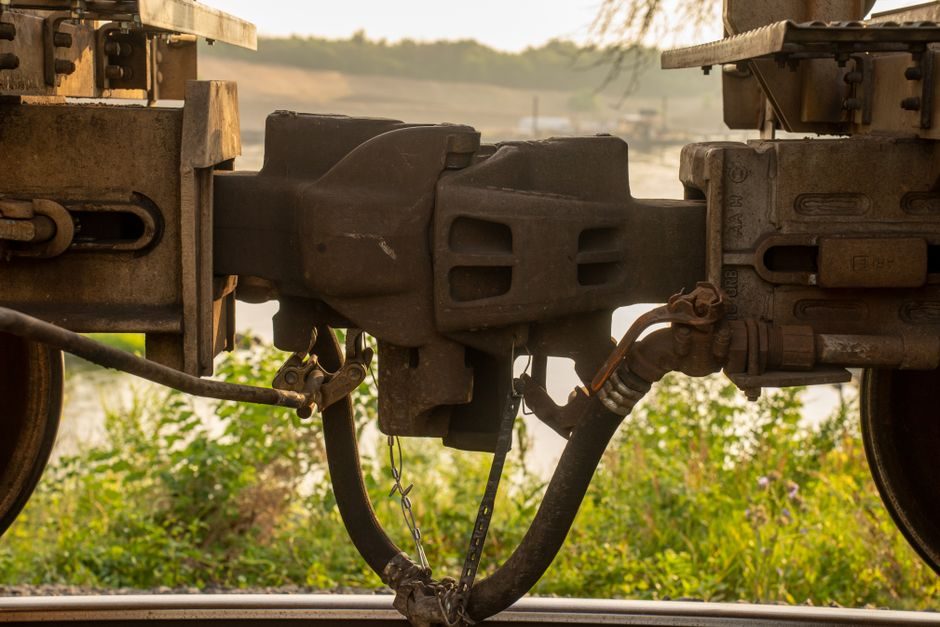
A fluid coupling is a hydrodynamic power-transmission device in which torque crosses from the impeller to the runner through the working fluid only, with no mechanical contact between input and output shafts. Slip is inherent, output torque equals input torque at equilibrium, and absorbed power converts to heat that must be removed by either a fresh-water or oil-to-air cooler.
Selection is not a brand problem, it is a thermal-balance problem. Five gates decide a pass/fail: (1) required service factor vs catalogue rating, (2) input speed and driven-pole count, (3) absorbed-power heat load and cooler capacity, (4) the fluid itself (mineral oil vs water vs a water-glycol mix) and its contamination window, and (5) the upstream-driven mismatch — for example a fluid shaft coupling is a mechanical part, while the fluid coupling is a hydrodynamic one, and a gear coupling does not behave like either. A common spec error is to size on motor nameplate kW and ignore the starting/breakaway duty of a fully loaded belt conveyor or a crusher.
Service Factor, Slip and the Hydrodynamic Torque Curve
OEM catalogues rate a fluid coupling by the maximum input kW the unit can absorb in continuous duty at a given motor speed, typically 4-pole 50 Hz (1480 rpm) or 4-pole 60 Hz (1750 rpm) [S1]. Service factor (SF) is the multiplier applied to the motor's nameplate kW to account for starting shock, peak load and duty cycle; 1.0 is steady-state, 1.25 to 1.5 is normal industrial starting, and 1.5 to 2.0 is heavy shock load such as a conveyor fully loaded at start or a hammer mill. Slip at rated load commonly runs 3 % to 5 % for a correctly sized constant-fill unit and rises to 6 % to 8 % in a variable-fill design.
The torque curve is non-linear: transmitted torque scales with the square of input speed, so a fluid coupling transmits almost zero torque at standstill, ramps up as the motor accelerates the load, and approaches a stable equilibrium point where motor torque equals load torque. That is why fluid couplings are standard on high-inertia soft-start drives — long conveyors, crushers, mills, centrifuges — and are also used as a no-load motor starter that lets the motor come up to speed before transmitting load.
Fluid Type: Mineral Oil, Water-Glycol, or Fire-Resistant Hydraulic Fluid
Fluid type is a safety and environment decision, not a cost decision. Standard units use ISO VG 32 or VG 46 mineral oil. Underground coal-mining conveyors and fire-risk zones often require water-glycol or invert-emulsion fluid, which raises viscosity loss with temperature and therefore reduces peak transmitted torque at low ambient. Where ignition or surface-temperature limits apply, the coupling must clear the relevant surface-temperature class (T4, T5) under stalled-load heating — a different test from the ATEX/IECEx motor rating of the driven machine. [S1]
For a build that is going into a hazardous area, the rule of thumb is to read the OEM's ATEX/IECEx certificate for the coupling assembly, not the certificate of the bare coupling body, because the working fluid and the seal set change the certification boundary. A 6 kW thermal loss at 5 % slip is not unusual for a 200 kW unit, and that heat is rejected through the housing fins, an external disc coupling-style guard (mechanical, not hydrodynamic), and any fitted oil cooler.
Constant-Fill vs Variable-Fill vs Delayed-Fill Designs

Constant-fill couplings (also called simplex or fixed-fill) hold a fixed volume of working fluid. They are the simplest, cheapest and most common type, used for soft-start, torque limiting and overload protection. Variable-fill couplings add an external scoop tube or annular chamber; the scoop position controls the effective working volume, so output speed can be controlled between roughly 30 % and 95 % of input speed without an electrical VFD. [S2]
Delayed-fill designs keep the impeller chamber empty at standstill, then fill the chamber with a pump-and-valve circuit after the motor is up to speed. This is the configuration used for very high-inertia soft-start duty on large belt conveyors (2 MW class) and for some mill drives, where a sudden full-fill at zero speed would motor the input side. By contrast, a torque converter (also a hydrodynamic fluid device) has a third element — the stator/reactor — that provides torque multiplication above unity, which a fluid coupling deliberately does not; that distinction is the one the procurement spec has to make explicit when sourcing automotive driveline parts vs industrial soft-start couplings [S2].
Sizing Cuts: Motor kW, Pole Pair, Heat Load and Cooler
Step 1 — match motor nameplate kW × service factor to the catalogue rating at the actual motor speed, not at 1500 rpm by default. A 6-pole motor (980 rpm at 50 Hz) on the same catalogue frame can only handle roughly two-thirds of the kW the same frame handles at 1480 rpm, because transmitted torque scales with speed squared. Step 2 — compute slip power loss = (1 − η) × input kW, and size the oil cooler or the air-cooled fin area to reject that loss at the worst-case ambient. A liquid-cooled cooler is typical above 300 kW absorbed loss. [S3]
Step 3 — check the starting torque ratio. Most fluid couplings transmit 1.2× to 1.8× motor rated torque during acceleration, which is enough for conveyors and pumps but not enough for hard-start loads like a fully loaded apron feeder; in those cases a gear coupling with a soft-element elastomer or a hydrodynamic coupling with a high-fill pre-fill circuit is the alternate path. Step 4 — for a parallel-shaft drive train, decide whether the upstream mechanical jaw coupling needs a higher torsional stiffness than the fluid coupling itself, because in soft-start duty the fluid coupling is the soft element and the upstream jaw coupling will see the residual torsional shock.
Selection Criteria vs Alternative Couplings
A decision matrix is the cleanest way to compare options [S3]. On four criteria — soft-start capability, overload protection, efficiency at full load, and torque transmission at zero speed — a fluid coupling scores high, high, medium (because of slip loss), and zero. A gear coupling scores low, low, high, high. A jaw coupling scores low, low, high, high. A VFD-controlled induction motor drive scores high, high, high, high — at roughly 3× to 6× the line-side cost of a fluid coupling for a 200 kW unit.
For most belt-conveyor and mill applications, the comparison reads as: fluid coupling wins on first cost and on tolerance of supply-voltage dip, VFD wins on energy cost over the asset life, and mechanical couplings win only when the soft-start is handled elsewhere in the driveline. The selection rule of thumb on those four axes is that a fluid coupling is FOR drives above 30 kW with high-inertia loads, FOR conveyors and mills needing controlled start-up torque, and FOR sites where VFD-induced motor bearing damage is a known risk; it is NOT FOR applications requiring zero slip (gears, chains), NOT FOR very low-speed high-torque drives below roughly 600 rpm input, and NOT FOR applications needing torque multiplication (use a torque converter).
Common Failure Modes and Sourcing Signals to Track
The top three in-service failures of fluid couplings, in roughly the order of incidence, are: (1) seal leakage from the input bearing housing, which drops the working fluid level and pushes slip above 10 %; (2) bearing failure from radial load on the input shaft, almost always from a misaligned upstream shaft coupling or a bent shaft; (3) phase-to-phase short in the electric motor driven by the same coupling when the working fluid contaminates the motor windings via a breached seal, a hazard specific to mining and process-plant installations. A working-fluid analysis interval of roughly 2000 hours is a useful starting point, with shorter intervals on high-ambient or dusty sites. [S1]
On sourcing, three signals to track: (1) the OEM's published catalogue revision date for the frame you are sizing — fluid-coupling ratings have shifted in recent years as bearing technology has changed; (2) the OEM's lead time on the working-fluid cooler, which is often the long-pole item; and (3) the OEM's ATEX/IECEx certificate scope for the fluid type you intend to use, because mineral oil, water-glycol and invert-emulsion each carry a different temperature class. For a related parallel decision, see how the Universal Joint vs Disc Coupling spec cut lines up misalignment tolerance, or check Universal Joint 2026 price levers for the upstream mechanical-link spec.