A universal joint is the go-to component when two shafts meet at a fixed angle and the drive must transmit cyclic, shock-loaded torque; a disc coupling is the go-to component when shafts are nominally aligned but must tolerate small parallel and angular offsets at high rotational speed without periodic maintenance. Both products are listed in the same power-transmission category on industrial sourcing platforms, with 163 disc-coupling SKUs across 42 manufacturers tracked on one such index as of 2026-05-03 [S1], and Chinese factories reporting main-product lines that include "universal joint, cardan joint, double joint shaft" alongside gear couplings in 2026-Q2 catalogs [S4]. The two designs are not substitutes; they overlap only in the narrow band of small, light-duty drives.
Universal joint assemblies — referred to as Cardan shafts in European driveline catalogues and cross-and-yoke joints in U.S. service literature [S8] — transmit torque through a mechanical cross inside two yokes. Disc couplings transmit torque through a stack of thin metallic diaphragms (or "disc packs") bolted between two hubs, with no sliding metal-to-metal contact. The functional divergence is the basis for the selection cut below.
Working Principle and Torque Path
A universal joint converts rotational input into output through a cruciform (cross) journal: as one yoke rotates, the cross swings inside the second yoke, so the output shaft angle can be set anywhere from 0° to a typical maximum of 35°–45° per single joint, and angular velocity is non-uniform over each revolution unless a double-joint (constant-velocity) configuration is used. The catalogued ZHENJIANG SUODA UCD180-390 double universal joint lists a torque range of 12,500–250,000 N·m at bore diameters from 105 mm to 345 mm, sized specifically for steering and telescoping weldment-type drivelines [S2].
A disc coupling transmits torque through tension and compression in a thin, flexible disc pack. The hubs and the disc pack are usually stainless or alloy steel, and torque is carried by bolted connections at the inner and outer diameters of each disc. The result is a torsionally stiff coupling with zero backlash, no lubricant, and no wearing sliding parts — features that show up consistently on the disc-coupling product index of 42 manufacturers totalling 163 SKUs in the 2026-05-03 snapshot [S1].
Misalignment Capability: Angle vs Parallel Offset
Universal joints are specified because the shafts are not parallel; misalignments of 10°–35° per joint are routine in cardan shafts, and double-joint telescoping shafts handle both angular and axial displacement on rolling-mill and marine drivelines. Disc couplings are specified because the shafts are nearly parallel but small errors exist: typical published allowances are up to a few millimetres of parallel offset and a fraction of a degree of angular misalignment, with axial misalignment capacity roughly equal to the disc-pack deflection. The two ratings do not compete — they address different failure modes of shaft alignment. [S1]
The product mix on industrial sourcing platforms confirms the boundary: the disc-coupling category lists 163 SKUs from 42 makers including Ameridrives, CENTA, R+W, REICH, Miki Pulley and Cross & Morse [S1], while the Chinese Cardan-shaft catalog groups universal-joint models (SWC, SWP, WSD, WSL, WHL, 587, 687 series) on the same page as gear couplings GIICL, GICL, WGT, WGP, NGCLZ, WGZ [S4]. When the misalignment problem is a fixed angle, the universal-joint page is opened; when the problem is residual parallel error after alignment, the disc-coupling page is opened.
Speed, Balance and Service Interval
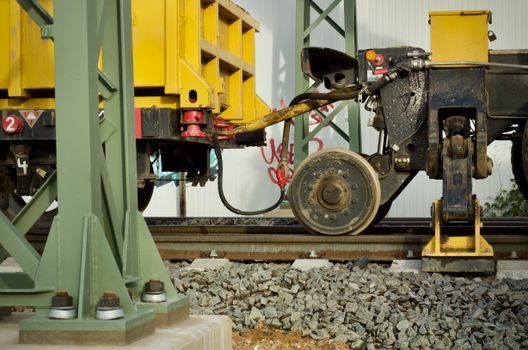
Disc couplings are the high-speed, maintenance-free default. The disc pack is dynamically balanced to a stated ISO grade (commonly G2.5 or higher for turbomachinery), and there is no grease nipple because no metal slides against metal during normal operation. Universal joints are speed-limited by the cruciform bearing — needle-roller crosses are grease-lubricated and have a finite relubrication interval, with service life governed by L10 bearing fatigue as a function of speed, angle and torque. [S2]
Spec data from the Hangzhou Shuangyou Industrial catalogue groups Djm disc couplings and universal couplings in the same product line, and the manufacturer is registered as a "Manufacturer/Factory" under the "Manufacturing & Processing Machinery" business range in 2026 supplier listings [S9]. For drives above roughly 3,000 r/min or where any lubricant leakage onto the product (textile, paper, food-grade, or cleanroom machinery) is unacceptable, the disc coupling is the only one of the two that meets the requirement.
Torque Range and Frame Size
Universal joints dominate the very high-torque end. The UCD180-390 double universal joint runs from 12,500 N·m to 250,000 N·m, with bore diameters of 105–345 mm — a frame that disc couplings reach only in the largest API-610 process-pump sizes [S2]. Disc couplings cover the bulk of industrial pump, fan, compressor and servo drives from sub-100 N·m up to roughly the 100,000 N·m range, with frame selection driven by shaft-bore and continuous-torque rating rather than by angle.
For comparison only (do not treat as substitutes): the universal-joint index page in the 2026-04-29 Alibaba supplier listing groups "universal joint, drive shaft, drive shaft parts" together with a US$1–2.5 million revenue band [S6], while the disc-coupling maker index lists 163 products across 42 manufacturers as of 2026-05-03, including 16 from Miki Pulley Europe AG, 11 from CENTA, 8 from R+W Italia, and 7 from REN bottles for hydraulic-motor applications [S1]. The 11-product and 16-product sub-ranges on CENTA and Miki Pulley alone indicate a healthy disc-coupling design grid keyed by torque and bore.
Selection Criteria: When to Use Each
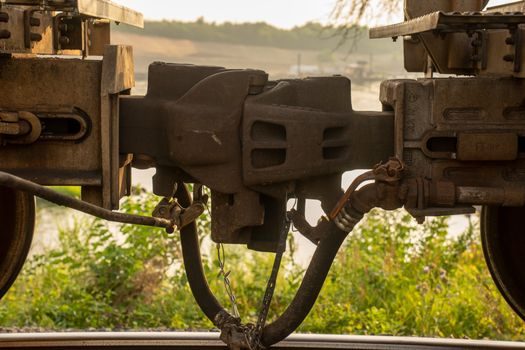
Use a universal joint when the shafts are deliberately at an angle (drive shaft on a car or truck, propeller shaft on a ship, rolling-mill spindle, crusher drive), when torque reversal and shock loading are expected, and when the length between bearings must vary (telescoping spline). The Mercedes-Benz truck universal-joint listing on Made-in-China shows double-joint shafts at 38×119 mm and OE cross references A0003300428 / A0003306635 for Unimog 424, 425, 427, 437, with pricing around US$ 35 per unit for heavy-truck service [S10].
Use a disc coupling when the shafts are nominally aligned (pump-to-motor, motor-to-gearbox, servo-to-lead-screw) and the engineer wants zero backlash, no lubrication, high balance grade, and a short axial footprint. Selection criteria are then: rated torque, continuous torque, peak torque, bore range, maximum speed (RPM), parallel/angular/axial misalignment capacity, balance grade, and material (typically stainless disc pack for corrosion service, carbon-steel hubs for general industrial).
Limitations and Failure Modes
Universal joints fail by needle-bearing fatigue, cross-shaft wear at the trunnion journals, and yoke-web cracking under shock; they also introduce secondary cosine-driven speed fluctuations (the "Cardan effect") unless a double-joint is used. Disc couplings fail by disc-pack fatigue cracking when misalignment is forced beyond the published limit, by hub-to-disc bolt loosening under cyclic torque, and by corrosion of the disc pack in sour or chloride service — the disc pack is typically replaced as a unit rather than repaired. [S3]
Neither product is a cure for gross misalignment. A disc coupling will not absorb a 10° shaft angle, and a universal joint will not deliver ±0.1 mm precision under servo control. Specifying the wrong one is a common procurement error and is the most expensive way to use either part.
Supplier Landscape and Standards Notes

As of 2026-05-03, the disc-coupling manufacturer index on DirectIndustry lists 42 companies and 163 products, with Miki Pulley Europe AG (16), CENTA POWER TRANSMISSION (11), R+W Italia S.r.l (8) and REN bottles (7) the largest contributors by SKU count [S1]. The Chinese universal-joint supplier directory on Alibaba, captured 2026-04-29, lists "universal joint, drive shaft, drive shaft parts" as a main-product line for multiple manufacturers in the US$1–2.5 million and US$5–10 million revenue bands [S6]. Hangzhou Shuangyou Industrial's 2026-05-27 supplier profile groups Djm disc couplings, universal couplings, and flexible couplings under one factory, with the company registered in Jiangdong District, Hangzhou, roughly 10 km from Xiaoshan International Airport [S9].
Relevant related reading on this site: gear-coupling for higher-torque alternatives, jaw-coupling for low-cost low-torque flexible drives, and fluid-coupling for soft-start hydrokinetic applications. Two cross-site comparison pieces that pair well with this spec cut are the gear-coupling vs clutch-brake spec guide and the rotary-drilling-rig vs shield-machine 2026 spec cut for heavy-driveline decision-making. For process-engineering context, the total-station buying guide covers spec-driven sourcing discipline applicable here as well.
Trackable next-node signals: (1) the disc-coupling SKU count on DirectIndustry (currently 163 across 42 manufacturers) — watch for a step change as Miki Pulley Europe AG and CENTA release new sizes; (2) Chinese Cardan-shaft catalog updates on the LIAONING SUODA / LIAONING group, where 2026-Q2 listings still lead with the SWC, SWP, 587, 687 series [S4] and any move to a new series code would indicate a design refresh.