Food and beverage buyers specifying wrapping equipment in 2026 face a deceptively simple question, "wrap what with what," and four distinct machine families answer it: horizontal form-fill-seal (HFFS) flow wrappers for individual solid items, rigid-container lines for bottles/jars/cans, pallet stretch wrappers for unit loads, and shrink systems for multipacks. Each family carries its own throughput, sanitation, and material-of-construction rules, and the wrong pairing shows up as either line stoppages or audit findings [S1][S2].
Recent product launches from Hayssen (BW Packaging) and Theegarten-Pactec, plus published 2026 spec sheets for pallet wrappers, give specifiers a concrete basis for comparison that did not exist in older buying guides [S1][S3][S5].
Flow Wrappers (HFFS): the workhorse for candy, bakery, bars, and snacks
Flow wrapping machines, also called horizontal form-fill-seal or HFFS systems, form a continuous tube of flexible film around a product, longitudinally seal the overlap with heated rollers, then clamp rotating sealing jaws to make the end seals and cut individual packages [S1]. Published application lists for 2026 cover candy bars, cookies, granola bars, bakery items, and fresh produce; the same architecture also runs medical devices, soaps, sponges, and various retail hardware [S1].
Throughput for a flow wrapper is "dozens to over a hundred products per minute," and the architecture is chosen specifically to prevent contamination and handling damage while improving presentation through clear or printed films that display expiration codes cleanly [S1]. Theegarten-Pactec's FPC6, launched April 2026 for interpack, targets chocolate, confectionery, cereal and protein bars, functional foods, and snacks, with a stated design focus on "outstanding flexibility with advanced user-friendliness, digital networking and maximum process reliability" and coverage from unpackaged product to secondary packaging in cartons [S3]. A baseline flow wrapping machine for these SKUs is what most line designers start from.
Rigid-Container Lines: cappers, sealers, labelers, and fillers
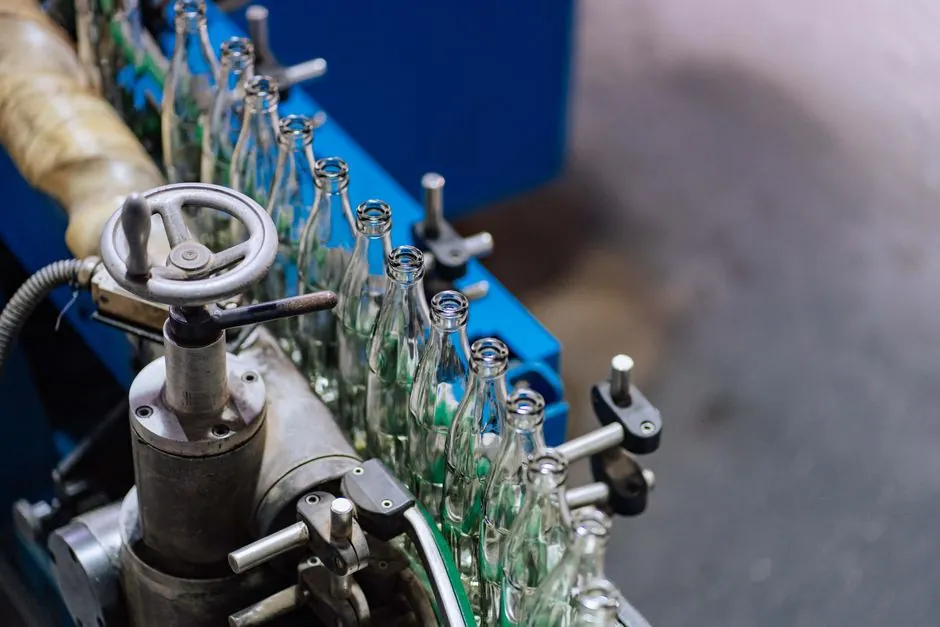
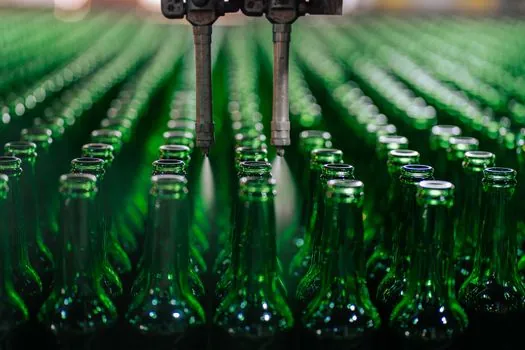
For spices, sauces, preserves, confectionery, oils, and any product packaged in a rigid container, the 2026 spec map is a lineup of cappers, sealers, labelers, and fillers, configurable as automatic or semi-automatic [S2]. Published 2026 reference applications include a Secure Star Capper for vitamin supplements, a Secure Chuck Capper for maple syrup, a Notaris 2-Panel Labeler for spices, an Aquarius Monobloc for hot sauce, and a Magna Capper for fruit; a recent jellybean-producer retrofit used the Magna Capper specifically to "overcome variations in containers and caps which were handled manually" [S2].
Sanitation drives the configuration. Wash-down machine configurations use stainless steel construction with an open frame elevated from the floor, no hollow members or entrapment areas, and covers over cleaning zones, all to avoid microbial growth [S2]. Line design has to absorb the SKU proliferation common in consumer goods, so quick changeover and adaptable format handling are listed as core design requirements, not optional features [S2].
Pallet Wrappers: turntable, mobile robot, and rotary ring
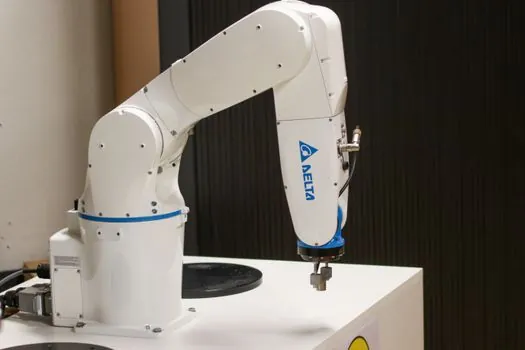
For unit-load protection, the published 2026 spec data clusters around three platforms: mobile stretch wrapping robots, turntable wrappers, and rotary/plat wrappers. A representative mobile robot, the Robopac Robot S7, runs on 230 V with a 12 V 110 Ah (C5) lead-acid battery, handles up to 2200 mm wrapping height, supports unlimited load dimensions, runs 7 hours continuously (200+ loads), pre-stretches film up to 500%, and stores 12 wrapping programs on a 7-inch touchscreen [S5]. A representative turntable, the Masterplat, runs at 10–25 rpm turntable speed with a 1.4–4 m/min film carriage, 230 V 1-phase 50/60 Hz, turntable diameters of 1500/1650/1800 mm, maximum pallet size 1000 × 1200 mm, maximum load height 2200 mm, and maximum load weight 2000 kg [S5].
For higher-volume palletizing, a shrink wrapping machine or rotary-ring stretch wrapper is typically selected instead of a turntable; for warehouses with mixed pallet sizes, a mobile robot class like the Robot S7 tends to be the default, since it moves around the pallet and applies PE stretch film automatically [S5]. Across all three classes, the published 2026 spec sheets converge on the same film: PE stretch film, applied under PLC-controlled tension for cycle accuracy and load stability [S5].
Food-Contact Components: the materials behind the wrapper
Wrapping machines fail in food and beverage plants most often at wear parts, not the main frame, so the 2026 spec map has to include the plastics and grades those wear parts are machined from. FDA-compliant materials listed for food-contact and washdown zones include UHMW, acetal, nylon, PET/Ertalyte, PTFE, PEEK, polypropylene, and HDPE, machined into wear strips, guide rails, star wheels, timing screws, rollers, bushings, bearings, chain guides, scraper blades, and change parts [S4].
The selection criteria are not just food-contact approval. Components are specified against an eight-point list: food-contact compliance, washdown and cleaning-chemical resistance, low moisture absorption, chemical resistance, wear resistance, low friction, dimensional stability, and reduced product-contamination risk [S4]. For product-handling zones the typical part set is rollers, wheels, bushings, bearings, and chain guides; for washdown zones, the same parts are required to be smooth-surfaced, low-friction, and dimensionally stable so that cleaning chemistry does not swell or warp them [S4].
Decision Comparison: which platform fits which product

Cross-platform, the 2026 spec sheets line up against four decision criteria: product form, throughput range, sanitation class, and typical end use. Flow wrappers (HFFS) fit individual solid items (candy bars, cookies, granola bars, bakery, produce) at dozens to 100+ units per minute, with film-driven sanitation and presentation [S1]. Rigid-container lines fit powders, granules, and liquids in jars, bottles, and cans, at line speeds set by the filler and capper, with wash-down stainless open-frame construction [S2]. Mobile pallet robots fit mixed-size unit loads with unlimited load dimensions, 200+ loads per battery cycle, and up to 500% film pre-stretch [S5]. Turntable pallet wrappers fit standardized pallets up to 1000 × 1200 mm, 2000 kg, and 2200 mm height, at 10–25 rpm [S5].
On product form, a bar or cookie maps to flow wrap; a spice jar or sauce bottle maps to a rigid-container line; a pallet of finished cases maps to a stretch wrapper or shrink system. On throughput, flow wrappers lead for unit count, turntable wrappers lead for predictable pallet count, and mobile robots lead for mixed-size warehouses. On sanitation, the wash-down requirement forces open-frame stainless on rigid lines and FDA-grade plastics on wear parts across every class [S2][S4]. On end use, flow wrap is consumer-unit primary packaging, rigid-container lines are retail-unit, and pallet wrappers are tertiary or logistics packaging, which is why the materials lists differ by zone.
Who a flow wrapper is for, and who it is not for
Flow wrappers are specified for stable, dimensionally consistent individual items moving in a single-file infeed: chocolate bars, protein bars, granola bars, cookies, candy, soap bars, and medical devices of similar footprint [S1][S3]. They are not the right pick for bulk powders, free-flowing granules, liquids, or any product that has to be dosed by volume into a formed pocket, where a vertical form-fill-seal (VFFS) or a rigid-container filler is the correct architecture. They are also not ideal for very tall or very soft products that cannot be carried through the forming shoe and the rotating sealing jaws without deformation, since the longitudinal seal is made by heated rollers and the end seal is made by clamping jaws [S1].
Limitations, failure modes, and 2026 constraints
The published 2026 spec sheets are clear on what each platform cannot do. Flow wrappers cap out around "over a hundred products per minute" and are limited by the speed of the end-seal jaws, not the longitudinal seal [S1]. Rigid-container lines are limited by changeover time, which is the reason quick-change format parts are listed as a core design requirement rather than an option [S2]. Pallet turntable wrappers cap at 2000 kg load weight and 2200 mm load height on the published 2026 data; mobile robots remove the size cap but are still bound by the 7-hour battery cycle and the 200+ loads-per-charge envelope [S5].
Materials failures in food lines typically trace to one of three root causes: a non-FDA grade creeping into a food-contact zone, a plastic that absorbs moisture and swells in washdown, or a wear surface that sheds particles onto product [S4]. The 2026 component spec data addresses each by grading every part against the same eight-criterion checklist and by specifying the surface finish and dimensional stability expected for washdown zones [S4].
For 2026 procurement, three signals are worth tracking: (1) Theegarten-Pactec's FPC6 launch at interpack 2026, with its stated focus on digital networking and process reliability, which sets the new baseline for chocolate and confectionery flow wrap; (2) the widening pre-stretch envelope on mobile pallet robots, now up to 500% on the Robot S7 spec sheet, which directly cuts PE film consumption per pallet; (3) the explicit FDA-plastics grading list (UHMW, acetal, nylon, PET/Ertalyte, PTFE, PEEK, PP, HDPE) that 2026 component suppliers are publishing against an eight-criterion selection matrix, which makes the wear-part sub-spec a verifiable line item rather than a footnote.
For component-level specifications, see construction machinery and equipment.
For related coverage, see Needle Valve Advantages and Disadvantages: Spec Map for 2026 Selection.