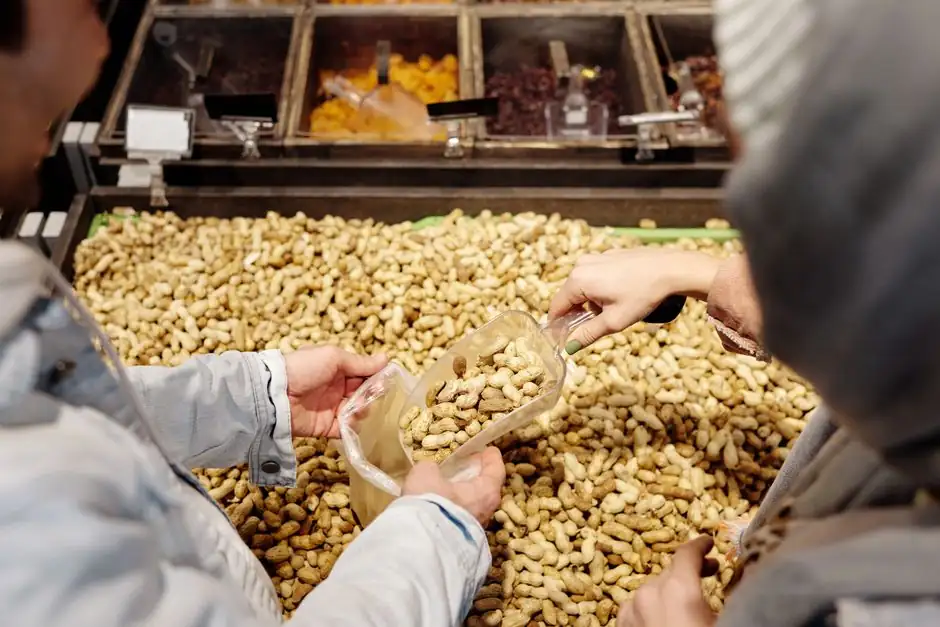
Food grade FIBCs are woven polypropylene flexible intermediate bulk containers sized to carry 2,000-4,000 lb of dry, flowable product, with 37" x 37" x 63" listed as a stock food-grade geometry for production and pet food plants [S3][S7].
The fabric is typically virgin polypropylene with calcium carbonate and UV stabilizer additives, and the assembly is built in certified clean rooms to keep extractables, particulates, and microbial load below the thresholds buyers in flour, sugar, salt, starch, and rice lines require [S1][S4][S5]. Selection decisions are driven by four independent axes: food safety certification, electrostatic class (FIBC Type A, B, C, or D), construction style, and Safe Working Load (SWL) matched to pallet geometry, as outlined in bulk bag application guidance and corroborated by bag filter fabric-handling notes for similar woven PP media [S3][S4][S6].
Food Safety Certification: BRCGS, ISO 22000, and Clean-Room Build
BRCGS (British Retail Consortium Global Standards) is the protocol most often written into U.S. and EU retail food contracts, and BRCGS is benchmarked by GFSI so a BRCGS-audited FIBC plant generally satisfies equivalent food-safety schemes for the same end use [S5]. A BRCGS food grade FIBC is required to start from 100% virgin polypropylene resin and to be produced under documented operational health and safety controls, which is the difference between a food-grade bag and a generic industrial bulk bag that only looks clean [S5].
Clean-room manufacture and lot traceability are the two practical signals a buyer should request in the mill certificate or certificate of conformance, since extractable and migration testing per food-contact protocols is what catches heavy-metal and off-odor contamination before the bag reaches a flour silo [S1][S5]. Plants that already run BRCGS- or ISO 22000-audited quality systems should require the FIBC supplier to hold one of those certifications, because penalties for non-compliance (rejected loads, recall exposure) far exceed any per-bag price differential [S5]. The same hygiene discipline that drives lighting equipment and electric lamps and lamps and light fittings specification in sanitary process areas carries over to packaging material specifications in food and beverage plants.
FIBC Type A, B, C, D: Electrostatic Class Comparison
Type A FIBCs are standard woven polypropylene bags with no electrostatic protection and must never be used to hold combustible dusts or in flammable atmospheres; they are the lowest cost option and the most common food-grade build when the product itself is non-flammable, such as sugar, salt, or rice [S4][S6]. Type B bags have a thin coating that reduces propagating brush discharges but still do not qualify as static-dissipative; their use around flammable powder is constrained, so most food lines stay on Type A or jump to Type C/D for sugar/flour blends that may carry fines [S4][S6].
Type C (conductive) bags use carbon-fiber interwoven yarn and must be grounded during fill and discharge, which is workable in a fixed plant with dedicated ground points but adds operator-procedure burden at a third-party warehouse [S4]. Type D anti-static bags dissipate static without grounding, which is the preferred path for food-grade flammable powders and for any line where a ground connection cannot be guaranteed at every transfer point [S4]. In a food plant the typical rule of thumb is: Type A for inert dry foods (salt, rice, non-dusty sugar), Type D for fine flours, starches, and milk-powder-style products where combustible dust clouds are possible [S4][S6].
Construction Style, SWL, and Pallet Fit

Standard food-grade SWL is 2,000-4,000 lb, with 5:1 or 6:1 safety factors (SF) used for single-trip and multi-trip service respectively, and the bag's footprint must be sized to the receiving pallet so the filled bag does not overhang the deck [S3][S4]. Duffle-top bags, which let the operator tie off the filling spout with the fabric sleeve, are a common food-grade choice because they cut dust release during top-filling and make open-mouth discharge at the next station cleaner [S4][S7].
Four-loop (cross-corner) lift geometry is the default for forklift and single-crane pickup, while multi-loop and single-loop variants are specified where the plant has a dedicated jib crane or where construction machinery and equipment is used to spot bags in awkward bays [S4]. Baffle (Q-baffle) FIBCs keep the bag rectangular during fill, which lets warehouses stack two high without bulging and recovers roughly 20-30% of container cube versus a tube-style bag, a benefit that lines up with the warehouse-storage savings already documented for FIBC versus rigid bins [S3][S4].
Liner Selection and Moisture / Oxygen Barriers
Food-grade polyethylene liners (LDPE, LLDPE, or EVOH coex) inserted inside the woven FIBC are what actually keep the product away from the outer fabric, control moisture-vapor transmission, and prevent sift loss of fine powders during handling [S1][S3]. For hygroscopic products like sugar and salt, a food-contact-grade liner with a heat-sealed or tied top is specified; for oxygen-sensitive products such as malt or specialty flours, an EVOH or aluminum-foil laminate liner is added, often with an oxygen scavenger pack in the headspace [S1][S3].
Tabbed liner construction simplifies fit-up at the filler, while form-fit liners pre-shaped to the FIBC reduce wrinkle traps where product can hang up and contaminate the next batch [S1]. The liner must be food-contact compliant on its own; a clean woven bag plus a non-food-grade liner is still a non-compliant system, so the liner and the FIBC are typically ordered and audited as one part [S1][S5].
Filling and Discharging Equipment Integration
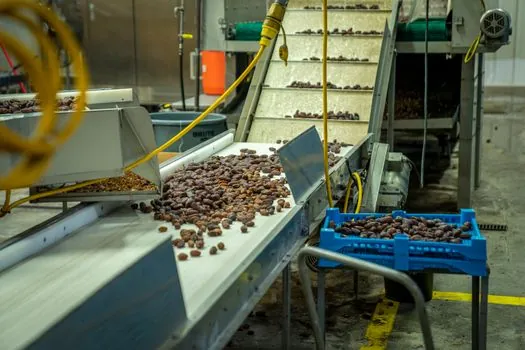
FIBC filling stations feed the bag through a top spout while the bag is suspended on a pallet or four-loop frame, with net-weight or gross-weight scales and integrated dust collection to keep the filler head below typical 5 mg/m^3 nuisance-dust targets in food rooms [S3]. For products with poor flow, vibratory table or air-amp settling on the bag settles the density before the loops are released, which prevents the bag from looking full at the filler and arriving half-full at the customer [S3].
Unloading is done by slitting the bottom spout, by spout-and-sock discharge into a downstream conveyor, or by full disposable-bag systems that cut the operator's dust exposure to near zero, an approach often used for potent actives and high-care ingredients in pet food and dairy plants [S3][S8]. The same disposable-bag discharge pattern is described for IBC tank selection for warehouse automation when a plant wants to eliminate washout steps between SKUs, and the decision logic maps over to FIBC discharge for the same reason: shorter changeover, less cross-contamination risk, no return logistics for the empty container [S3][S8].
UN Certification, Disposal, and Limits of Food-Grade Use
UN-certified FIBCs (UN packaging groups I, II, III under the relevant UN model regulation for bulk packaging) are required when the food bag is also used to ship a hazardous good, which is rare on a flour line but common on a shared packaging asset that occasionally ships chemical or fertilizer SKUs through the same filler [S1][S6]. A food-grade UN bag exists, but the buyer should confirm the UN mark on the bag matches the product's UN packaging group, since food-grade and UN are not mutually exclusive but require a more expensive build with thicker fabric and tighter seam construction [S1][S6].
Food grade FIBCs are not a fit for liquids, for products with sharp particles that can puncture the fabric, or for any process where the bag will be steamed, retorted, or exposed to temperatures above roughly 100 degrees C in service; those applications move to stainless pressure transmitter-equipped rigid IBCs or dedicated process vessels [S3][S6]. They are also the wrong choice for products that demand FDA / EU food-contact migration data on every layer, since a multi-layer laminated food bag is the only configuration that can carry the full migration dossier buyers in infant formula and pharmaceutical excipient lines now require [S1][S5].
Common Selection Mistakes and Trackable Signals
The most common selection error is buying a Type A bag on price for a fine-flour line that should be on Type D, which results in static-discharge near-miss reports and occasional dust flash events at the baghouse; the fix is to write FIBC Type into the spec and have the supplier ship a certificate of conformance with each lot [S4][S6]. The second error is treating BRCGS as a marketing line instead of an audited registration number; the fix is to require the supplier's current BRCGS or ISO 22000 certificate copy attached to the first article and to verify it on the certifier's public registry [S5].
Trackable signals for the next planning cycle: BRCGS audit-pass rate per FIBC plant, lot-level COA for extractables and migration, and dimensional conformity to the pallet on incoming receipt (since bags that overhang a 40" x 48" pallet by even 1 inch get refused by automated stretch-wrap and conveyors downstream) [S1][S4][S5]. For plants adding an in-line metal detector or check-weigher, confirm the bag's fabric and any foil liner will not false-trigger the detector, an issue that has shown up with foil-laminate food bags running on ferrous-only detection heads [S1][S8]. Plants standardizing on food grade FIBCs across multiple lines should also cross-reference gas chromatograph-based off-odor screening, where the same lot-level sampling discipline described in Choosing a Gas Chromatograph for Food and Beverage Labs applies to incoming FIBC lot inspection.