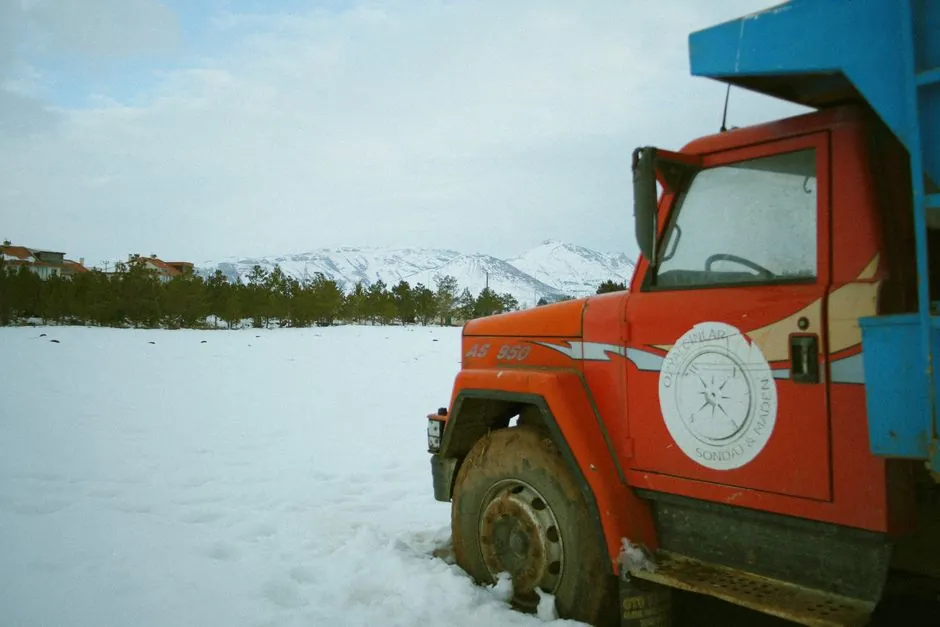
Forestry work splits cleanly between two truck classes: tracked mini-dumpers rated 750-6,000 kg for steep, soft, or narrow sites, and road-legal highway tippers with steel or aluminum bodies running main haul routes up to 15 t payload [S1][S4].
Bed material choice, AR450 abrasion-resistant steel versus aluminum, drives durability, payload, and corrosion trade-offs; drivetrain choice, rubber-tracked mini versus 6x6 on-highway, decides where the truck can actually work [S2][S4].
Payload classes and where each truck class fits
Tracked crawler dumpers in the Liteng LT-series span seven payloads: 750 kg (LT750D, 370 kg operating weight), 1,200 kg, 1,500 kg, 2,000 kg, 3,000 kg, 4,000 kg (LT4000D), and 6,000 kg (LT6000D), all rated at 35° gradeability and driven by direct-injection diesel engines from Youpu, Changfu, Changhao, and Weichai [S1].
On public-road logging, ordinary tippers with one or two rear axles and one front axle handle loads up to 15 t on main and lighter forest roads, while mini-tippers cover tight spaces at 1-3 t payloads [S4]. For contractors straddling steep forest extraction and the public highway, see the spec map for dump truck selection for road construction, which uses overlapping payload and axle logic. Forestry fleets operating close to fields and orchards also share traction logic with agricultural track carriers and ADTs.
Steel versus aluminum body: a criteria-based comparison
AR450 steel beds take the impact and abrasion of unprocessed logs, rocks, and stumps day after day, which is why heavy thinning operations running raw timber default to steel [S2].
Aluminum bodies cut tare weight, raise legal payload within Gross Vehicle Weight Rating (GVWR), and resist corrosion in wet, muddy sites, but they dent more easily under the same impact loading [S2]. For brush and wood chips, both options are commonly paired with sideboard extensions, solid or slatted, that raise cubic yardage and let a single truck move more low-density material per trip [S2]. On heavy demolition-style sites that occasionally feed forest jobs, the same steel-versus-aluminum logic appears in demolition dump truck selection.
Drivetrain and running gear for soft, steep, and narrow terrain
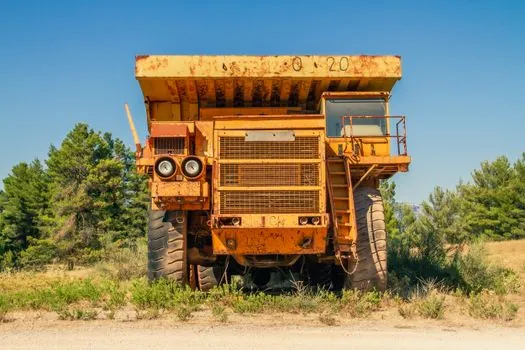
Rubber-tracked crawler dumpers distribute load over a long track footprint, so they keep moving on rice fields, swamps, muddy field roads, rugged mountain roads, soft grasslands, and icy surfaces where a wheeled truck would bog [S1].
Wheeled loaders and trucks remain faster on even ground; tracked carriers win on soft or steep slopes; trailer-mounted loaders add reach at busy landings [S4]. Crawler bodies stay compact, in the Liteng range from 1,900x750x1,200 mm at 750 kg payload up to 3,500x1,600x2,100 mm at 6,000 kg, so they slip through narrow mountain tracks, woodlands, and tight farm lanes that block conventional transport [S1]. For steeper, smaller-payload work, mini dumper trucks for hilly timber yards cover the 1-3 t class with hydraulic tip and controlled dumping on slopes.
Hydraulics, tipping geometry, and operator safety
Forestry tippers rely on a hydraulic cylinder that tilts the bed, usually to the rear, dumping a load of logs, soil, or debris in seconds and avoiding jams in wet bark or tacky mud [S4].
Cab-controlled tip means the operator never steps into the wet, cold, or hazardous ground at the dump point, and the in-cab control keeps cycle times tight on thinning work where trucks cycle between landing and mill [S4]. A chipper-truck combination reduces fuel consumption by roughly 15 percent compared with operating a diesel dump truck and a separate chipper, cuts haul miles by an average of 45 miles per job, and saves about 5 tons of CO2 annually for a mid-size contractor [S3].
Forest thinning duties versus heavy log haul: who each truck is for
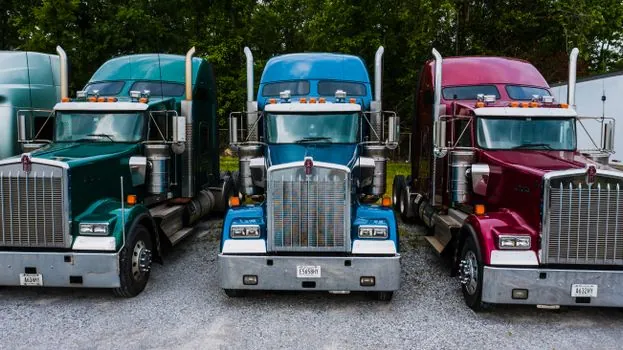
Forest thinning produces brush, limbs, and small-diameter wood at high volume but low mass, so sideboard-extended steel or aluminum bodies on a road-legal chassis are the typical answer, and the same chassis doubles for biomass, mulch, and pulp haul [S2].
Heavy log haul from clear-cut or final-harvest sites needs a higher-capacity tipper or a dedicated mining-class dump truck where payload, ground pressure, and tire survival dominate the spec, while arboricultural tree-care work uses bucket trucks with chip boxes rather than dump bodies [S4]. Forestry bucket trucks, tippers, log lorries, and long-log trailers each cover a different link in the chain, so the right dump truck is only one piece of the fleet.
Bed upgrades that change forestry productivity
Side extensions, solid for chip retention or slatted for visibility and weight, are the highest-leverage upgrade for thinning because they directly raise cubic-yard capacity per cycle [S2].
Hardox/AR450 inner liners, reinforced top rails, and tailgate chains rated for log impact extend service life on raw-timber hauls, while integrated chipper bodies add a single-machine workflow that halves on-site handling stages [S2][S3]. For contractors comparing forestry duty to heavier earthworks, the upgrade logic overlaps with demolition-spec body choices, where steel grade and tailgate design drive uptime. Forestry-specific bed modifications and matching body work, including reinforced aprons and quick-release tailgates, are catalogued alongside broader dump truck configuration references used by spec-driven buyers.
Sourcing, standards, and verifiable next signals
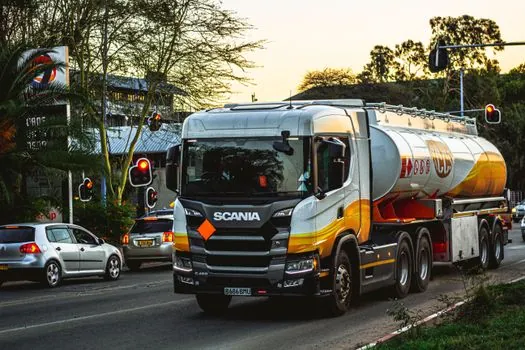
Track a small set of concrete signals when sourcing a forestry dump truck: published payload and gradeability (for example 750-6,000 kg at 35° in the Liteng range), engine make and displacement, track or axle count, and bed material grade (AR450 steel or 5xxx-series aluminum) [S1][S2][S4].
Two trackable signals to watch through the rest of 2026: OEM disclosures on AR450 versus Hardox 450 sourcing for forestry bodies, and regional forestry-equipment market reporting for the U.S. Northeast, Southeast, Upper Midwest, and Upper Northwest, which remain the most active forestry-truck markets [S4].
Detailed specification references: reach truck.