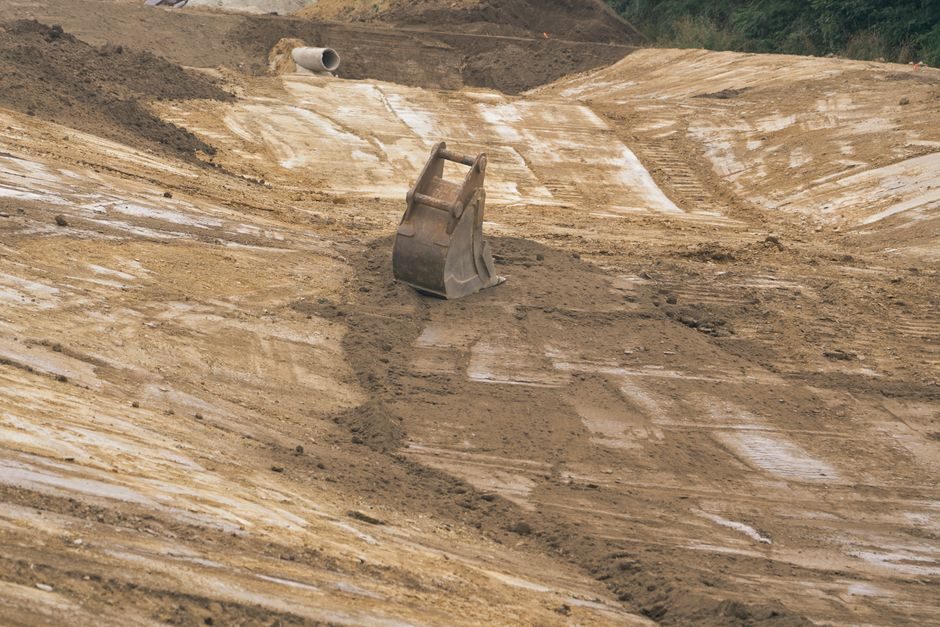
An excavator-based log loader is the standard swing machine in mechanized forestry: undercarriage frame height is raised to clear stumps and slash, the belly plates are heavier than on construction units, and the cab is moved higher and forward for visibility around the boom [S1].
Forestry-specific carriers are not a single product class but a chassis configuration: tracked, higher ground clearance, reinforced frame, ROPS/FOPS cab meeting OSHA 1910.266, and hydraulic circuits sized for grapples, shears, and mulchers [S1][S3].
Forestry chassis configuration versus construction excavator
Forestry chassis variants raise undercarriage height and add heavier belly plating to absorb impact from stumps, logging debris, and rough ground, and they relocate the cab higher and forward to lift the operator's eye line over a raised boom and a tall attachment [S1].
The protective cab on a converted or purpose-built forestry unit must carry rollover protective structures plus falling object protective structures, with solid or mesh shielding on the top, bottom, and sides of the cab — this is a hard requirement, not an option, when construction equipment is modified for forest work [S1].
Three slope factors govern where a tracked or wheeled carrier can work: safety (the no-tip angle), gradeability (above which fluids leak and the engine cannot pull load), and soil disturbance — the last is the one that pushes loggers toward wider tracks on soft ground even though tracked and wheeled machines exert roughly equal ground pressure at equal machine weight [S1].
Operating weight and engine power envelope
Compact forestry carriers in the 3-6 t class pair diesel engines in the 15.7-46 hp band with hydrostatic drive and main-relief hydraulic pressure near 4,977 psi across two 33.2 gpm pumps, which is enough to run a small grapple or a 2-3.5 t-class mulcher head [S5][S2].
Mid-size forestry excavators in the 19-20.5 t operating-weight band, exemplified by John Deere's compact forestry machines at 19,700-20,500 kg (43,431-45,300 lb), use a 129 kW (173 net hp) engine, deliver 126 kN (28,330 lb) of bucket digging force, and dig to 5.83 m (19 ft 2 in) with 9.58 m (31 ft 5 in) of maximum reach [S8].
Full-size log-loader and harvesting carriers span much wider: John Deere's forestry-fleet figures reach 46.6-399.0 kN (10,476-89,699 lb) of bucket digging force, 30.7-280.0 kN (6,902-62,946 lb) of arm digging force, 2.12-5.4 m (6 ft 11 in to 17 ft 9 in) arm lengths, and 6,650-57,085 kgf (14,661-125,850 lb) of drawbar pull, so the same OEM catalog covers everything from a yard loader to a 50+ t harvester [S8].
Excavator classes matched to forestry tasks
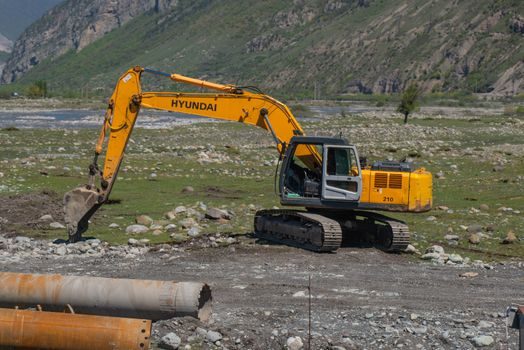
Stump pulling, trail building, and selective log handling fall to compact excavators in the 3-9 t class; mulching and roadside clearing fit 9-15 t machines; full-tree handling, processor-duty work, and steep-slope harvesting need 20 t-and-up carriers with long-front or log-loader boom geometry [S4][S7][S8].
Link-Belt breaks its own forestry line into a 40 Series and a heavier 40B Series, distinct from the X4S, X4, Spin Ace, Heavy Duty, Long Front, and Material Handling lines used on construction sites, so forestry buyers should treat the 40/40B as the only relevant sub-family when speccing a purpose-built log loader [S7][S4].
Construction-based X4S and X4 models can be converted for light forestry work (stump digging, ditching, brush clearing) because forestry duties overlap with construction below the 20 t class, but they need ROPS/FOPS cab upgrades and heavier belly plating before they meet OSHA 1910.266 in a logging setting [S1][S4].
Attachment selection by carrier class
Forestry mulcher heads scale with carrier weight: 2-3.5 t excavators pair with FM-22E units, 4.2-6.5 t units with FM-36E, 6-9.5 t with FM-40E/40ET, 9.5-15 t with FM-48E/48EH, and 15-32 t with FM-60E, while skid-steer mounts (FM-36 at 25-55 hp up to FM-72 at 70-140 hp) cover the smaller carrier side [S2].
Stump buckets, grading buckets, and the dozer blade are the three most common factory-fit attachments on a log-loader base, and the blade doubles as a soil-levelling tool for building skid trails and decking areas [S6].
Disc-style mulchers (DS-36E for 15-32 t excavators, DS-60 for 70-140 hp skid steers) are a different cutting geometry from drum heads, and they trade tooth life for higher surface feet per minute — a useful distinction when matching a head to the carrier's hydraulic horsepower rather than just its weight class [S2].
Tracked versus wheeled decision in the woods
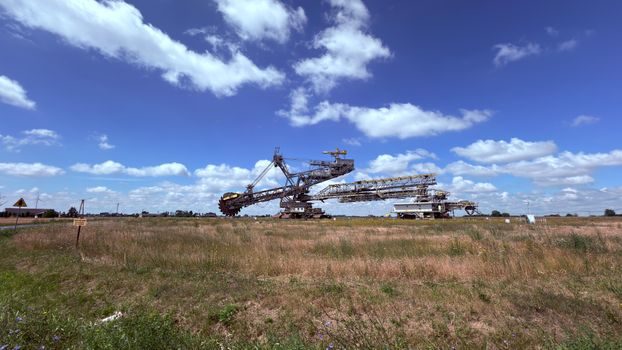
Tracked carriers run slower than wheeled carriers but pull better on loose, wet, or root-matted soils; wheeled carriers are faster on roads and mill yards and cause less surface damage on dry, firm ground, while dual tires or wider shoes lower ground pressure on both layouts [S1].
For long-distance log extraction, tracked carriers lose productivity because of their lower road speed, so many forestry fleets split the duty: tracked excavator-based loader for in-woods handling, wheeled loader for the mill yard, and a self-propelled carrier (a 6x6 or rough-terrain unit) for moving loaders between blocks [S1][S3].
Tracks concentrate displaced soil at the turning point — a partial-cut or thinning operation with tight turns will show noticeably more rutting on tracks than on tires, which is one reason some contractors spec high-flotation tires on lighter yard machines [S1].
Spec comparison: carrier class versus forestry fit
Compact (3-9 t, 15-75 hp): best for stump pulling, trail work, light mulching; cheapest conversion path from a construction mini, but needs ROPS/FOPS and belly plating for OSHA 1910.266 compliance; limited grapple size restricts log diameter [S1][S5].
Mid-size (9-20 t, 75-173 hp): the sweet spot for roadside mulching, small-log handling, and selective harvesting; John Deere's 19,700-20,500 kg / 129 kW forestry compact sits in this band with 5.83 m dig depth and 126 kN bucket force [S8].
Heavy forestry (20-50+ t, 200-360 hp): long-front or purpose-built log-loader geometry, 399 kN-class bucket force and 57,085 kgf drawbar pull on the upper end; required for full-tree processors, large-diameter grapple work, and steep-slope harvesting [S4][S7][S8].
Construction-based X4S, X4, Spin Ace, Heavy Duty, Long Front, and Material Handling models from Link-Belt are NOT direct substitutes for a forestry 40/40B carrier — they are specced for trenching, lift, and material handling, not for the raised frame, forestry cab, and stump-cycle duty cycle of a logging operation [S4][S7].
Operational limits, failure modes, and sourcing standards
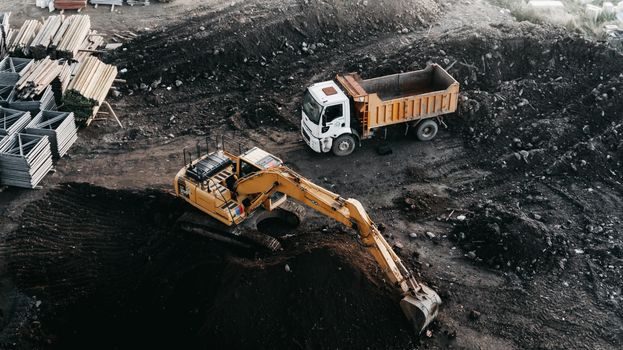
The single largest spec error is pairing a forestry cab-less construction excavator with logging duty: OSHA 1910.266 requires ROPS, FOPS, and solid or mesh cab shielding for any machine in forest operations, and operators must modify converted construction equipment to meet it before it enters the woods [S1].
Undercarriage wear is the dominant cost line in a forestry excavator: stump strikes, slash entanglement, and abrasive soil combine to shorten track and idler life versus construction use, which is why forestry carriers spec heavier belly plates and wider shoes as standard rather than as options [S1].
Hydraulic overheating is the next failure mode to plan around: continuous mulching or processor work loads the circuit to main-relief for long stretches, so the carrier's cooling package and continuous-horsepower rating matter more than its peak engine power when the duty cycle is high [S2][S5].
Buying path and what to verify before signing
For a new purpose-built forestry carrier, start from the OEM's forestry sub-family (Link-Belt 40/40B, John Deere forestry compact, Wacker Neuson excavator) rather than a construction line, and download the matching spec sheet to confirm raised undercarriage, forestry cab, and forestry hydraulics are standard rather than dealer-installed options [S7][S3][S8].
For a conversion path, buy the smallest construction excavator that still covers the production target, then budget for the ROPS/FOPS cab, mesh shielding, raised frame, and heavier belly plates required by OSHA 1910.266 — and confirm the local dealer can supply parts and undercarriage service, because forestry duty shortens service intervals [S1][S3].
Two trackable signals to watch: OEM forestry line expansions in the 9-20 t class, where the spec gap between construction and forestry units has narrowed, and the wider rollout of disc mulcher heads (DS-36E, DS-60) as a price-competitive alternative to drum heads in the 15-32 t excavator band [S2][S8].
Spec-level background on the components involved: excavator, pressure transmitter, and flow meter.
See also our earlier report, Spec-Driven Cut-Off Machine Selection for HVAC Installations.