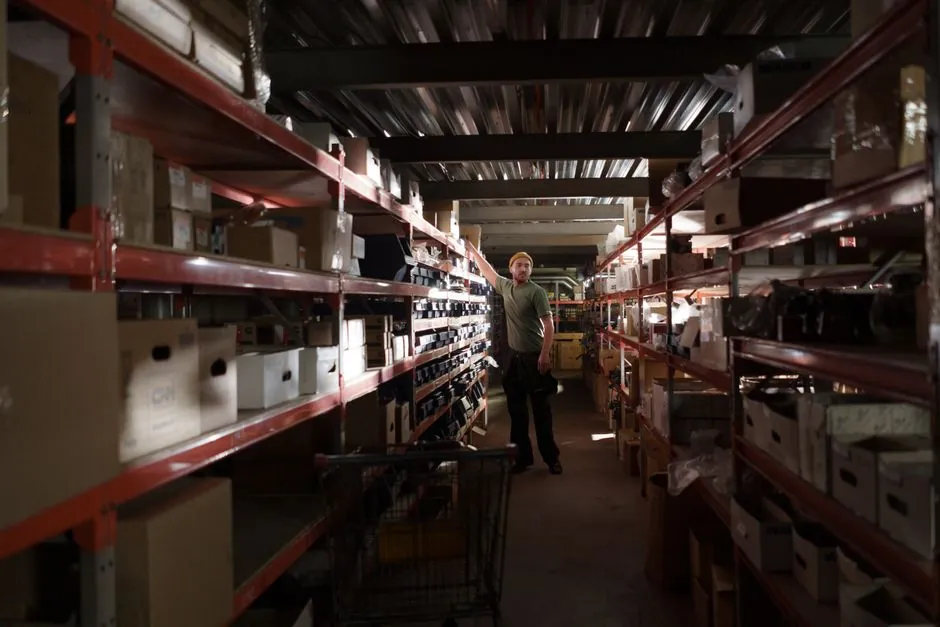
Forestry operations that handle logs, cants, and sawn boards need cantilever-based storage racks with arm lengths from 8 to 24 ft, not standard teardrop pallet rack, because pallet rack columns block forklift access to long material and cause board sag [S3]. A 20 ft upright paired with six arm levels is the baseline configuration for high-density lumber yards [S3].
For log yards, firewood processing, and sawmill green-chain storage, the decision pivots on board length, bundle weight, throughput direction, and outdoor exposure. The rack category spans cantilever lumber racks, vertical sheet racks, and bar-stock trees, each solving a different length and orientation problem [S1][S2].
Why pallet rack fails on long forestry material
Pallet rack columns block forklift access when loading 16–20 ft boards, and beam spacing on standard teardrop rack cannot support lumber along its full length, so boards sag or bow under their own weight [S3]. Selective pallet rack and drive-in rack are designed for unit loads on 40×48 in pallets, not stick lumber, pipe, or bar stock over 8 ft [S1].
Closed-bottom shelving also fails for forestry material because it lacks the depth to accept full bundles of dimensional timber, and the shelves concentrate point loads rather than distributing weight along the board length [S3]. For an operation handling 8 ft or longer material, pallet racking is the wrong tool and cantilever is the only category that solves the column-access problem by removing the front uprights entirely [S3].
Cantilever rack anatomy: uprights, arms, bracing
Every cantilever rack, whether used for lumber, pipe, or bar stock, is built from three components: vertical uprights (the primary load-bearing columns), horizontal arms that extend from the upright to support the load, and bracing (X-braces or horizontal braces) that ties adjacent uprights together to resist racking under load [S3]. Single-sided cantilever runs along a wall, double-sided cantilever stands in open floor space with arms on both sides and roughly doubles storage density per upright [S3].
Arm length on forestry-grade cantilever systems commonly runs 24 to 48 in for short-stock and 8 to 24 ft for full-length lumber, with the longer arms requiring heavier arm sections and more frequent bracing. A 20 ft upright typically accepts six arm levels, so a single upright column carries six stacked bundles if bracing and base-plate capacity are sized for the load [S3]. Double-sided systems demand careful left-right load balancing because an unbalanced arm on one side creates a tipping moment on the upright [S3].
Horizontal cantilever vs vertical sheet rack vs bar-stock tree
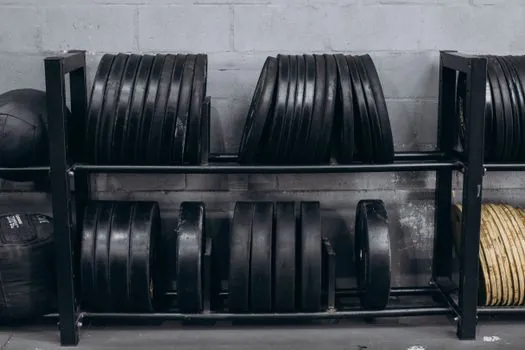
Horizontal cantilever is the go-to choice for lumber yards, sawmill green chains, and high-volume distribution because the material rests flat across the arms and is supported along its full length, with unobstructed forklift access from the front [S3]. This type stores dimensional lumber, timber, pipe, bar stock, long panels, rebar, and conduit in the same bay by changing arm spacing, and it is the correct system whenever forklifts are handling the material and board length exceeds 8 ft [S3].
Vertical sheet rack stores material upright using dividers or slots and is built for plywood sheets, MDF, particle board, cabinet-grade panels, and short boards, particularly in cabinet shops and finish-goods areas where floor space is constrained [S2][S3]. Light-duty vertical sheet racks in the KASTFORCE KF1004 pattern measure 17 in tall with 13 in deep shelves, adjustable in width from 48 to 72 in, and carry roughly 110 lb per level for workshop use [S6]. For heavier structural plywood stacks, heavy-duty vertical sheet racks are stackable 2 high, which doubles capacity without doubling the floor footprint [S2].
Bar-stock trees are a separate product class for long round, square, or hex bar that needs horizontal cantilever-style storage but in a tree-arm configuration; horizontal bar-stock trees are available in single and double-sided models and are specified when organizing long items, clearing floor space, and reducing trip hazards around saws and CNC cells [S2]. For forestry use, bar-stock trees are most often applied to handle dowel stock, tool handles, and small-diameter round wood rather than full logs.
Firewood and small-cord sizing: when a quarter-cord rack is enough
For firewood processing yards, U.S. retail sizing breaks storage into cord fractions: a quarter-cord to half-cord rack is typically sufficient for residential and small-dealer operations, and any larger footprint should be justified by actual burn rate rather than guesswork [S4]. Green wood holds up to 50% moisture by weight and needs 6 to 12 months of seasoning for hardwoods before it burns cleanly, so the rack is functioning as an active seasoning bay, not just a holding bin [S4].
A minimum 2–3 ft clearance between a firewood pile and garden beds, structures, or other combustible storage is the standard airflow and pest-separation buffer [S4]. For commercial firewood processors running multiple cords per week, the same airflow rule applies but rack footprints scale linearly: a full cord occupies 128 ft³ stacked, and double-sided outdoor cantilever with 8 ft arms can hold that volume in a single 8 ft bay if arm capacity is verified.
Outdoor and agricultural exposure: coatings, ventilation, pest control

Forestry yards store material outdoors or in open-sided sheds, so rack specification must address moisture, UV, and biological attack rather than just static load. Agricultural-grade rack designs for farm and forestry use include adjustable shelving, ventilation openings, pest-resistant coatings, and structural bracing rated for outdoor humidity cycles [S8].
Three spec details that determine whether a cantilever rack survives a logging or sawmill environment: hot-dip galvanizing or powder coat over zinc-rich primer for the uprights and arms, closed-base footings that shed water rather than wicking it into the concrete, and cross-bracing on every other bay to handle the lateral loads from forklift impact and wind on outdoor installations. Wire mesh decking is a common accessory on indoor pallet rack but should not be added to cantilever arms because it traps moisture against stored lumber and accelerates mold and insect damage on green boards [S1][S8].
Loading, FIFO, and safety constraints specific to forestry
Cantilever lumber racks are loaded and unloaded by forklift from the front face, with no columns in the forklift's path, so the operator can place a full bundle of 16 ft 2x4s without driving around an obstruction [S3]. For operations running FIFO inventory, a rack reorganization plan is required because cantilever itself is a LIFO system; a separate pick-face flow lane is the standard workaround when seasoning time and stock rotation both matter [S7].
Load balancing on double-sided cantilever is non-negotiable: an arm loaded on one side with no counter-load on the opposite arm multiplies the tipping moment on the upright and has been the root cause of multiple sawmill rack failures. Operators should also confirm that the arm capacity rating matches the heaviest single bundle, not the average bundle, because a green-oak bundle can run 30–40% heavier than the same volume of kiln-dried pine.
Decision map: which rack for which forestry job
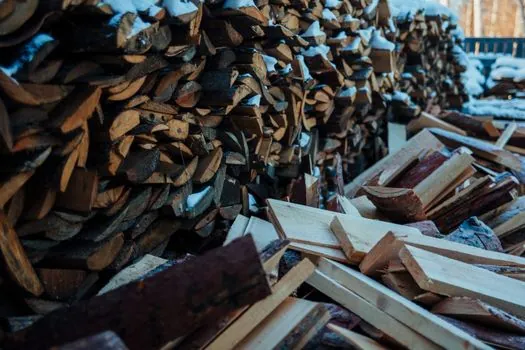
For board lengths over 8 ft, forklift handling, and high throughput, horizontal cantilever is the correct pick, with arm length matched to the longest stock (commonly 16 or 20 ft) and double-sided configuration for open-floor yards [S3]. For plywood, MDF, and cabinet-grade sheet goods stored upright, a vertical sheet rack is the right tool, and a stackable 2-high unit doubles capacity without doubling the floor footprint [S2]. For long round, square, or hex bar under 12 ft, a horizontal bar-stock tree in single- or double-sided form is purpose-built and clears the trip-hazard issue around saws and CNC cells [S2]. For firewood and small-cord retail, a quarter- to half-cord outdoor rack with 2–3 ft clearance to combustibles is the right scale, and overbuilding beyond actual burn rate wastes space and money [S4].
Working with bundled palletized forestry products on standard 40×48 in pallets, a selective pallet rack or drive-in rack remains the correct tool, but it is a complementary system, not a substitute for cantilever. For smaller stick and tool inventory, a carton flow or shelving module fills the role between the long-material cantilever and the bench. Operators looking at the upstream equipment side of a green chain should review the forestry bulldozer selection map for LGP and winch specs, and the aerial work platform selection for forestry for height and ground-pressure constraints on log-stacking work.
Track the next change points: any update to ANSI MH16.1 or RMI cantilever capacity tables, and any new OSHA 1910.176 guidance on outdoor cantilever bracing for log yards. Watch for sawmill and firewood processor OEMs publishing matched rack footprints for their standard bundle sizes, since those numbers drive arm-length standardization across the industry.