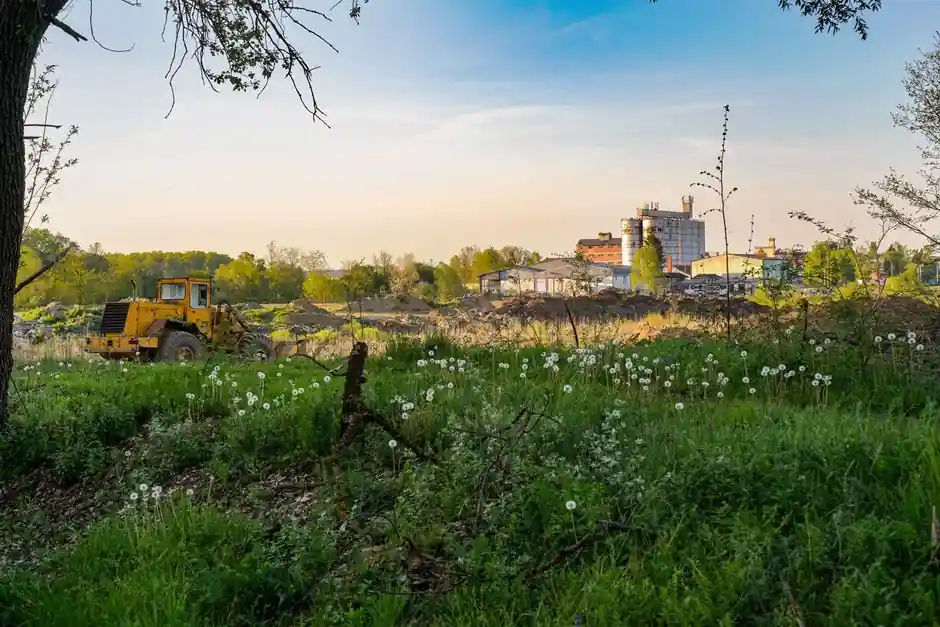
A logging-class dozer in the D6-D7 size class with Low Ground Pressure (LGP) tracks is the baseline spec for serious timber operations; standard-track logging dozers run 6-8 psi of ground pressure, while LGP configurations drop that to 4.5-5.1 psi on soft forest soils [S2]. That 1.5-3.5 psi gap is the difference between working through a wet skid trail and spending the day winching a sunk machine out of the muck.
Power for forestry dozing clusters around 150-215 hp at the engine, with 150 hp flagged as the practical floor for sustained timber work and 215 hp on the Caterpillar D6 XE LGP via electric-drive technology delivering 35% better fuel efficiency than the prior D6 platform [S1][S2]. Lighter D4-D5 frames still earn a place in selective cutting, where keeping the blade narrow and the ground disturbance low matters more than raw production.
Ground Pressure and Track Width: Why LGP Beats Standard Tracks in the Woods
Ground pressure below 5.1 psi is the threshold most contractors use to keep a logging dozer working through soft, stump-littered soil rather than sinking to the bottom of the undercarriage [S2]. Standard-track dozers sit at 6-8 psi, which is acceptable on a dry landing but marginal the moment you push onto a freshly cut skid trail or a spring-thaw swamp line. Wider LGP shoes spread the same machine mass over more square inches of contact patch, which is why the D6 XE LGP, D6 LGP, and equivalent D7 LGP platforms are the default in mechanized cutblocks.
Track choice also drives undercarriage life. Forest floors chew up standard track chains with stumps, root balls, and embedded rock; purpose-built forestry undercarriages use heavier link pitches, sealed-and-lubricated track pins, and full-length track-guarding to absorb side impact [S2]. A logging dozer with a reinforced undercarriage can outlast an unprotected machine by roughly 30% in cycle-life terms, based on National Timber Operations Council field data cited in the forestry-bulldozer selection guide [S1].
Horsepower, Drawbar Pull, and the D4-D5 vs D6-D7 Split
Drawbar pull, not flywheel horsepower, is the number that actually pushes a slash pile or drags a windfall across mineral soil, and drawbar pull scales with operating weight and the lower gear ratios logging dozers run in [S2]. The D6 XE LGP pairs its 215 hp electric-drive powertrain with a low ground pressure undercarriage to keep the same drawbar pull as a heavier conventional machine while burning 35% less fuel [S2]. For most logging contractors, that is the most cost-relevant single spec on the data sheet.
Below the D6 class, D4-D5 dozers handle selective cutting, pre-commercial thinning, and small-parcel clearing where the ground has to be treated gently and the blade is doing more nudging than pushing [S2]. Above the D6, D7 and D8 platforms are reserved for heavy slash, large-diameter windfall, and steep-slope roading where the extra weight and track contact area justify the fuel burn. The general rule from logging-equipment selection guidance: pick the smallest class that still moves your worst-case slash pile, and step up only when ground pressure or drawbar pull, not horsepower, fails first [S2].
Blade, Winch, and Undercarriage Options That Change the Job
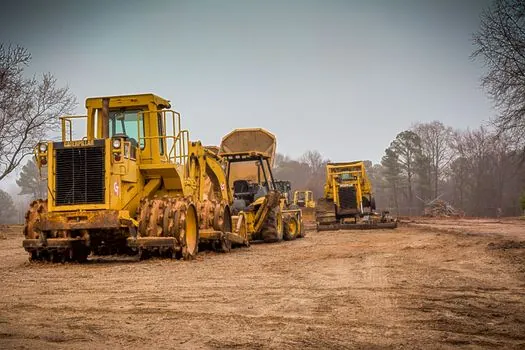
Wide, low-profile blades win on stability in tight timber and on slash piles; semi-universal and straight blades both appear on logging dozers, with the choice driven by whether the work is mostly push-clear or side-casting [S1][S2]. A factory winch option turns a dozer into a log-extraction tool on slopes too steep to drive a skidder across, and the same winch doubles as a self-recovery device when the undercarriage finally finds a hole it cannot climb out of [S2].
Undercarriage protection, not the blade, is usually the first system to fail in forestry service. Track-guarding, full-length rock guards, and sealed-and-lubricated chains are specified for logging dozers for that reason, and they are cheaper to specify at order time than to retrofit after the first season [S2]. Buyers comparing bids at the same horsepower class should weight undercarriage guarding and LGP availability more heavily than paint colour or dealer proximity; the LGP option on a D6-class machine is what unlocks the 4.5-5.1 psi ground pressure range that defines modern logging dozing [S2].
Forestry Bulldozer vs Forestry Mulcher: When to Use Which
On jobs that stay as land, a forestry mulcher beats a bulldozer: it grinds brush where it stands, leaves a soil-protecting mulch layer, and the ground is walkable the same day, with no piles to burn or haul [S3]. On jobs that are headed for a slab, septic field, pond dam, or plowable field, a bulldozer with a root rake is the right tool, because the stumps and root balls have to come out of the ground, and a mulcher can only grind them flush [S3].
The economic crossover is straightforward: if the next step is excavation or grading, a dozer earns its day rate; if the next step is grass, browse, or wildlife cover, mulching usually wins on total cost because the dozer leaves bare, erosion-prone soil plus debris piles that have to be ground, burned (where legal), or hauled [S3]. On ashe juniper (cedar) ground, mulching alone is often permanent because cedar does not resprout from a cut stump, which is why many Hill Country and Edwards Plateau clearing jobs no longer send a dozer at all; on heavy mesquite ground headed for pasture, a dozer-and-root-rake pass is still standard because mesquite resprouts from the root crown [S3].
Selection Criteria: Putting LGP, Horsepower, and Attachments on One Page
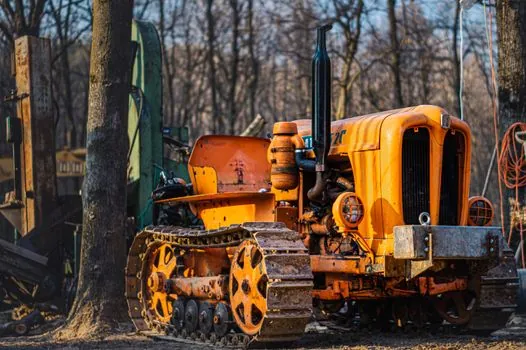
Decision matrix for picking a forestry dozer, drawn from the logging selection guide and mulcher/dozer comparison [S1][S2][S3]:
<b>Ground pressure:</b> LGP at 4.5-5.1 psi for soft, wet, or stump-littered ground; standard tracks at 6-8 psi only on dry, prepared landings [S2].
<b>Engine class:</b> D4-D5 for selective cutting and pre-commercial thinning; D6-D7 (150-215 hp) for general logging, skid-road building, and slash piling; D8+ for heavy slash and large-diameter windfall [S1][S2].
<b>Attachment fit:</b> factory winch for steep-slope log extraction and self-recovery; wide low-profile blade for stability in tight timber; root rake when stumps must come out; forestry undercarriage guarding whenever the machine will see stumps and root balls [S1][S2][S3].
<b>Fuel efficiency:</b> electric-drive platforms such as the D6 XE LGP deliver 35% better fuel burn than prior D6-series machines, which is a meaningful operating-cost line for high-hour logging contractors [S2].
<b>Process match:</b> use a bulldozer when the next step is dirt work, a slab, or a pond; use a mulcher when the next step is pasture, views, trails, or selective clearing around keeper trees [S3].
Limitations and Failure Modes in Forestry Service
The honest cost of dozing is rarely the machine day; it is the piles afterwards and the finish work on disturbed dirt, which is why dozer jobs are typically quoted with a written cleanup plan, not discovered later [S3]. Bare soil exposed by a dozer is erosion-prone until vegetation returns, and on undeveloped land that erosion risk is the main reason a mulcher is preferred over a dozer when the land is staying land [S3].
Failure modes cluster around three systems: undercarriage wear from stump and root impact, hydraulic overheating from constant high-load dozing, and structural cracks in the blade mount and C-frame from pushing beyond the machine's rated drawbar pull. Logging-equipment selection guidance treats reinforced undercarriages, full-length track guarding, and a winch rated for the heaviest log the operation expects to handle as the three highest-ROI options at order time, ahead of comfort cab upgrades or telemetry packages [S1][S2]. Buyers comparing the [S2] logging guide against the [S3] mulcher/dozer field experience will see the same conclusion from two angles: spec the undercarriage and the ground-pressure system first, then size the engine, then choose the blade, and only then negotiate the rest.
For a broader view of how size-class selection plays out on related heavy-equipment jobs, the wheel loader selection map for port bulk handling and the wheeled excavator selection guide apply the same horsepower-class-and-attachment-fit logic to adjacent machines. On the mulching side, the comparison between a dozer and a forestry mulcher lines up closely with how an excavator is chosen over a dozer for surgical stump work in wet ground, where a blade would only smear the soil.
Detailed specification references: bulldozer, pressure transmitter, and flow meter.
For related coverage, see Screw Pump vs Concrete Pump Truck: Selection Matrix for 2026 Jobsites.