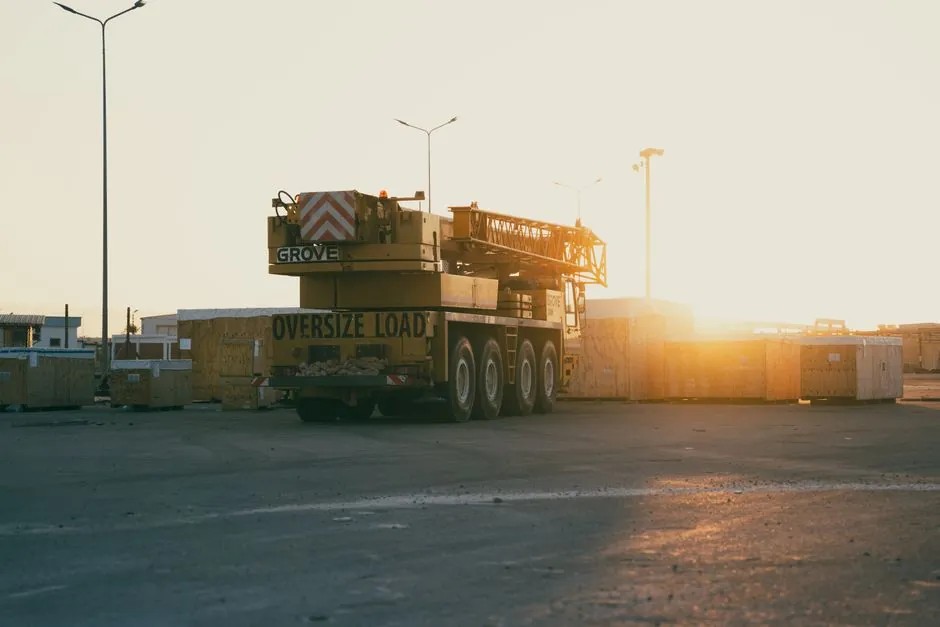
For forestry buyers in mid-2026, the working envelope matters more than the nameplate lift moment: Kesla's Z14 CITY crane runs 14 t payload at 8,080-10,100 mm working height in the boom-tip class [S3], while Fassi's F120B.2 e-dynamic hits 18.6 m hydraulic outreach at 11,100 kg lift and 1,855 kg body weight for lighter carriers [S4]. On the heavy end, Liebherr's LTC 1050-3.1E delivers 50 t capacity at 48 m hook height and 39 m horizontal reach from a 3-axle chassis [S6].
Articulated forestry cranes (Befard, Poland) still dominate European cut-block work because the knuckle geometry folds logs inside a tight lane; telescopic loader cranes (Hiab, Fassi, Effer) are winning new orders in Nordic thinning and roadside loading where 17-21 m horizontal reach cuts shuttle cycles. The 2026 catalogue window shows Hiab pushing the iX.188 HIDUO at 17,949.3 kg max lift and 17.5 m hydraulic outreach, with manual extensions stretching to 19.2 m [S5].
Articulated Z-boom vs telescopic loader crane: where each class wins
The structural decision is geometry, not capacity. Articulated forestry cranes (knuckle-boom, Z-boom) keep the load close to the column, so the lift moment decays fast with radius, and they fold into a narrow envelope; the trade-off is a 6-10 m practical horizontal reach when loading 3-6 m pulp bolts. Kesla's Z14 CITY family uses a cast slew system with oil bath and a wide-angle joint starting at the 204 model to stabilise boom position across angles, with the proSTABILITY controller cutting lift when overload, chassis tilt, or ground-loss events are detected [S3].
Telescopic loader cranes (Effer iQ.2255 HP, Fassi F120B.2, Hiab iX.188) carry a heavier first boom and 2-4 telescoping sections, pushing hydraulic reach past 17 m on mid-class machines and past 39 m on 50 t units. Effer's iQ.2255 HP sits at the flagship end with 55 m working height and 39,900 kg total weight, sized for 5+ axle carriers [S1]. For forestry buyers, telescopic wins when the cycle is grab-then-drive, not stack-then-stack: roadside processing yards, biomass terminals, and rail-siding loading.
Selection criteria that actually filter the shortlist
Five specs prune a 30-model shortlist to 3 finalists in 30 minutes. (1) Required horizontal reach at full load, not nameplate reach: Fassi's F120B.2 e-dynamic drops from 18.6 m at light load to 5.7 m at the heavy envelope, so the 18.6 m headline is misleading [S4]. (2) Stabilizer envelope and outrigger spread: forestry carriers rarely run full outriggers on soft cut-block soils, so look for a "limited lift sector without stabilizer legs" mode, which Kesla's proSTABILITY provides explicitly [S3]. (3) Carrier axle count: 2-axle carriers (Fassi F120B.2) suit 11 t-class units, 3-axle is mandatory above ~30 t, and Effer's 39,900 kg iQ.2255 needs a 4-5 axle chassis [S1][S4]. (4) Mass on the subframe: Hiab's iX.188 HIDUO holds 1,946-2,786 kg body weight, leaving payload on the truck for timber [S5]; Fassi's F120B.2 at 1,150-1,855 kg is even lighter [S4]. (5) Control interface: radio remote plus top-seat (Kesla proSTABILITY, Fassi RCH/RCS) is now table-stakes, not an option [S3][S4].
For reference, payload figures across the 2026 m6 window: Effer iQ.2255 HP up to 39,900 kg total (carrier + crane) at 55 m, Fassi F120B.2 e-dynamic 10,000-11,100 kg, Hiab iX.188 HIDUO 15,305.7-17,949.3 kg, Kesla Z14 CITY 14 t, Liebherr LTC 1050-3.1E 50 t at 48 m / 39 m reach [S1][S3][S4][S5][S6].
Stability control: from optional add-on to mandatory spec
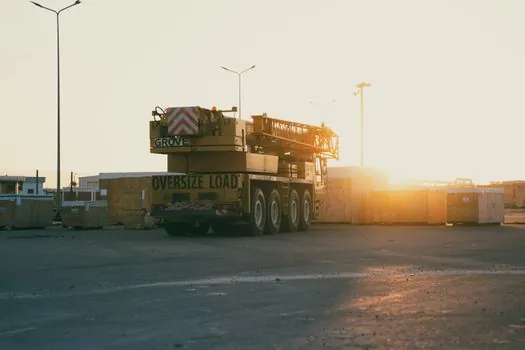
Modern forestry crane stability systems do more than cut the lift on overload. Kesla's proSTABILITY reads chassis inclination, ground contact loss, and overload, blocks functions that would raise the lifting torque in extreme conditions, exposes sensor faults and the fault log, and permits a "limited lift sector without stabilizer legs" mode that lets the operator work with one outrigger pair pinned [S3]. On Fassi cranes, the FX500 control unit pairs with the D850 digital hydraulic distributor and a flow-sharing system, and the ProLink linkage widens the working angle envelope while the XP device adds extra power in demanding positions [S4].
For buyers, the question is not "is there a stability system" but "does it integrate with the carrier's CAN bus, and does it allow operator-defined lift sectors". Hiab's iX.188 HIDUO integrates Start/Stop and Dynamic RPM to drop truck-engine idle time and trim fuel, which is the kind of energy management that used to live only on heavy loader cranes [S5]. The bench-test takeaway: any crane shortlisted for 2026 procurement should expose a published list of cut-back conditions and a documented behaviour chart for partial outrigger use.
Reach envelopes, carrier match, and the Liebherr upper bound
The 2026 catalogue window shows a clean stratification. Mid-class telescopics for 2-axle carriers: Fassi F120B.2 e-dynamic at 18.6 m max reach, 11,100 kg, 2,340 mm base width, radio-controlled [S4]. Mid-class articulated for urban-thinning work: Kesla Z14 CITY at 8,080-10,100 mm working height, 14 t, proSTABILITY-equipped [S3]. Lightweight high-cycle: Hiab iX.188 HIDUO at 17.5 m hydraulic reach, 17,949.3 kg max lift, 1,946-2,786 kg body mass [S5]. Heavy flagship: Effer iQ.2255 HP at 55 m working height, 39,900 kg total, designed for 5-axle carriers and 50 t-class duty [S1].
The upper bound, for context, is the Liebherr LTC 1050-3.1E: 50 t lift, 48 m working height, 39 m horizontal reach, 85 km/h driving speed, 243 kW / 330 hp drive engine, with an electro-hydraulic compact electric drive concept for the boom that targets greenhouse-gas reduction [S6]. That is road-rail-tower territory, well above what a normal forestry forwarder or truck-loader cycle needs, but useful as the reference ceiling when matching a crane to the heaviest stems on a harvesting site.
Cost-of-ownership signals: weight, energy, and service access
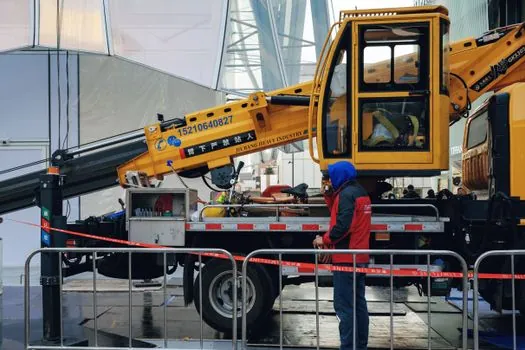
Three line items drive 5-year cost on a forestry truck-mounted crane: crane dry mass, hydraulic-oil cooling duty, and electronics serviceability. The light-end Fassi F120B.2 e-dynamic at 1,150-1,855 kg and Hiab iX.188 HIDUO at 1,946-2,786 kg keep the carrier payload budget intact for timber [S4][S5]. The Fassi unit's analogic temperature sensor on the oil cooler actively regulates hydraulic temperature, which matters when the crane idles on the outriggers for hours during loading cycles [S4]. On the heavy end, Effer's 39,900 kg total on the iQ.2255 HP forces a multi-axle carrier and a heavier tare, which burns more fuel per empty kilometre between sites [S1].
Serviceability is increasingly defined by control architecture. Fassi publishes a temperature-control device, flow-sharing, and ProLink as part of the e-dynamic package [S4]. Kesla publishes a sensor-fault display and fault log on proSTABILITY [S3]. Hiab publishes Start/Stop and Dynamic RPM as standard energy-management features [S5]. When the supplier does not publish these, the risk of undocumented behaviour on partial-outrigger lifts moves from operator to specifier, and that is rarely a good trade.
How to shortlist three finalists in one working session
Step 1: lock the carrier. Two-axle carriers force a sub-12 t crane class (Fassi F120B.2 e-dynamic, Hiab iX.188 HIDUO); three-axle carriers open the Kesla Z14 CITY and similar 14 t units; four-axle and above permit Effer's 39,900 kg-class machines [S1][S3][S4][S5]. Step 2: lock the geometry. Articulated Z-boom if the cycle is in-stand loading with tight radii and frequent slewing; telescopic if the cycle is grab-load-and-drive with 15-20 m horizontal reach. Step 3: lock the controls. ProSTABILITY (Kesla), FX500+ProLink (Fassi), or HIDUO+Start/Stop (Hiab) as the minimum published feature set. Step 4: ask the supplier for a partial-outrigger lift chart and a documented behaviour list for overload, chassis tilt, and ground-loss events; reject any bidder that cannot produce one.
For procurement teams cross-referencing crane choice against truck-mounted crane selection guides, the forestry duty cycle is closer to municipal and construction work than to heavy rigging, so the same outrigger and stability logic applies across the truck-mounted-crane, aerial work truck, and truck-mounted concrete pump families. The link to the jib crane selection guide is worth a parallel read when comparing knuckle vs fixed-column geometry. Track next: whether suppliers publish partial-outrigger lift charts as a 2026-2027 RFP standard, and whether the next Hiab and Fassi firmware drops publish sensor-fault logs over CAN.