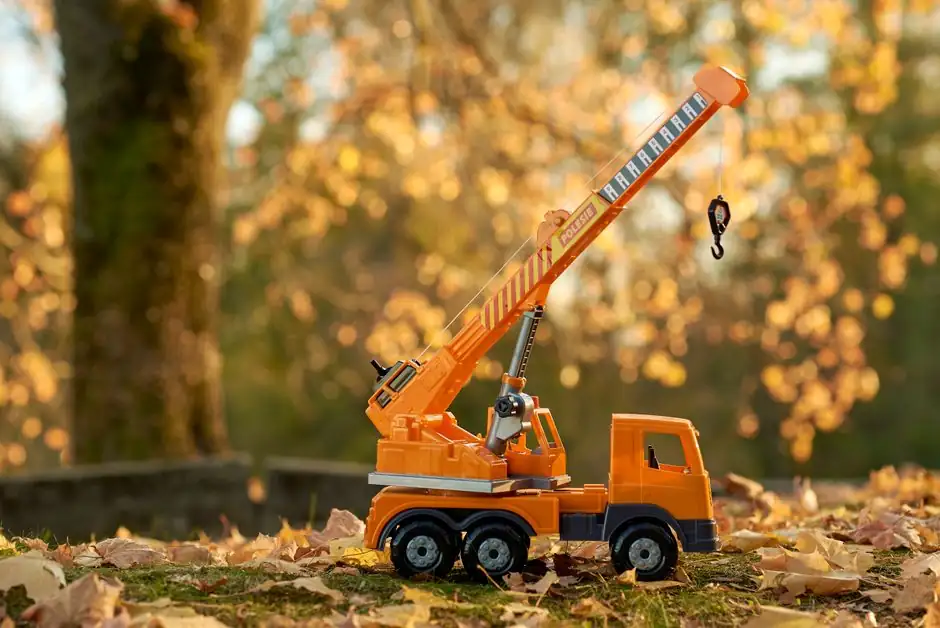
Quarry operators selecting a truck-mounted crane in 2026 are converging on a 16-65 ton lifting envelope, a knuckle or telescopic boom with 4-6 hydraulic sections, and an off-road chassis with minimum 6x6 drive configuration, per current OEM catalogs [S1][S3].
Quarry duty cycles impose three hard constraints that rule out light commercial units: 2,000-3,000 annual load-hour targets, dust-laden ambient air, and gradient ramps up to 30% at the pit face. The selection gate is therefore not lifting capacity alone but the matched chain of boom geometry, outrigger span, and chassis GVW class.
Quarry Duty Cycle and Why Generic Crane Specs Fail
A quarry truck-mounted crane typically runs 2-3 shifts per day, 5-6 days per week, accumulating 2,000-3,000 load hours per year, a duty class that exceeds the design envelope of general-purpose units sold for urban construction [S5]. Quarry dust contains silica fines below 50 microns, which penetrates standard IP54 enclosures; OEM guidance now specifies IP65 or higher for the hydraulic valve bank and slewing motor [S1].
Boom reach matters more than raw capacity on a quarry face. A 16-ton class unit with 18 m of boom reach will outperform a 25-ton class unit limited to 12 m, because the latter forces the truck to drive closer to unstable pit walls. Buyers should rank reach-at-radius before peak lift on the spec sheet [S3].
Boom Type Comparison: Knuckle vs Telescopic for Quarry Service
Two boom architectures dominate the quarry segment: knuckle (articulated, folding) and telescopic (straight, multi-section). Each has a distinct trade profile on cycle time, transport length, and maintenance access [S3].
Knuckle booms (typical model codes SQ5ZK2Q, SQ16ZK4Q) fold behind the cab, keeping overall transport length within a standard 12 m container-chassis envelope. They cycle faster (typically 25-35 second full deploy) and need less cab clearance, but the two hydraulic pivots add 2-3 leak points that quarry dust will exploit [S3]. Telescopic units (codes SQ2SK1Q) deliver longer vertical reach, typically 20-28 m, and have fewer pivot seals, but require a 14-16 m transport envelope and a longer deployment cycle of 45-60 seconds [S3].
For pit-floor work with 6-10 m face heights, knuckle geometry is the dominant 2026 quarry choice because the truck stays parked on the haul road while the boom reaches down. For overburden stripping at 15-20 m bench heights, telescopic is specified despite the cycle penalty. A side-by-side spec comparison:
Knuckle SQ5ZK2Q class: lifting capacity 5-16 t, boom reach 12-18 m, transport length 10-12 m, deployment 25-35 s, pivot seal count 4-6. Telescopic SQ2SK1Q class: lifting capacity 2.5-8 t (typical), boom reach 20-28 m, transport length 14-16 m, deployment 45-60 s, pivot seal count 2.
Chassis and Drivetrain Gates for Quarry Haul Roads
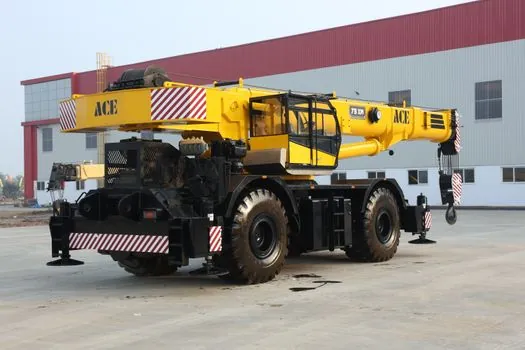
Quarry haul roads are unpaved, with loose aggregate, 15-30% gradients, and standing water at the loader face. A 4x2 on-road chassis is not acceptable; minimum drive configuration is 6x6 with at least two locking differentials [S1]. Gross vehicle weight (GVW) must exceed the sum of crane weight, counterweight, and 1.5x the rated lift, otherwise the rear axle is overloaded before the boom is even deployed [S5].
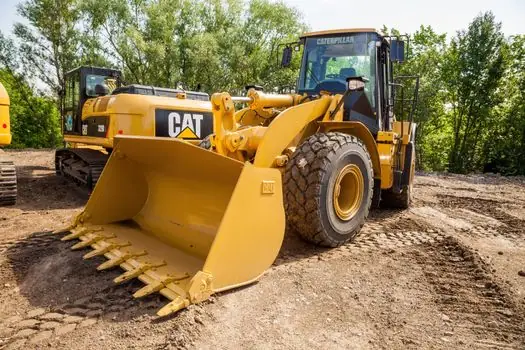
Diesel engine class typically lands at 380-460 hp for the 30-50 ton GVW segment, paired with a 9-12 speed manual or automated manual transmission. Buyers should verify that the chassis supplier offers a quarry-duty suspension package, which adds 30-40 mm of ground clearance and a heavier front anti-roll bar versus the on-road version [S1]. A dump truck chassis is often re-used as the donor because the quarry already runs that fleet, but a reach truck chassis is not a valid donor for crane mounting and should be excluded from the spec.
Hydraulic System, Filtration, and Dust Management
Quarry dust is the single most expensive failure mode for crane hydraulics. Standard suction strainers (100-150 micron) are insufficient; OEM data sheets for quarry-class units call for 25-micron return filtration with a water-absorbing element, plus a pressurized cab with filtered intake to ISO 23875 (the cab air quality standard for mobile equipment in dusty environments) [S1].
Working pressure on modern quarry booms runs 28-32 MPa at the lift cylinders, with pilot pressure at 2.5-3.5 MPa for the control valves. Hydraulic tank capacity is typically 200-400 L, sized for thermal headroom on continuous load cycles. Buyers should spec an oil cooler with automatic fan reversal (every 30 minutes) to blow out dust accumulation on the cooler fins; this single feature extends cooler service life by 2-3x in quarry conditions [S5].
Load Chart Interpretation and Real Quarry Cases
Manufacturer load charts are quoted at 360-degree slewing, on firm level ground, with full counterweight. A quarry rarely offers all three: pit-floor pads are often wet, and slewing arcs are constrained by blast berms. The practical lift is therefore 60-75% of the published chart, and a 50% derate is common when working over the front of the cab on a 15% side slope [S3].
Comparable spec gates for crawler cranes used in pipeline and forestry work, which share the quarry duty profile, are documented in the forestry crawler crane selection and crawler crane selection for pipeline construction references.
Safety Standards and Compliance Documentation
Quarry crane operations in the EU fall under the Machinery Directive 2006/42/EC and, where the quarry is classified as a potentially explosive atmosphere due to methane or dust, ATEX 2014/34/EU for the equipment and ATEX 1999/92/EC for the workplace. Lifting accessories (slings, shackles) must carry CE marking per EN 13414-1 for slings and EN 13889 for shackles [S1].
Daily inspection must follow a documented pre-shift checklist covering hook latches, hydraulic hoses (visual for abrasion), outrigger pad condition, and load moment indicator (LMI) self-test. The LMI is a non-bypassable safety interlock on units sold into the EU after 2010, and a faulty LMI renders the crane non-compliant for any commercial lift [S5]. Buyers sourcing from Chinese manufacturers should request the LMI calibration certificate and the boom angle sensor verification before shipment [S1][S3].
For Whom This Spec Applies, and When to Walk Away
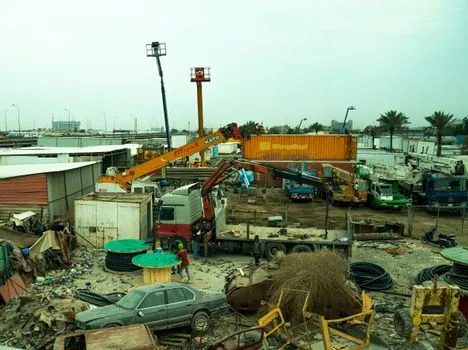
This selection profile applies to aggregate quarries, dimension-stone quarries, and open-pit mining operations running a single shift or 24/7 haul cycles with loads in the 5-65 t range. It does not apply to underground mining (where compact telehandlers or aerial work truck platforms are specified instead), nor to port or intermodal handling (where full crawler or all-terrain cranes are mandatory) [S5].
Walk away from any quote that omits the IP rating on the hydraulic valve bank, that does not name the LMI model, or that quotes lead time under 30 days for a custom-configured unit. A 60-90 day lead time is the 2026 norm for a quarry-rated truck-mounted crane; shorter lead times usually mean a stock urban-construction unit is being repurposed and will fail on dust ingress within 12-18 months [S1][S3].
Track these signals over the next two quarters: (1) XCMG and Tadano 2026 model-year quarry options, typically announced at bauma China in late November, and (2) tightening of EU Stage VI emissions on the donor chassis, which will price some 30-40 ton GVW configurations out of the market by 2027 [S3][S5].