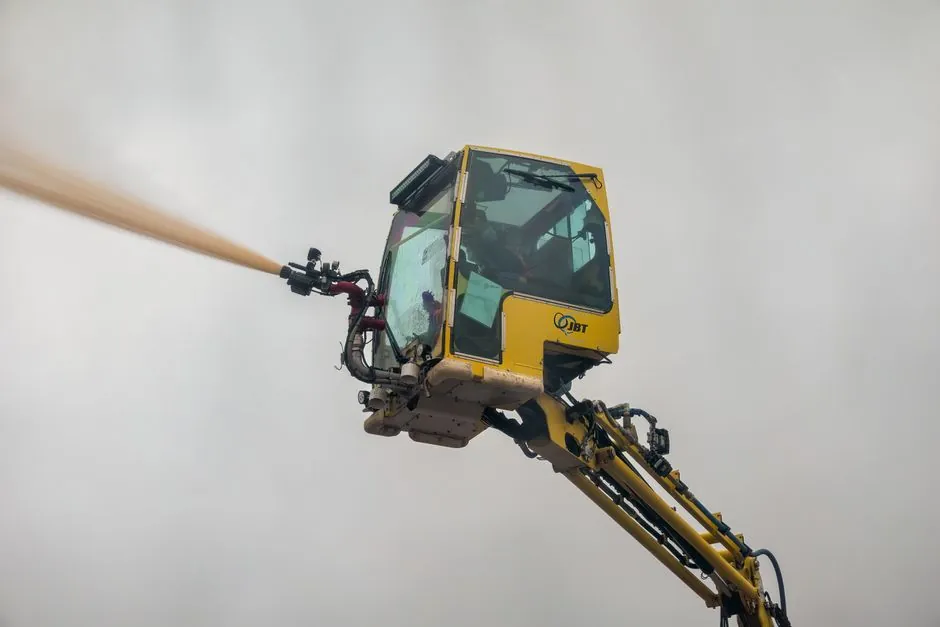
Landfills rank among the most punishing duty cycles a truck-mounted crane can face: low-bearing soft subgrade, hydrogen-sulphide off-gassing from fresh waste, abrasive grit, and frequent single-axis load swings when picking leachate pipes or 20-foot roll-off boxes. Successful specification starts by matching chassis class, boom geometry, and outrigger footprint to those conditions, not to a generic on-road duty.
For most U.S. municipal solid waste sites the working envelope collapses into 8-16 tonne lift capacity, 360-degree full rotation, an H-type outrigger pattern rated for uneven ground, and full-hydraulic proportional control. Reference designs in the Chinese market span the same 1-16 tonne range on a Foton-style two-class chassis, with the upper half of that range covering landfill, coal-handling, and municipal construction work [S4].
Chassis and load-class selection
Chassis choice sets the floor for everything downstream: axle count, allowable payload, and outrigger reaction at full reach. A 4x2 rigid truck can legally carry a crane up to about 6-8 tonne-metric in many jurisdictions before the front axle is overloaded; a 6x4 or 6x6 becomes mandatory once the crane plus load pushes gross combination weight past roughly 26 tonnes. Foton-class two-class chassis are commonly used in the 1-16 tonne lift range, with full-cab configurations preferred because the vehicle spends most of its life working outdoors on uneven ground [S4].
For landfill work, a 6x6 with heavy-duty single rear tyres and an engine meeting at least Euro V / EPA Tier 4 Final is the conservative default, because the unit must traverse wet cover soil and clay caps without getting stuck. Operators consistently report that under-speccing the chassis, not the crane, is the leading cause of premature failures in this service environment.
Boom geometry: knuckle versus telescopic
The two boom geometries map to different landfill tasks. Telescopic booms give longer vertical reach, typically 18-28 m on 12-16 tonne units, and a cleaner envelope for loading open-top transfer trailers. Knuckle (folded) booms deliver a shorter retracted length, a lower centre of gravity, and tighter manoeuvring around leachate-wellheads and gas-collection piping, which is why they dominate European and Chinese waste-handling fleets. [S1]
Reference Chinese-market truck-mounted cranes cover 1-16 tonne lift capacity, 360-degree full rotation, large working amplitude, and use high-strength steel plate for the boom and outrigger beams to keep mass low while lifting heavier loads [S4]. For landfill duty, the knuckle boom is typically preferred when over 70 percent of lifts are short-radius container handling, while the telescopic boom wins for cell-construction work where vertical reach to a 4 m working face matters more than footprint.
Outriggers, slew drives, and stability margins
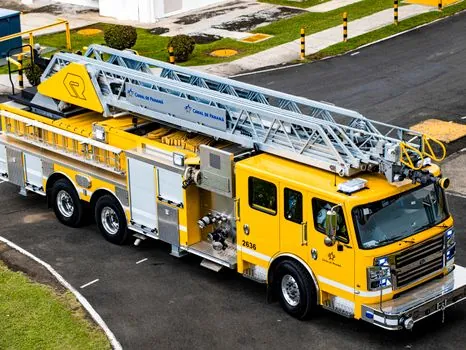
Outrigger geometry is the single largest factor in safe landfill operation, because the crane will routinely set up on 50-150 mm of soft cover material. H-type outriggers with independently adjustable vertical jacks are the industry default, allowing the chassis to remain level on slopes and to spread the reaction load over a footprint that is typically 5.0-6.5 m wide on a 12-tonne crane. New H-type legs also let the unit work on slopes and irregular ground, an important feature when a cell is half-closed and the access bench is graded at 4-6 percent. [S1]
The slew and winch drivetrain is the second stability decision. Planetary slew drives with integrated hydraulic motors, such as those Bonfiglioli markets specifically for truck-mounted crane applications, are engineered for safe, smooth rotation under variable load and are sized to the crane's reach and manoeuvrability requirements [S3]. The matching winch drive is then developed around the same envelope, improving performance in the available package space. For landfill duty, specify planetary rather than worm slew drives, since worm units run hotter and have shorter life under the constant partial-load cycling typical of container handling.
Hose, seal, and filtration choices for landfill air
Landfill air carries hydrogen sulphide, ammonia, dust, and acidic condensate, and it will attack any unsealed hydraulic system within a season. Specify at least IP65-rated junction boxes, NBR or FKM seals rated for H2S exposure, and a two-stage return-line filtration package with a 10-micron absolute primary and a water-absorbing breather on the reservoir. The Chinese-market Foton reference design uses internationally sourced hydraulic valve locks and domestically sourced components from recognised brands, a configuration that supports easier seal and filter sourcing in the field [S4].
Hydraulic fluid choice matters: a mineral ISO VG 46 oil with a high viscosity index is the standard reference, but many landfill operators have moved to biodegradable HEES fluids to contain spill damage to the leachate collection layer. Either way, sample the fluid at 500-hour intervals; hydrogen sulphide attack on copper-containing components shows up as a sharp rise in total acid number and copper-in-oil ppm long before the crane fails.
Selection criteria and a four-option comparison
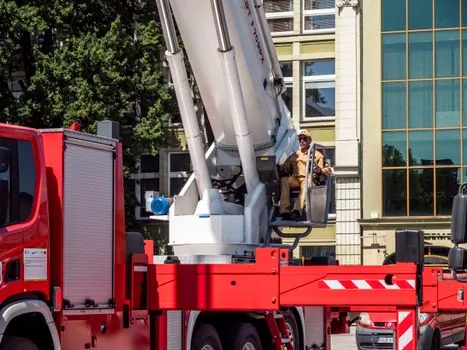
When lining up crane types against landfill decision criteria, the comparison looks like this for a 12-tonne class unit: a knuckle-boom on a 6x4 chassis scores high on footprint (low), manoeuvrability (high), and cost (low), but lower on maximum vertical reach (around 14-18 m). A telescopic-boom on a 6x4 scores high on reach (20-28 m) and lift at radius (high), but loses on retracted length (high) and price (medium-high). A knuckle-boom on a 6x6 adds off-road mobility (high) and slope-working ability (high) at the cost of payload and acquisition price (high). A telescopic on a 6x6 is the maximum-spec choice: reach (high), mobility (high), footprint penalty (high), and price (high), reserved for large regional landfills hauling ash or contaminated soil. [S1]
Two qualitative gates are equally important. First, confirm the manufacturer publishes a load-chart that includes the outrigger half-span and the actual front-axle load at the worst-case radius, not just a marketing capacity number. Second, verify that the supplier offers ANSI B30.5 (or the regional equivalent such as GB/T 6067.1) documentation, including the most recent load-test certificate and the operator's manual translated to the working language. Skipping either gate is the most common root cause of an out-of-service crane within the first year of landfill duty.
Maintenance, inspection, and lifecycle expectations
Truck-mounted crane maintenance intervals are typically defined in operating hours rather than mileage, because the chassis may sit still for weeks while the crane works 8-10 hours a day. Daily checks cover boom pivot pins, outrigger pad condition, hydraulic hose routing, and slewing-ring bolt torque to the manufacturer-specified value. Periodic checks at 250, 500, and 2,000 hours cover slewing-ring gear lubrication, hydraulic oil sampling, and the structural inspection required by the crane's inspection standard [S4].
Lifecycle expectations for a well-specified landfill crane cluster around 12,000-18,000 operating hours before a major boom or slewing-ring refurbishment, with the chassis usually reaching the end of its economic life first at 8-10 years in this service. A truck-mounted crane paired with the right chassis will outlast two or three bodies; an under-chassised one will be parked within five years, which is the cheapest justification for spending the extra on a 6x6 platform when duty demands it.
For a deeper look at how the same crane class is specified for confined-space work, the field data on truck-mounted cranes in tunneling applications is a useful cross-reference, since tunnel headings share several of the same low-headroom, single-axis lift problems found inside enclosed landfill cells. Adjacent selection guides for crawler cranes on snow-removal fleets and overhead bridge cranes in duty-class selection round out the heavy-lift decision tree when the landfill is being built rather than operated.
For the relevant spec sheets and selection criteria, see truck mounted crane, truck mounted concrete pump, and dump truck.