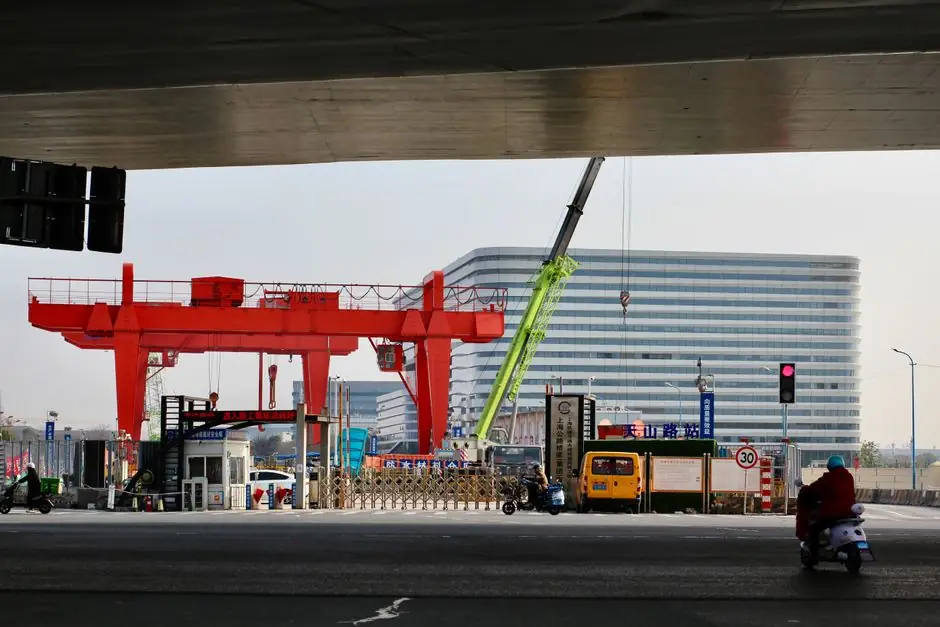
Tunnel work demands a truck-mounted crane sized to the shaft and the heading, with 3-25 tonne lifting classes dominating Chinese-built supply and most contractors matching a 6x4 or 8x4 commercial chassis to a knuckle or telescopic boom [S1][S4].
Selection pivots on four engineering gates: shaft/portal clearance, boom geometry under restricted headroom, duty cycle inside the bore, and engine emissions tier for the tunnel's forced-ventilation profile. Skip any one and the unit either will not fit the heading or will not pass the safety file.
Why a Truck-Mounted Crane, Not a Crawler or Pick-and-Carry
A truck-mounted crane is a knuckle, folding, or telescopic boom crane permanently or semi-permanently mounted on a commercial truck chassis, lifting between roughly 1 and 60 tonnes depending on configuration [S1][S2].
Inside a tunnel this definition matters because the unit must self-deploy from the portal, work inside a confined cross-section, and reposition along the invert track without external rigging. Crawler cranes have higher lift capacity but lower mobility and worse emissions inside a bored heading, while pick-and-carry rough-terrain cranes save cost on short hauls but lose the road-going chassis that lets the unit move between shaft sites under its own power. For a 4-8 metre diameter TBM or NATM heading, a truck-mounted crane on a 6x4 chassis is the practical compromise between mobility, lift, and tunnel-class emissions.
Selection Gates That Actually Decide the Buy
Four selection gates decide the buy: lift class, boom type, chassis rating, and emissions/ventilation compatibility, with the safety file checking each before purchase [S1][S4].
Lift class is the most common filtering step. Chinese supply is densest in the 3-25 tonne range, with the Dong Feng (DFAC) truck-mounted crane platform offered with lift ratings of 3, 5, 8, 10, 12, 16, 20, and 25 tonnes paired to brand-name boom modules from XCMG, SHIMEI (Shi Mei), LIFUTE, and Zoomlion [S4]. Below 3 tonnes the unit becomes a utility loader; above 25 tonnes the chassis cost and axle load start to dominate, and most tunnel headings do not need it. Boom type is the second gate. Knuckle/folding booms win on low headroom (compact parked height, can fold under a 3.5 m tunnel ceiling) and reach around obstacles. Telescopic booms win on straight-out vertical reach and on repetitive cycle work where the operator is not constantly folding and unfolding sections. Chassis rating is the third gate. A 6x4 chassis typically carries up to 25 tonnes of crane and a 6-9 tonne payload, while an 8x4 chassis is the common step for 30-50 tonne units and for any spec that needs on-road payload above 12 tonnes. The fourth gate is emissions. Underground diesel particulate and NOx limits on modern metro and rail tunnel projects effectively force a China V/Euro V or higher engine tier, with aftertreatment sized to the tunnel's forced-ventilation capacity, not open-air duty.
Knuckle vs Telescopic vs Stiff-Boom: A Criteria-Based Comparison
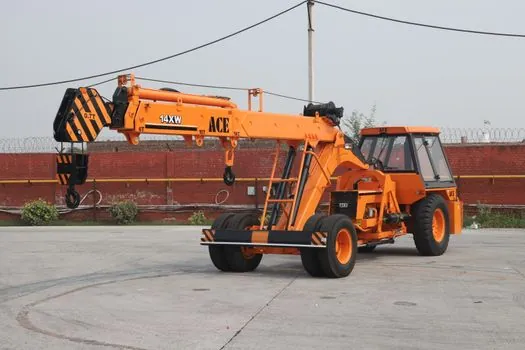
Side-by-side, knuckle-boom truck-mounted cranes win on headroom and folded envelope, telescopic-boom units win on straight reach and operator throughput, and stiff-boom units win only on heavy or repetitive industrial lifts outside tunnel headings [S4].
Three criteria matter most in a tunnel: parked height, working reach, and cycle time. A knuckle boom typically parks at 2.4-3.2 m and works inside a 3.5-5 m cross-section by folding its second arm over the load, which is the dominant reason it is the default for metro and rail heading service. A telescopic boom needs 3.0-4.0 m of clear headroom to deploy its sections, but offers a longer straight-out reach (commonly 12-21 m on 16-25 tonne models in the truck-mounted crane class) and a faster single-line cycle. Stiff-boom units are an option above 30 tonnes but rarely justified inside a tunnel. For demolition or quarry-style tunnel work, the same chassis platform extends into more aggressive duty, as covered in demolition-ready truck-mounted crane spec gates and quarry truck-mounted crane field data, where boom geometry is again the dominant decision driver.
Tunnel-Specific Constraints and Failure Modes
Tunnel work adds four constraints that do not show up on a supplier's general datasheet: shaft clearance, heading ventilation, fire-suppression, and tandem-lift reserve [S4].
Shaft clearance is the first constraint. A typical metro or rail shaft headframe limits the crane envelope to 3.0-4.5 m of vertical clearance, and the crane must be able to deploy with the boom folded or telescoped within that envelope. Heading ventilation is the second. Diesel particulate in a forced-ventilated heading is controlled by the tunnel's ventilation plan, and most metro projects now specify an engine tier no lower than the current Chinese national standard with DPF/SCR aftertreatment, with the engine bay sized so the unit can run at low idle for 20-40 minutes at a stretch without tripping the dust sensor. Fire suppression is the third. Tunnel-rated truck-mounted cranes are typically fitted with a dry-powder or aerosol automatic fire-suppression unit plumbed to the engine bay and the hydraulic tank, plus a manual extinguisher at the operator station, because egress in a 4 m heading is slow. Tandem-lift reserve is the fourth. A 25 tonne unit is rarely working at 25 tonnes in a tunnel; common lift cases are 6-12 tonne segment handlers, fan-stack sections, and pump skids, and a 50% reserve margin on the rated chart is normal practice for tunnel service.
Sourcing, Chassis, and Standards Reference
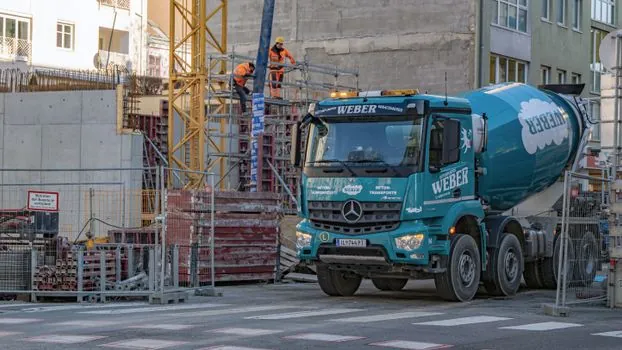
Sourcing from Chinese OEMs is concentrated in Guangdong and Liaoning, with chassis supply split between Dong Feng and other domestic commercial-truck builders, and lifting modules from XCMG, SHIMEI, LIFUTE, and Zoomlion [S1][S3][S4].
Reference suppliers and regions tracked in the public sourcing record include a Guangdong-based manufacturer offering a hot-item truck-mounted crane listing with negotiable MOQ and L/C payment terms [S1], and Liaoning Qingshan Heavy Machinery Co., Ltd, registered 2012 in Jinzhou, Liaoning, with a business range covering auto, motorcycle parts, industrial equipment, and transportation [S3]. The Dong Feng (DFAC) truck-mounted crane line uses Dong Feng commercial-truck chassis paired to brand-name boom modules, covering the 3-25 tonne lift range for municipal, coal-mine, landscaping, and general freight handling duties [S4]. Buyers comparing chassis options will note that a dump truck chassis is sometimes used as the carrier for light-duty (3-8 tonne) crane builds, while heavier lift classes revert to 6x4 or 8x4 dedicated crane carriers. Standards discipline worth pinning to the safety file: the lifting module should carry a GB/T 6067.1 load-test certificate, the carrier should carry a current emissions certificate, and the complete unit should carry a Special Vehicle (特种车辆) type approval. Buyers also pull adjacent reference for spec logic, such as the bearing-grade constraints in angular contact bearing selection for mining, which is useful when specifying turntable bearings for higher-cycle tunnel duty.
Who This Crane Class Is For, and Who It Is Not
The 3-25 tonne truck-mounted crane is the right tool for tunnel segment handling, shaft service, fan and pump installation, and short-cycle logistics in metro, rail, and mining headings, but is the wrong tool for high-rise steel erection, long-reach bridge work, or open-pit heavy lift [S1][S4].
It is FOR metro and rail tunnel contractors running a 4-8 m diameter NATM or TBM heading with 6-12 tonne segment lifts, 8-15 tonne fan and pump lifts, and short-cycle repositioning along the invert. It is FOR mining contractors running portal-to-face service with 10-20 tonne equipment lifts and the need to road-drive the unit between adits. It is also FOR municipal contractors running shaft and station builds where a 3-8 tonne lift and 12-18 m boom reach cover the bulk of daily work. It is NOT FOR high-rise steel erection, where a tower or crawler crane is the right tool, and it is NOT FOR long-reach bridge or wind-farm erection, where a dedicated mobile crane above 60 tonnes capacity is the right tool. Specifying outside that envelope tends to over-stress the carrier chassis and inflate the emissions package for no working benefit.
Trackable signals for the next sourcing cycle: a new emission-tier step (China VII or equivalent) tightening the tunnel-rated diesel spec, and the 30+ tonne truck-mounted crane class maturing from one-off builds into a stock OEM offering for heavy metro and hydropower heading work.
For the relevant spec sheets and selection criteria, see truck mounted concrete pump.