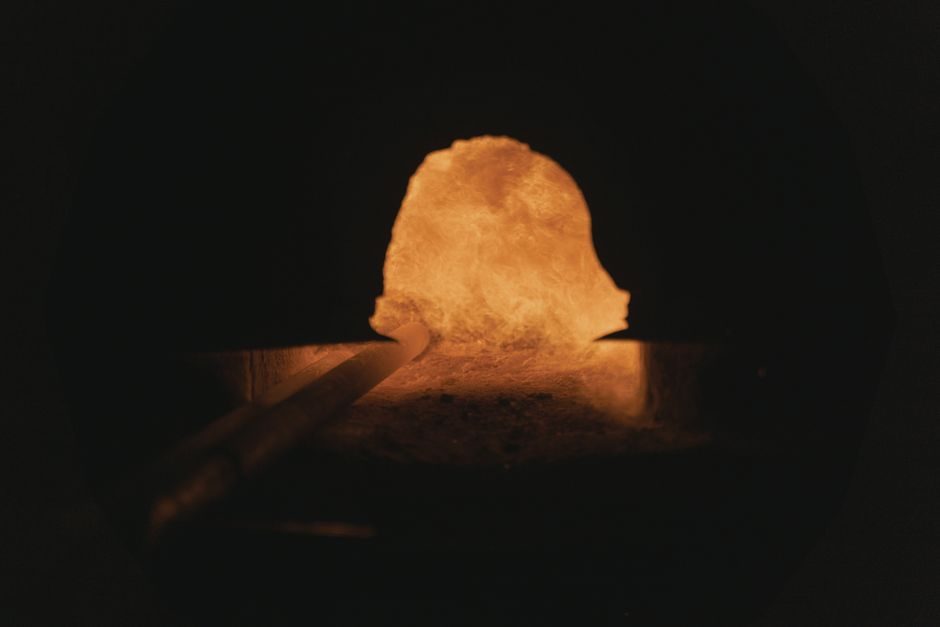
Forging-press selection is driven by four hard gates: drive topology (mechanical, hydraulic, servo-hydraulic), forming force in kN or tons, rated hydraulic pressure in bar, and the die envelope plus bar/billet stock range [S1]. A horizontal servo-hydraulic 3-punch press such as the Neotecman H3.32 delivers 980 kN at 250 bar (3,626 psi) on a 3,330 × 3,300 mm footprint and weighs 9,500 kg, processing brass bar from 12-32 mm diameter up to 4,000 mm long into 205 × 205 mm dies at 500-3,600 parts/h [S1].
The 2026 European catalogue of compact hot-forging cells still centres on multi-punch servo-hydraulic architectures: 3-punch (H3.32), 5-punch compact (HV205.32 gas / HV205.32i induction), 5-punch versatile (HV255.45 / HV255.45i) and 5-punch ultimate (HV270.65 / HV270.65i) [S2]. At the heavy end, Chinese builders quote open-die and hot-die hydraulic forging presses from 80 MN up to 500 MN (50,000-ton) class, with forging manipulators rated to 120 t and ring-rolling mills to 8 m diameter [S3]. Older forging-line builders (in production since 1956 in China) still ship complete impression-die lines for gear, bearing, claw-pole and flange work [S4].
Drive topology: mechanical, hydraulic, servo-hydraulic
Mechanical friction and electric-screw presses dominate high-cycle hot forging of steel near net shape, while hydraulic forging presses carry the open-die, free-forging and large-die close-die workload where stroke and dwell are programmable [S3][S4]. Servo-hydraulic presses add closed-loop position/force control on every punch — the H3.32's three horizontal punches are regulated independently by an industrial PLC with 1/100 s delay and independent pressure channels per punch, which is what enables flashless forming of brass [S1]. A 12,000-ton (120 MN) high-frequency hot-die forging hydraulic press is the current top-of-line reference for large automotive and aerospace die forging in the Chinese supply base [S3].
Selection rule of thumb: specify mechanical/screw for short-stroke steel hot work where cycle time is the bottleneck; specify hydraulic for open-die ingot breakdown above ~20 MN or any part needing variable dwell; specify servo-hydraulic for multi-punch brass/aluminium flashless work, complex closed-die brass plumbing components, and cells that must run alongside CNC equipment without transmitting vibration [S1]. The H3.32 datasheet states < 85 dB(A) and "no vibrations during production" precisely because the servo-hydraulic actuators close the loop on position rather than letting stored fluid energy hammer the frame [S1].
Force, pressure and die envelope sizing
Match rated force to projected area, not part weight. A 980 kN press like the H3.32 is appropriate for brass and aluminium parts in the 205 × 205 mm die window; for a steel part of the same plan area the required force scales roughly with the material's hot flow-stress ratio, so a similar brass-rated cell is undersized for steel [S1]. On the hydraulic side, the figure that actually limits the die is pressure × ram area, not the marketing "tonnage" alone — the H3.32 names 250 bar (3,626 psi) as its Max. pressure, which together with the 980 kN rating fixes the effective ram area at roughly 392 cm² [S1].
Open-die presses are quoted by forging force directly: 1,250 t, 2,000 t, 3,150 t, 4,500 t, 8,000 t, 10,000 t, 12,000 t, 20,000 t and 30,000 t hydraulic hot-die / close-die forging presses all appear as stock SKUs from one Jinan-based builder, plus a 500 MN (50,000-ton) class as the documented maximum capacity [S3]. Open-die free-forging hydraulic presses are offered from 1,250 t up to 12,000 t as catalogue lines, often paired with a 15 t manipulator as a matched cell [S3]. Stroke and daylight (opening) matter as much as force: the H3.32 lists 200 mm (8 in) opening, which constrains the maximum billet height plus die height it will accept [S1].
Throughput, automation and billet handling
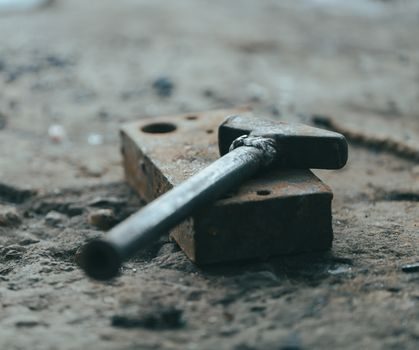
For high-volume non-ferrous work, the press is only one of four sub-systems that have to be specified together: heater, shear, manipulator/feeder, and unloader. The H3.32 ships as an all-in-one cell with a 4 m-long combustion furnace for whole brass bar, a shear for billet cutting, a manipulator that feeds the pressing unit, and a finished-parts unloader, all sequenced by the same PLC [S1]. The result is 500-3,600 parts/h depending on the part, with flashless forming that eliminates a downstream clipping operation and lets the builder use a smaller billet for the same final shape [S1].
Heating choice is the first branching decision in the HV-series line: gas-fired (HV205.32, HV255.45, HV270.65) versus medium-frequency induction (HV205.32i, HV255.45i, HV270.65i) [S2]. Induction gives faster start-up, tighter temperature windows and lower NOₓ, which matters for plants with restricted emissions budgets; gas still wins on capex for tonnage heating of large billets. The "i" suffix in the Neotecman line-up is the cleanest single-letter indicator of the heating topology, and it correlates with the higher-end 5-punch models (HV255 / HV270) that are aimed at versatile and ultimate-spec parts [S2].
Application fit: brass, aluminium, steel, free forging
For brass and aluminium hot forging at sub-MN forces, the servo-hydraulic 3-punch / 5-punch architecture is the default in 2026 European supply: H3.32 (980 kN) covers 12-32 mm bar brass; HV205.32 / HV205.32i extend into 5-punch compact cells; HV255 and HV270 cover versatile and ultimate part geometries [S1][S2]. For automotive, furniture and non-ferrous parts the same architecture handles aluminium, brass and other non-ferrous bar, with horizontal high-speed short-cycle operation and an automatic feeder [S1]. Typical end-products named on the H3.32 datasheet are automotive parts, furniture fittings and non-ferrous industrial components [S1].
For steel impression-die forging of gears, bearings, claw poles and flanges, complete forging lines from builders in service since 1956 still dominate, with matched reheating furnaces, forging presses, trimming presses and die-spray systems [S4]. For open-die ingot breakdown, shaft forging, ring-rolling preforms and large cylindrical shells, the choice is a hydraulic forging press at 1,250-12,000 t paired with a forging manipulator up to 120 t, optionally feeding a ring-rolling mill up to 8 m diameter [S3]. For context on the heat-source and chamber-class decisions upstream of the press, the industrial oven selection criteria for temperature, volume, heat source and atmosphere follow the same fuel/electric, batch vs continuous logic. Downstream material handling into the press is driven by the roller conveyor selection criteria for drive, load, roller and frame, especially when billets are fed automatically to the press.
Limitations, failure modes and what not to specify
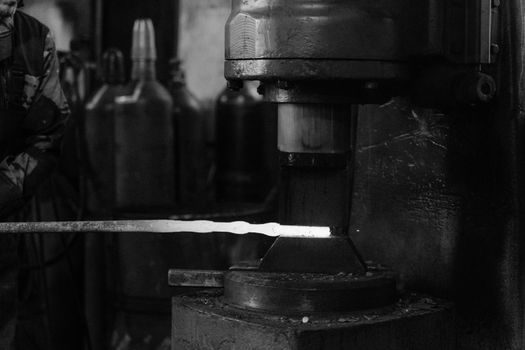
Servo-hydraulic forging presses are not the right tool for steel hot forging above the kilo-newton range: the H3.32-class architecture is engineered for brass and aluminium, with maximum hydraulic pressure 250 bar and a frame sized to 980 kN, so re-tasking it to steel at similar plan area will stall the pumps and overheat the actuators [S1]. Conversely, a 12,000 t hydraulic hot-die press is overkill for brass flashless work — the tonnage, the foundation cost, the manipulator class and the energy per stroke all price it out of non-ferrous high-volume cells [S3].
Open-die free-forging hydraulic presses need a manipulator in the same tonnage class or operators work the billet by hand, which is the single biggest safety and quality risk on a heavy forging cell [S3]. Compact multi-punch cells need clean, dry, particulate-controlled shop air and stable incoming bar straightness; a 12-32 mm brass bar that is bent or ovalised will jam the feeder and stop the cell, regardless of the press's own capability [S1]. Noise exposure should be checked: the H3.32 is documented at < 85 dB(A), but that is at the machine itself and assumes the cell is installed in a clean environment, not a shared shop floor with impact tools [S1].
Sourcing, standards and cost signals
European servo-hydraulic 3- and 5-punch forging cells are sourced from a small set of named OEMs: Neotecman (Spain) currently lists V1.32 vertical, H3.32 3-punch, HV205 5-punch compact, HV255 5-punch versatile and HV270 5-punch ultimate, with gas and induction variants on the higher-end models [S2]. Chinese builders (Jinan Linteng, Anyang and others) cover the full open-die and hot-die hydraulic range from 80 MN up to 500 MN, plus manipulators to 120 t and ring-rolling mills to 8 m diameter, with documented export markets in North America, South America and Eastern Europe [S3][S4].
Pricing on the Chinese hydraulic-forging line is RFQ-only with "Negotiable" MOQ 1 set, which is normal for capital equipment of this size; lead-time, foundation drawings and die try-out are typically scoped per order [S3]. Specifying engineers should fix, in writing: rated force (kN or t), max hydraulic pressure (bar), stroke and daylight, die-plan size, bar/billet stock diameter and length range, heating method (gas or induction), throughput target in parts/h, and the manipulator tonnage if open-die [S1][S3]. Two trackable signals to watch over the next quarter: any new "i" induction variant in the Neotecman HV270 5-punch ultimate line, and any move by Chinese builders to publish a 50,000-ton open-die press as a catalogue SKU rather than a custom-engineered one-off [S2][S3].
For component-level specifications, see tablet press, linear guide, and crossed roller guide.