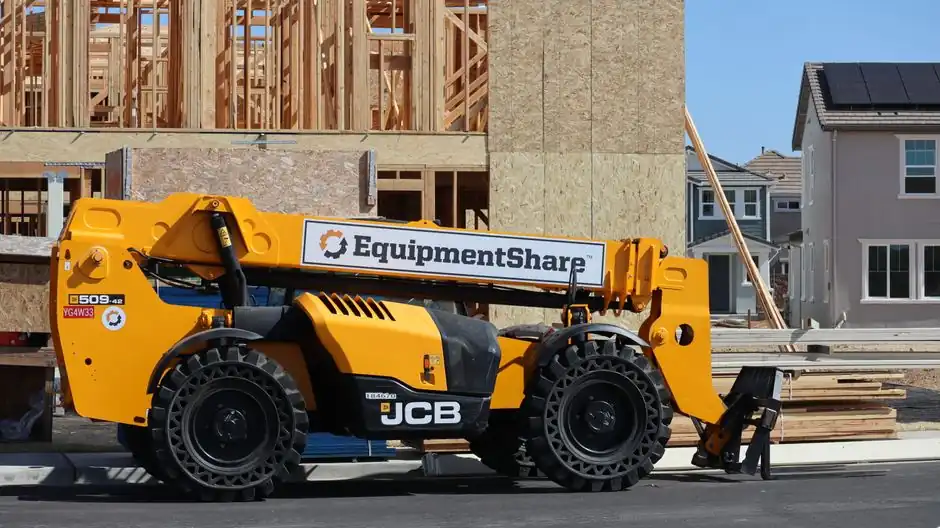
An aerial work platform (AWP, also MEWP, EWP, or cherry picker) is a mechanical device used to provide temporary access for people or equipment to areas usually at height, with a typical safe working load under 1 t on most production units [S2]. A forklift is engineered for an entirely different duty cycle: lifting and transporting palletized or unitized loads at or near ground level across warehouses, factories, loading docks, and yard logistics [S1].
The two machine classes share hydraulic actuation and a vertical-movement vocabulary, but they are not interchangeable. AWPs are designed around occupant safety, with guard rails, platform controls, and fall-arrest tie-offs; forklifts are designed around load security, with mast, carriage, and forks rated to handle 1-10+ t routinely. Choosing the wrong one is the most common root cause of lift-related incidents flagged in training bulletins [S3][S4].
Core Functional Divergence: People vs Loads
AWPs carry personnel and their tools to an elevated work position; most production units are rated for a safe working load (SWL) of less than 1 t, although some specialty MEWPs exceed that [S2]. The defining purpose of an AWP is access and elevation for individuals doing installation, inspection, or repair work [S1].
Forklifts carry material, not people; their rated capacities are typically 1-10 t for sit-down counterbalanced units, with rough-terrain and telehandler variants extending that envelope further on uneven ground [S1]. The defining purpose of a forklift is flow and product support, not personnel access.
AWP Sub-Types and Operating Envelope
The three dominant AWP architectures are scissor lifts, boom lifts, and vertical mast lifts, each tailored to specific tasks and environments [S4]. Scissor lifts move the platform straight up and down using linked folding supports; the platform remains centred over the base throughout the elevation range, producing a stable, predictable footprint [S3].
Boom lifts articulate or telescope outward, letting the platform reach horizontally away from the base. Articulating (knuckle) booms bend around obstacles, while straight telescopic booms maximize horizontal reach to building facades, signage, and overhead utilities [S3]. Bucket trucks, a third sub-type, mount an AWP on a vehicle chassis, combining road transport with elevated access for utility and telecom crews [S3]. Lightweight electric units are now common for indoor window-cleaning and maintenance, replacing older diesel-hydraulic machines where emissions and floor loading matter [S2].
Decision Matrix: AWP vs Forklift Across Four Criteria
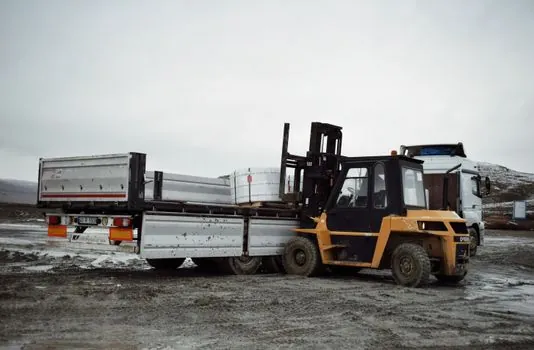
Use this comparison matrix to shortlist equipment by primary function, reach pattern, travel surface, and rated capacity: [S1]
Primary function: AWP elevates people and tools to a work position (SWL typically under 1 t) [S2]; forklift elevates and transports unit loads at ground level (typical capacity 1-10 t) [S1].
Reach pattern: AWP offers either vertical-only (scissor) or vertical-plus-horizontal outreach (boom, 10-50+ m on production spider lifts) [S5]; forklift offers vertical mast lift plus short horizontal travel, with no elevated personnel reach.
Travel surface: Indoor electric AWPs need smooth, level floors with non-marking tires; rough-terrain scissor and boom lifts add 4WD, larger pneumatic tires, and higher clearance for unimproved sites [S3]; forklifts span the same range, with electric cushion-tire models for warehouses and pneumatic-tire diesel/LPG models for yards.
Who it is FOR vs NOT for: AWP is the correct pick whenever a worker must work at height with both hands free, including overhead lighting, façade work, ceiling fixtures, and inspections [S4]. AWP is the wrong pick whenever the deliverable is moving pallets, drums, or bulk material on the ground. Forklift is the correct pick for stacking, loading, and short-distance transport of unitized loads [S1]. Forklift is the wrong pick whenever someone needs to ride elevated, an unsafe practice that disqualifies the machine as a personnel lift.
Standards, Certification, and Operator Rules
European MEWP design falls under EN 280, with ISO 16368 governing the same machine class globally; OSHA and the ANSI A92 series cover the equivalent ruleset in North America [S5]. Operator certification is mandatory and equipment-specific: aerial-lift and scissor-lift credentials are not interchangeable, because the stability profile, control layout, and outreach geometry differ [S3].
OSHA-compliant training must address the specific hazard profile of the machine the operator will run, including boom extension, articulation, and platform positioning for booms, or load-distribution and overhead-clearance management for scissors. Confusing the two certifications during an audit is a documented compliance risk, not a paperwork nuance [S3].
Selection by Use Case
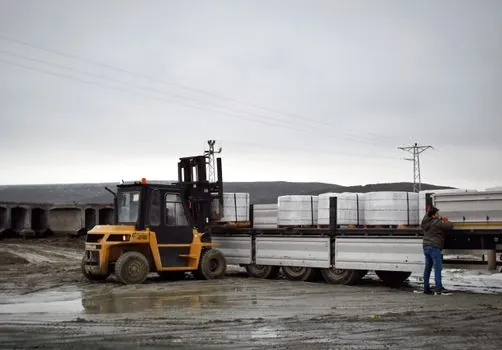
Indoor warehouse maintenance, retail fit-out, and ceiling-fixture installation call for an electric scissor lift with non-marking tires, picked for quiet operation, zero local emissions, and a centred vertical lift envelope that suits a flat slab floor [S3][S4]. Outdoor construction on unimproved ground calls for a rough-terrain scissor or articulating boom lift with 4WD and pneumatic tires, where ground clearance and stability on uneven surfaces override the need for outreach [S3].
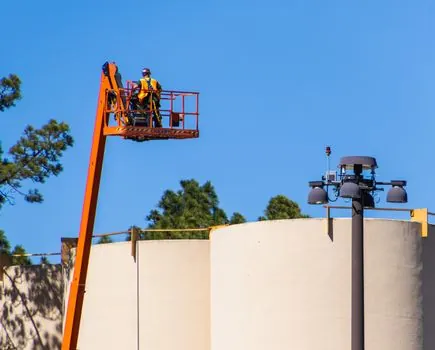
Utility line work, tree care, and signage installation on a roadside call for a bucket truck or telescopic boom, where horizontal outreach plus the ability to drive the unit between job sites removes the need for a separate transport vehicle [S3]. For sensitive or uneven terrain where a wheeled machine cannot stage, tracked spider lifts (available up to 54 m on production units) provide low ground pressure and a compact stowed footprint [S5]. Warehouse, factory, and loading-dock logistics call for a forklift sized to the load: electric counterbalanced units for indoor pallet handling, and diesel or LPG pneumatic-tire units for outdoor yard work. On unimproved construction ground, a rough terrain forklift is the right substitute for a warehouse truck.
Limitations and Common Failure Modes
AWPs are limited in their lift envelope: the typical SWL under 1 t [S2] means they cannot double as material hoists for dense equipment, and scissor lifts cannot reach horizontally to bypass obstacles. Boom lifts overcome the reach limit but introduce new stability challenges, because the platform is offset from the base during outreach and overturn risk rises with extension, slew angle, and wind.
Forklifts are limited in two structural ways: they cannot safely elevate personnel, and their load capacity drops sharply as the load centre moves further from the mast carriage. Standard sit-down forklifts are also unsuited to soft, muddy, or graded terrain, which is why rough terrain forklift variants with 4WD and larger tires exist for construction and yard work. Choosing a standard warehouse truck for outdoor ground conditions is a frequent source of tipover events and a recurring cause of operator injury in incident reports [S1].
Trackable Signals to Watch Next
Two signals will reshape the AWP vs forklift decision over the next procurement cycle. First, the spread of lithium-ion battery packs in both classes is cutting charge times and allowing indoor and outdoor fleets to share a common electrification roadmap, narrowing the diesel-vs-electric split that has long defined fleet specification. Second, the EN 280 and ANSI A92 frameworks continue to converge on operator-training language, which is likely to make cross-border equipment moves easier for rental fleets operating in both Europe and North America [S5]. For a closer look at the chassis and lift selection logic for one high-demand AWP sub-type, see Aerial Work Truck Specs for Snow Removal: 2026 Chassis and Lift Selection.