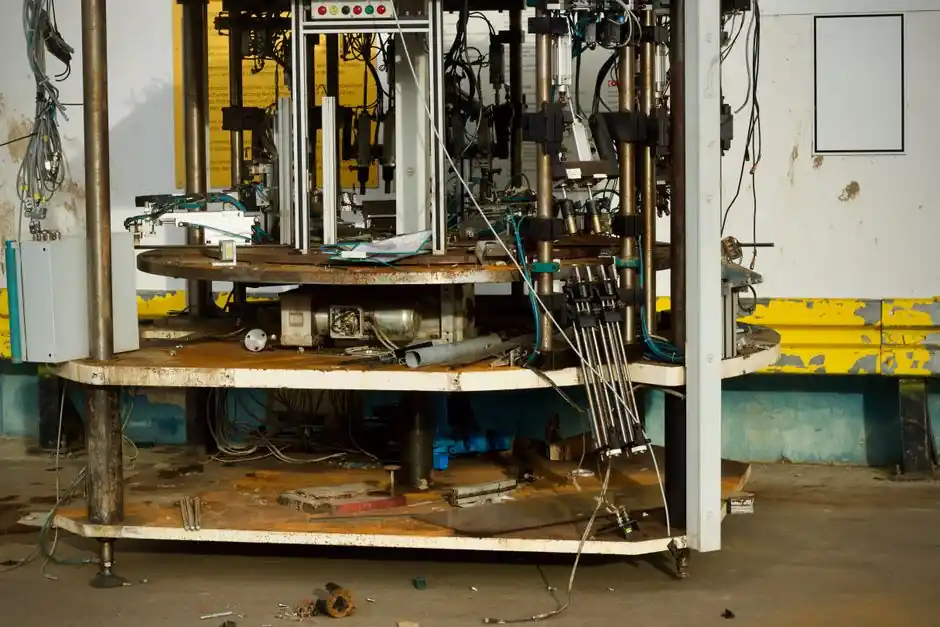
Modern foundry sand-reclamation lines are moving past batch sampling toward closed-loop automation, with one UK operation cutting new-sand purchases by roughly 5,000 metric tons per year through a mechanical attrition cell installed in 2022 [S3].
The economic driver is hard: a single pneumatic reclaimer such as the SIMPSON Pro-Claim is documented to drop new-sand demand from 60% of the mix to 5%, with end-users reporting savings of 75–90% versus virgin sand [S1]. Digital monitoring of grain fineness, moisture and airborne silica is now bolted to the same loop, turning reclamation into a controlled process rather than a waste-handling chore [S3].
Mechanical, Pneumatic and Thermal Reclamation: How the Three Paths Compare
Pneumatic scrubbers accelerate sand up a blast tube and impact a conical target, removing binder through kinetic energy without any thermal step, and they run continuously without an operator, which keeps staffing cost flat [S1]. Mechanical attrition cells, the technology MAT Foundry deployed at its Poole, England, plant, use kinetic energy to break up large sand clusters and are typically followed by a secondary attrition unit for fines and binder release [S3].
Thermal fluidized-bed systems (e.g. BHM) calcine, pre-cool and scrub in one envelope with no moving parts, while microwave reclaimers heat the refractory itself to flash off binders on a smaller footprint and with less energy than a comparable gas-fired line [S4]. The trade-off is straightforward: pneumatic and mechanical units win on energy per ton and capex, thermal wins on binder burn-off completeness, and microwave sits between them on footprint and energy. Waupaca Foundry reports a typical grain recirculating 30+ times through the cell before discharge, which is why reclaim rate, not equipment speed, is the real KPI [S1].
Sand Quality Monitoring: From Lab Tests to Inline Sensors
Inline quality monitoring has shifted from grab samples to continuous measurement of grain fineness (AFS number), moisture, compactability and temperature at multiple points along the reclaimer discharge [S3]. These sensor strings feed PLCs and SCADA, and on more advanced lines they close the loop by adjusting scrubber air volume or attrition retention time when the AFS number drifts [S3].
Pairing the sand loop with a plant-wide condition monitoring system on the turbo blower, bucket elevator and vibratory shakeout cuts unplanned downtime on the reclaimer itself, which is the single biggest threat to reclamation rate. Research published in 2025 demonstrated a Bayesian neural network approach to predicting reclaimed-sand quality in real time, an early case of smart manufacturing applied directly to the reclamation cell [S2]. On a heavily instrumented line, the same data historian that runs the reclaimer also drives the air quality monitor for respirable crystalline silica, which is regulated under OSHA’s PEL and is increasingly enforced during foundry audits [S4].
Selection Criteria: Which Reclaimer Matches the Sand System
For green-sand and chemically bonded systems, pneumatic scrubbers are the default because they remove clay and resin films without the fuel cost of thermal calcining, and they tolerate the 5–20% new-sand makeup most foundries still add [S1]. For foundries running large volumes of no-bake or shell sand with heavy resin loading, a thermal or hybrid mechanical-plus-thermal line is more common because pneumatic alone leaves residual binder that hurts refractoriness [S3][S4].
Microwave units fit plants with constrained floor space, ceramic-sand molding, or strict local emissions caps where a gas-fired fluid bed is hard to permit [S4]. The electrical automation scope is non-trivial in all three: a pneumatic cell needs only a turbo blower VFD and discharge screen interlocks, while a thermal or microwave line needs burner management, oxygen trim, scrubber interlocks and a full SIL-rated safety chain. Capex spread between a pneumatic cell and a full thermal line is typically 3–5x, which is why most retrofits start with mechanical attrition and add thermal capacity only when binder residue fails incoming inspection [S3].
Environmental, Regulatory and Worker-Safety Drivers
Spent foundry sand carries residual binders, additives and trace heavy metals, and reused without treatment it can cause environmental leaching, sand-grain corrosion and casting defects [S3]. Reclamation cuts both landfill tonnage and virgin-sand mining, and at Waupaca Foundry the recovered stream has been redirected into mine-site geotechnical fill under Wisconsin Administrative Code ch. NR 135, with 524,000 cubic yards applied to date in Wisconsin and 95,000 cubic yards shipped annually from the Tell City, Indiana plant for the same purpose [S5].
Airborne crystalline silica is the parallel regulatory pressure: every reclaimer cuts the dust load relative to a shakeout-only operation, and modern lines tie the power quality analyzer inputs on the blower VFDs to the dust-collection motor loads to verify the collection system is actually running at design airflow during shakeout. EC&S, a US system integrator, frames its thermal and microwave offerings explicitly around the OSHA silica PEL and AFS crystalline-silica guidance, which is the language procurement teams should expect to see in 2026 vendor quotes [S4].
Use Cases and Documented Savings
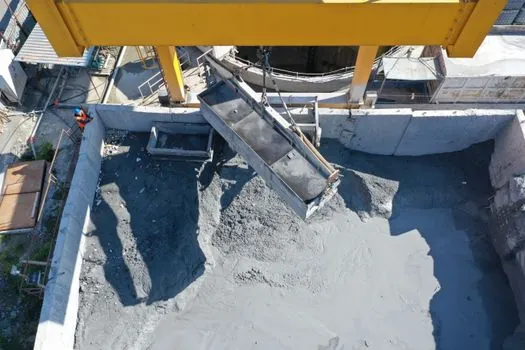
Three real-world numbers anchor the business case. A UK foundry using mechanical attrition cut new-sand consumption by approximately 5,000 metric tons annually after its 2022 install [S3]. A US iron foundry running the SIMPSON Pro-Claim moved from a 60/40 new-to-reclaimed sand split to a 5/95 split, with end-user savings of 75–90% on the sand line item [S1]. Waupaca Foundry, an iron casting operation, has reused foundry sand in-mold for years and then diverted spent material to 524,000 cubic yards of mine reclamation in Wisconsin plus 95,000 cubic yards per year in Kentucky [S5].
These cases separate into two patterns. The first is in-line reclamation tied to a single foundry molding line, where pneumatic or mechanical attrition dominates and the payback is measured in months on binder and sand alone. The second is centralized thermal or microwave reclamation shared across multiple molding lines, where the capex is justified by the volume and by the ability to reclaim chemically bonded sands that pneumatic cells cannot fully clean. Both patterns increasingly share the same digital backbone, with sensor data, alarm logs and shift reports flowing into the same MES that tracks pouring and shakeout, which is what makes the closed-loop concept viable in 2026 [S2][S3].
Foundries evaluating a 2026 capex bid should request AFS grain-fineness data, residual-binder LOI, and a 12-month trend of the air quality monitor on the reclaimer discharge, then validate that the vendor’s electrical automation package includes burner management, blower VFD interlocks and a historian tag list rather than a stand-alone relay panel. Watch for the next revision cycle of AFS crystalline-silica guidance and any state-level adoption of stricter PEL values, both of which tend to compress the payback on pneumatic cells by 6–12 months.
This topic is covered further in Aluminum HPDC Cell Equipment List: Press, Furnace, Die, and Auxiliary Stack.