The global fuel cell market is sized at USD 5.66 billion in 2025 and is projected to reach USD 18.16 billion by 2030, a 26.3% CAGR, with the solid-oxide (SOFC) type growing fastest at 31.2% CAGR and the hydrogen fuel stream growing at 26.8% CAGR [S1].
Component value sits overwhelmingly in balance-of-plant (BoP), which held 66.4% of 2024 component revenue, meaning compressors, humidifiers, DC power supply inverters, and thermal-management skids dictate BOM cost more than the stack plates themselves [S1].
Supply-chain pressure is concentrated in three nodes: catalyst-coated membranes (CCM) and bipolar plates for the stack core, stack end-of-line inspection for the assembly line, and high-pressure hydrogen storage Type IV tanks for the vehicle integration tier. The remainder of this article walks spec gates, vendor tiers, and the verifiable signals a sourcing engineer should track through 2H 2026.
Stack Type vs Use Case: Where PEMFC and SOFC Pull the Supply Chain
The PEMFC family dominates fuel-cell electric vehicles (FCEVs) and forklifts because the membrane-electrode assembly (MEA) operates at 60-80 °C with fast cold start, while SOFC is specified for stationary combined-heat-and-power, data-center backup, and industrial microgrids at 600-800 °C with electrical efficiencies above 50% on natural gas or hydrogen [S1][S3].
FC passenger-car sales fell from 15,000 units in 2022 to 5,000 by 2024 even with subsidy coverage near 50% in California and South Korea, so the stack volume that justifies PEMFC catalyst-coating capex is shifting away from cars toward medium- and heavy-duty trucks where the gross vehicle weight rating (GVWR) maps to higher kW stacks [S2]. China remains the largest fuel-cell LCV market at roughly 1,300 units sold in 2023, against about 50,000 BEV LCVs in the same year, a ratio that frames LCV stack sourcing as a low-volume, qualification-heavy segment [S2].
For a sourcing engineer the practical answer-first is: if the application is heavy-truck GVWR, bus, or stationary CHP, PEMFC or SOFC respectively pull the supply chain; if it is a passenger car or LCV, treat stack procurement as a low-volume custom build, not a catalogue line.
Stack Core Bill of Materials: CCM, GDL, and Bipolar Plates
Screen-printed catalyst layers on full-size MEAs were first demonstrated within a generic PEMFC stack in 2024, opening a roll-to-roll deposition route for Pt/C catalyst inks that replaces decal-transfer steps in pilot lines [S5]. The same work validated that screen-printed cathodes can hit initial performance within 5-10% of spray-coated reference cells, which is the threshold commercial stack makers accept before line conversion.
Bipolar-plate material has consolidated around metal (stainless 316L with gold or carbon coating) for automotive PEMFC stacks because graphite plates cannot meet the ≤1 W·cm⁻² power density at 2-3 mg·cm⁻² Pt loading that 2026 truck programs target.
Spec gate to put on every stack PO: (1) Pt total loading in g per kW rated power, target ≤ 0.3 g Pt/kW for 2026 truck stacks; (2) MEA active area cm² with ≤ 10 mV cell-voltage spread at 1 A·cm⁻²; (3) bipolar plate corrosion current density under simulated cathode conditions, target < 1 μA·cm⁻² at 0.6 V vs SHE for coated metal plates. If a supplier cannot put numbers on these three gates, they are not yet at stack-MEV maturity.
Balance of Plant: Where 66.4% of the Component Market Lives

BoP components held 66.4% of the 2024 fuel cell component market, so the switching power supply bus, air compressor, ejector or recirculation blower, and coolant pump are the real cost levers even though they sit around the stack, not inside it [S1]. For PEMFC truck stacks at 100-300 kW, the cathode air compressor alone draws 8-12 kW parasitic and typically costs more per unit than the membrane it feeds, which is why most commercial air-supply skids in this segment are sourced from a small set of turbocharger and oil-free blower vendors that also serve oxy-fuel cutter air systems and chain conveyor pneumatic lines.
Thermal management and humidification are the second BoP cost block: PEMFC stacks lose 40-50% of input hydrogen energy as waste heat, and that heat has to be dumped through a coolant loop compatible with DI water (≤ 1 μS·cm⁻¹) to avoid membrane contamination. Stationary SOFC skids are simpler on humidification but require a high-temperature DC power supply and grid-tie inverter that handles the stack's slow ramp profile, which is why SOFC BoP parts overlap with industrial UPS and telecom backup-power supply chains rather than automotive electricals.
Comparison passage for procurement: PEMFC BoP pulls from automotive-grade suppliers (tier-1 compressor and blower vendors, 12-48 V switching power supply modules, low-flow coolant pumps) and is constrained by automotive PPAP timelines; SOFC BoP pulls from industrial-process suppliers (high-temperature blower metallurgy, plate heat exchangers, grid-tie inverters) and is constrained by UL/IEC stationary certifications. Stack-core sourcing decisions should be made jointly with BoP sourcing because stack voltage, current, and start-time targets each rule out a different BoP architecture.
Stack Durability Specs and Inspection Bottlenecks on the Assembly Line
Fuel cell vehicle programs in North America, Europe, and Japan target stack durability of 5,000-8,000 hours for passenger cars and 25,000-30,000 hours for heavy-duty trucks, with end-of-life defined as 10% rated-power loss or a defined voltage-decay rate [S6]. Those hour targets translate directly into MEA test time on the line, because a stack cannot be shipped until its single-cell voltage distribution is mapped against a known-good reference, and that mapping step is the new assembly-line bottleneck.
Automated optical inspection (AOI) for MEA surface defects and bipolar-plate coatings is the capacity-limiting step in 2026 stack production; Konica Minolta's fuel-cell-stack inspection system is one of the publicly named AOI platforms aimed at detecting pinholes, catalyst agglomerates, and coating scratches on coated metal plates before cell stacking [S4]. Each 100 kW truck stack contains 300-500 cells, and the inspection step that catches a single defective plate at the start of stacking saves the entire downstream build cost, so AOI capex tracks roughly 1:1 with stack line throughput targets at the major system integrators.
Spec gate for an incoming MEA lot: (1) open-circuit voltage (OCV) at H₂/air, 25 °C, ambient pressure, target ≥ 0.95 V per cell; (2) cross-leak rate in mL·min⁻¹ at 50 kPa differential, target ≤ 2; (3) visual defect density per cm², target ≤ 0.001 per AOI classification, equivalent to the 1-2 defect/cm² ceiling that current screen-printed MEA lines can hold on a Six-Sigma basis.
Vehicle Integration Tier: Hydrogen Storage and the 700 bar Tank Supply Chain
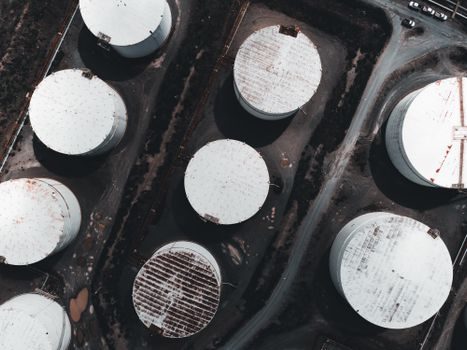
On-road FCEV storage is dominated by 700 bar Type IV hydrogen tanks with a carbon-fiber overwrap wound over a polymer liner, and the carbon fiber supply chain (PAN precursor, carbonization line, winding capacity) is the binding constraint for the 2026-2028 build window, not the stack itself [S3].
For medium- and heavy-duty trucks, the USA's National Zero-Emission Freight Corridor Strategy defines the deployment geography that drives tank demand, and stack power scales with GVWR: IDTechEx maps this relationship directly between truck class and required kW rating, with Class 8 long-haul tractors pulling the highest single-truck stack demand per vehicle [S2].
Supply-tier health check: as of 2024-2025, several fuel-cell truck system integrators (Nikola, Quantron, Hyzon) hit financial obstacles, and that capital-cycle stress filters back to stack procurement in the form of order pushouts and lower minimum-order quantities from component suppliers [S2]. A sourcing engineer should treat MEA and tank orders as conditional on a parent OEM's funding event, and qualify a second source for each stack subsystem in case of further integrator consolidation.
Lean Supply Chain Practices Applied to Stack Sourcing
Lean supply-chain practice applied to fuel cell stacks converges on five operational moves: (1) single-tool selection — vendor-managed inventory for the Pt catalyst and carbon-fiber tiers where annual demand is volatile; (2) explicit principles — pull-based MEA replenishment tied to weekly stack build plans, not quarterly forecasts; (3) value-stream mapping of the BoP assembly with takt time matched to stack kW output; (4) waste elimination on incoming-inspection redundancies that AOI can now absorb; (5) Six-Sigma overlay on the MEA coating line to hold catalyst-loading distribution within the Pt-loading spec gate above. [S1]
Cross-link to adjacent process-spec reading: lean supply-chain discipline on a fuel-cell stack line is similar in structure to the cell-format scaling work documented for the battery electrolyte market 2026, where the same pull-based MEA-style analogy applies to electrolyte filling, formation, and aging. For a sourcing engineer the takeaway is that BoP logistics, not the stack core, is where lean moves return the most working capital in 2026.
Decision Map: When to Source PEMFC, When to Source SOFC, When to Wait
Sourcing decision, condensed: for FCEV heavy-truck and bus programs with a 2027-2028 SOP, qualify PEMFC stacks with a Pt-loading spec, an AOI-confirmed MEA supply, and a ferritic-stainless or coated-metal bipolar plate on a dual-source basis; for stationary CHP and data-center backup, qualify SOFC stacks on a 25,000-hour durability target with a grid-tie inverter partner already holding UL/IEC stationary certification; for FCEV passenger car and LCV volumes, defer stack capex because the 2022-2024 sales contraction has not yet reversed in the unit-volume data [S2].
Trackable signals for the rest of 2026: (a) the next IDTechEx update on FCEV passenger-car sales through 1H 2026 to see if the projected recovery off the 5,000-unit 2024 base materialises; (b) the next round of OEM earnings, where stack integrator order pushouts or new offtakes will reset MEA and tank POs; (c) any USD Department of Energy Loan Programs Office (LPO) award that closes financing for a new US-based stack line, which the FCEV policy framework treats as a national strategic reserve [S3].