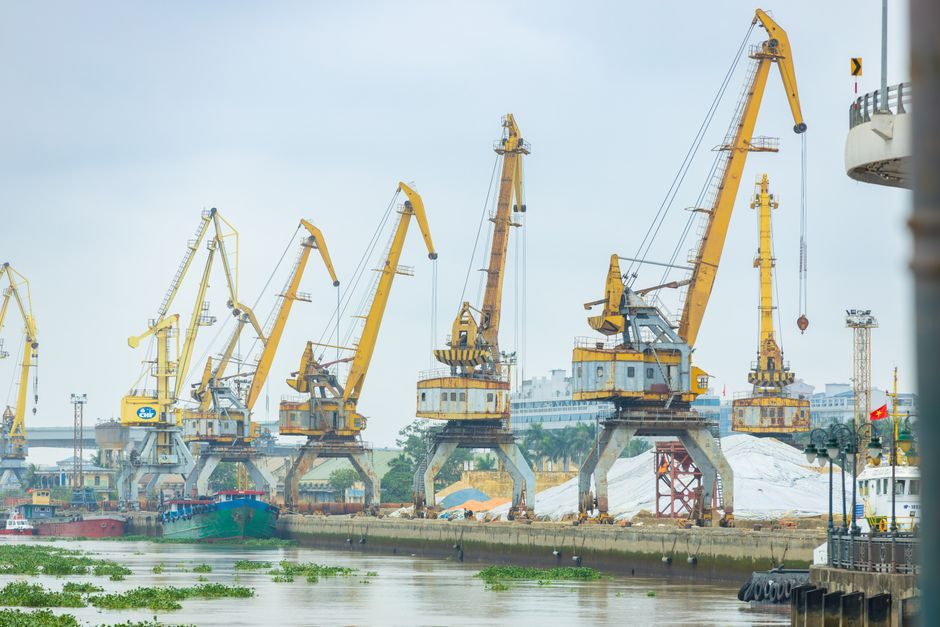
A 2026 gantry crane buy starts with two physical numbers — span and lifting height — and one classification code: FEM/ISO 4301 duty group (or CMAA 70/74 in North America, IS 807 in India). Get those three wrong and the crane either will not fit the bay, will not reach the load, or will fatigue long before the buyer expects [S8][S3].
Scope of this guide covers four structural families that show up in real RFQs: aluminium mobile gantry (1-person assembly, typically ≤2 t), hydraulic caster-mounted workshop gantry (≤5 t), single-girder electric gantry (the MHB/MH class, 2-10 t at 6-9 m lift), and double-girder heavy gantry (Weihua class, up to 550 t for container and project work) [S1][S2][S9][S5]. Buyers who jump straight to price before pinning those four families usually overpay by switching class mid-RFQ.
Duty Class and Design Code: The First Gate
Indian heavy-duty gantry cranes sold under the "Power-Master Goliath" range are explicitly designed to IS: 807 and IS: 3177, with the bridge rigidly supported on legs running on fixed rails or runway — no building column needed [S8]. European FEM 1Am–5m and ISO 4301-1 mapping (or US CMAA Class A–F) drives the wire-rope, hoist and wheel selection; under-specifying the class cuts hoist service life by 30-50% in high-cycle plants.
Australian double-girder builders explicitly market "A class above power saver, low carbon" packages, reflecting FEM 2m-4m duty at moderate cycle [S6]. A 5 t crane on FEM 1Bm duty (light/infrequent) is not equivalent to a 5 t crane on FEM 2m (medium/regular); the latter uses larger hoist motors, higher hoist SWP (≥1.0 vs 0.5) and heavier end-truck wheel loads. Always pin the code in the RFQ, not just "5 t".
Span, Lifting Height and Lifting Capacity
For the common MHB single-girder electric gantry listed on Made-in-China, published 2026 parameters are 2-10 t capacity, 6-9 m lift height, with span set as a build variable [S9]. Container gantry and project units from Weihua push to 550 t with bridge structures sized for 40 ft ISO container handling [S5]. Mobile aluminium units use telescopic span adjustment — the WIMAG 520 series offers 300 mm of one-side span adjustment and 100 mm height increments via pin locking, sized for one-person assembly in five minutes [S1].
For a process-engineer reader: span drives the bending moment in the main girder (roughly M = W·L/8 for simply-supported, more for cantilevered), so going from 12 m to 18 m at 10 t can double the required girder section and the wheelbase. Height is governed by the building clear-hook and the column/runway interface — verify both, then size the lift. A 10 t crane with 12 m span and 9 m lift is a stock build; 10 t at 24 m span with 18 m lift is a custom-engineered unit with a 6-9 month lead time. Buyers looking at parallel capacity decisions on truck- or tower-mounted equivalents should also check the Truck-Mounted Crane Selection: 5 Engineering Gates Buyers Run Before RFQ in 2026 guide to avoid double-spec'ing the same lift envelope twice.
Mobility Mode: Wheeled, Rail-Mounted or Stationary
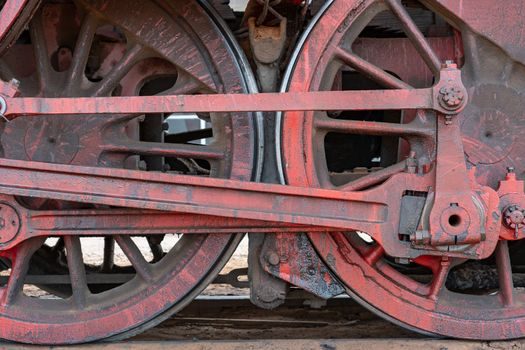
Three mobility classes appear in 2026 supplier catalogues, and they don't substitute for each other. WIMAG's 520-series aluminium mobile crane is one-person-assembled, height-adjustable in 100 mm increments and built for short-duration, low-frequency moves [S1]. LIFT SYSTEMS' SC-series gantry runs on casters with a hydraulic lift, intended for shop-floor load repositioning rather than continuous duty [S2]. Australian suppliers explicitly offer A-frame two-legged and double-girder rail-mounted configurations for fixed factory bays [S6].
Selection logic: if the load point moves more than once a shift and the floor is level, a rubber-tyred or PU-wheel mobile gantry is correct. If the path is fixed and the crane runs more than ~50 cycles/day, buy rail power-feed (festoon or conductor bar) — drag cables fail inside 18 months in heavy use. If the unit stays under one workstation and lifts occasionally, the SC-style caster unit is the cheapest viable answer. Mixing these — for example, dragging a 5 t unit on a 50 m run twice a day — is the most common cause of premature wheel-bearing and drive failure that we see in service reports.
Hoist, Trolley and Drive Options
Single-girder MHB-class cranes normally use an electric wire-rope hoist on a flanged-wheel trolley riding the lower flange of the I-beam main girder [S9]. Double-girder heavy units (≥50 t) use a separate crab/trolley riding on rails on top of both girders, which lets the hook approach the full lift height without consuming girder depth — necessary for 550 t container gantries [S5]. Variable-frequency drives (VFD) on hoist and cross-travel are now standard in Voitto Crane and Weihua 2026 export packages, reducing swing load and allowing soft-start on long-span bridges [S3][S5].
Hoist SWP (safe working period) class must match duty: FEM 2m demands ≥1.0 SWP hours, FEM 4m ≥1.6, and FEM 5m ≥2.0. Buyers running two-shift stamping or machining lines should refuse any quote that does not state the FEM group and SWP hours on the nameplate. A 2 t hoist on FEM 4m duty costs roughly 30% more than the same capacity on FEM 1Bm; ignoring the difference trades nameplate capacity for service life.
Power Supply, Controls and Safety
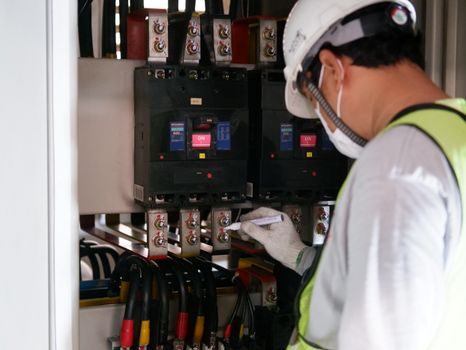
Power delivery is festoon cable, conductor bar (slip-ring or enclosed), or cable reel. For outdoor container gantries exposed to weather, enclosed conductor bar (insulated, IP54 minimum) is the default in 2026 export builds [S5]. Controls in Voitto's 2026 catalogue are pendent pushbutton plus radio-remote options; safety chain includes overload limiter, upper/lower hoist limits, and travel limits on bridge and trolley [S3].
Buyers in jurisdictions under EU machinery directives (2006/42/EC) and the UK supply of machinery regulations must receive a Declaration of Conformity, a full technical file, and CE/UKCA marking before commissioning. Buyers in India must receive IS: 807 and IS: 3177 compliance evidence; buyers in Australia typically reference AS 1418 and ASME B30 series for installation and inspection. State the standard in the PO, not as a footnote.
Sourcing, Lead Time and What to Pin in the RFQ
2026 sourcing is dominated by Chinese export mills (Voitto, Weihua, MHB-class builders) for the 1-200 t bracket, with Western and Indian builders holding the custom-engineering and after-sales niches [S3][S5][S8][S9]. Aluminium mobile units are also coming out of European specialty builders such as WIMAG, whose 520-series is documented at 1-person, 5-minute assembly [S1]. Australian specialists like Gantry Cranes Australia pitch modular A-frame and double-girder kits adapted to factory geometry [S6].
RFQ discipline that we recommend: pin (1) capacity in tonnes, (2) span in metres clear between legs, (3) clear-hook lift height, (4) FEM/ISO 4301 or CMAA duty class, (5) power supply voltage/phase/frequency, (6) mobility type (rail / rubber-tyred / caster), (7) hoist SWP class, (8) control type and (9) governing standard. Track 2026 published spec sheets on Voitto and Nante news pages for lead-time and pricing drift across the year, since both refresh export catalogues monthly [S3][S4]. For a parallel decision on the larger jobsite envelope, the Truck-Mounted Crane vs Tower Crane: 2026 Spec, Reach and Sourcing Cut piece is a useful contrast, while capacity-driven buyers handling container and steel-yard work will also want to weigh a Tower Crane 2026 Price & Cost Guide: Capacity, Jib Length and Spec Levers comparison before committing to fixed legs.
Next node to track: the Nante Crane and Weihua gantry product pages, both updated through June 2026, are the most reliable indicators of Chinese export lead times for the MHB and heavy-gantry classes [S4][S5]. Watch also for new Australian A-frame modular releases on the gantrycrane.com.au news feed through Q3 2026, and verify any vendor's IS: 807 or FEM/ISO 4301 certificate before the down-payment, not at FAT [S8][S6].
For component-level specifications, see gantry crane, linear guide, and crossed roller guide.