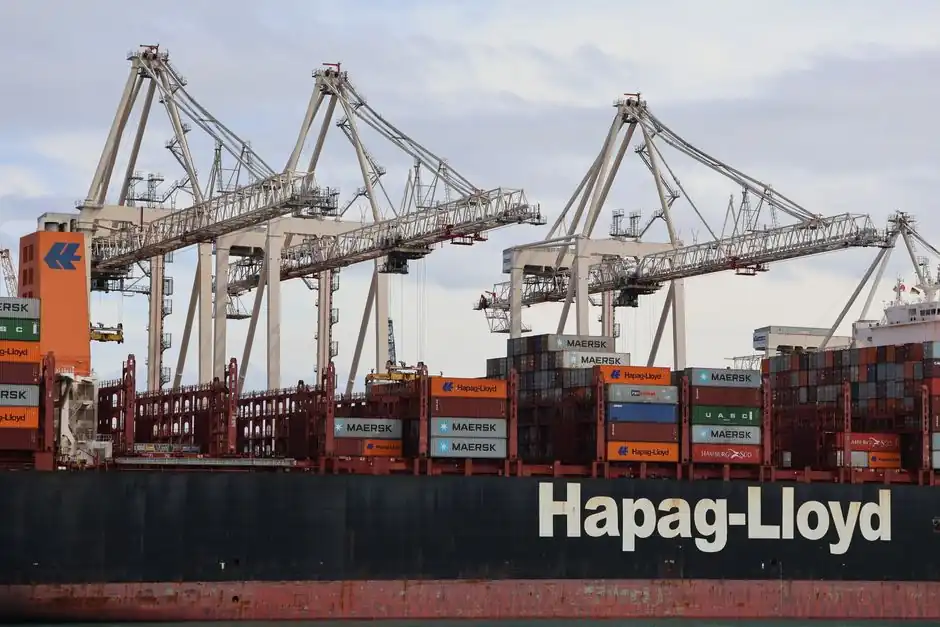
For mainline pipeline construction gantries, capacity bands of 5 t (stringing), 10-20 t (joint coating and lowering-in cradles), and 30-50 t (valve sets, scraper traps, river-crossing pulls) cover roughly 90% of the equipment that shows up on a typical spread [S2][S3].
Span is driven by the working envelope: a 12-18 m span handles single-row pipe stockpiles, 20-28 m covers a working lane plus a truck apron, and 30-35 m is reserved for double-row yards or simultaneous handling of two parallel strings. Rail gauge and straightness must be held to a level the supplier can verify before erection [S2].
Operating envelope: span, gauge, and rail tolerance
A gantry crane is defined structurally as a bridge crane whose horizontal girder is carried on two legs that ride ground-level rails, which is what lets it be re-positioned along a pipeline spread without permanent foundations [S2]. For pipeline use, span is the first number to lock: too narrow and you cannot straddle a pipe string plus a sideboom delivery lane; too wide and you waste steel and need a heavier rail base beam [S2].
Rail preparation is non-negotiable and is the most common cause of early-life structural problems. Specifications typically call for verifying the rail base beam straightness and levelness, tamping the subgrade, and tightening anchor bolts before any lift, since the crane has no permanent foundations to hide settlement under [S2]. On larger units, foundation design is usually handled with FEA-grade software such as GT STRUDL, where 64-bit solvers allow rapid iteration of anchor bolt and pad sizing for temporary foundations [S1].
Capacity and load chart logic
Pipeline work is not a single capacity problem. A spread usually runs two or three cranes in parallel: a light 5 t stringing gantry, a 10-20 t unit for joint racks and field-coating cradles, and a heavy 30-50 t machine for valve assemblies, launcher/receiver traps, and HDD pull-back headers [S2][S3]. Buying one oversized unit to cover all three is almost always wrong: the small lifts lose precision, the heavy lifts require a crane that is not mobile enough for the stringing crew.
The dual-crane rule is a hard operational limit: when two cranes hoist one object, the combined load must not exceed 75% of the sum of their rated capacities, and travel and hoist motions must be synchronized [S2]. For a single-crane lift with a luffing or telescopic boom, the lifted weight must stay under 50% of the rated capacity whenever the boom is being raised or lowered, because the dynamic amplification factor is at its worst in that motion band [S2].
Mobility: rail-mounted vs rubber-tyred vs crawler
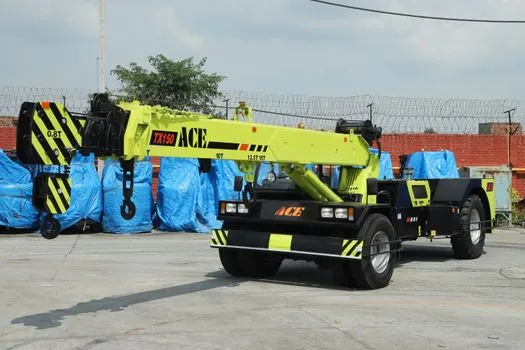
For a long pipeline spread the rail-mounted single- or double-girder gantry is the workhorse because it scales span and capacity cheaply. For a tie-in yard or a station site where the crane has to move between discrete work points without track, a rubber-tyred mobile gantry with independently locking casters is the right call: aluminium-alloy legs and beam trolley designs in this class can be towed behind a standard pickup and assembled by two people from the ground up [S3].
Crawler-mounted gantries, including heavy crawler crane conversions fitted with a gantry frame, are reserved for the heaviest valve-set picks and for river or road crossing pulls where ground pressure must stay low. None of these mobility choices change the underlying selection gates of span, capacity, and rail tolerance, but they do change the site-prep budget: a tracked unit needs a level, compacted matting surface, not a precision rail beam [S1][S2].
Comparison of the three common configurations
Lining the three options against the criteria that actually drive a pipeline purchase decision, the tradeoffs look like this. Rail-mounted gantries win on raw capacity (up to 50 t and beyond) and on the ability to lay a track parallel to the ditch for continuous stringing, but they lose on relocations because every move means re-laying and re-tamping rail [S2]. Rubber-tyred mobile gantries are the most flexible on site, can be repositioned by a small crew in minutes, but top out at lower capacities and are sensitive to ground slope and surface bearing pressure [S3]. Crawler or mobile crane gantry conversions handle the heaviest picks on soft ground but cost more to mobilize and are over-spec for daily stringing work [S1].
Safety rules the spec sheet must encode
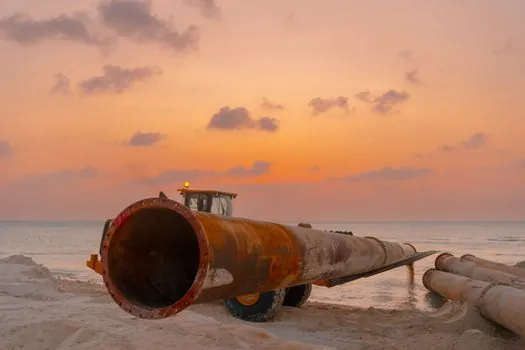
Wind is the most common environmental stop-work condition on a pipeline spread: a gantry must be taken out of service when sustained wind reaches force 6 on the Beaufort scale, with the boom turned downwind, the hook raised to the upper limit, rail wedges (rail stops) set, doors and windows closed, and the cable wind rope tensioned before the operator leaves the cab [S2]. Hook height on an empty travel move must clear 2 m above ground to avoid striking personnel and small obstructions [S2].
Other rules that belong in the method statement, not just the operator's manual: no personnel under the boom during any lift, the hook must be vertical with no diagonal drag, the load center of gravity must be located and the sling protected against sharp edges with proper padding, and on a shared track two cranes must keep a minimum 3 m separation [S2]. Lifting, luffing, and hoisting wire ropes need a documented weekly inspection with records retained, per the supplier's protocol [S2].
Pre-lift preparation and foundation interface
The pre-construction checklist for any gantry on a pipeline spread is short and should be completed in writing before the erection crew arrives: confirm accessories and electrical system integrity, prepare and certify the track, complete and tamp the subgrade to the construction unit's acceptance standard, check rail base beam straightness and levelness, complete operator certification and identification, stage tools and installation documents, and issue a written notice of commencement [S2]. Construction power distribution and lighting layout must be completed before commissioning [S2].
For heavier or longer-span units on permanent or semi-permanent foundations, foundation analysis is typically run in a dedicated FEA package so that anchor bolt patterns, pad reinforcement, and uplift checks can be iterated against the crane's load cases in hours rather than weeks [S1]. The same analysis feeds the supplier's data on maximum wheel loads, which the rail beam and subgrade must support, so the rail-prep crew and the foundation engineer are working from the same load numbers [S1][S2].
Build sequence and ancillary tooling
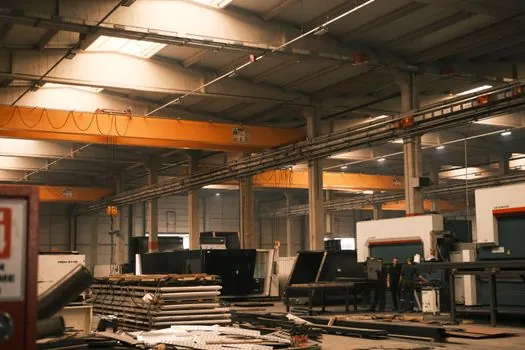
Gantry selection on a pipeline spread cannot be separated from the build sequence around it, because the same gantry is usually expected to feed stringing trucks, lower-in cradles, and the tie-in crew. Heavy-duty aluminium-alloy gantries aimed at portability ship in components that two operators can assemble at ground level before the beam is craned up, and use a wrap-around trolley that rides over the beam and cannot derail, which removes one of the most common failure modes on light-duty units [S3].
Grade L9 plated fasteners are the minimum corrosion-rating hardware expected on a unit that will sit in a pipe yard through several weather cycles, and independently locking swivel and roll casters are the single biggest safety upgrade over the basic fixed-wheel portable gantry that still shows up on smaller spreads [S3]. For an overview of how lighter gantry capacity and span choices compare in a different working environment, see the agricultural selection map at agricultural gantry crane selection.
Limits and failure modes engineers should pre-empt
Three failure modes account for most pipeline gantry incidents: rail misalignment under one leg that twists the bridge girder, sudden speed changes during a lift that swing the load into the boom, and wind exceedance on a unit that was not parked and pinned correctly [S2]. Each of these is design-preventable: rail alignment is a site-prep problem, speed-change control is a method-statement problem, and wind exceedance is a stop-work-authority problem. None of them are solved by buying a bigger crane.
For the structural engineer, the single most useful pre-emption is to run a proper lifting analysis with a recognized FEA tool before the foundation is poured, because the anchor bolt and pad sizing for temporary foundations is iterative and the worst-case wheel loads on a misaligned rail are the load case that controls, not the rated hook capacity [S1].
For the procurement engineer, the right next move is to lock a span-capacity matrix (5 t / 10-20 t / 30-50 t) against the spread's work-front list, then match mobility (rail / rubber-tyred / crawler) to the relocations the spread actually requires, and finally specify the rail-prep crew, the wind-out procedure, and the dual-crane 75% rule in the purchase specification rather than relying on the operator's manual to enforce them [S1][S2][S3].