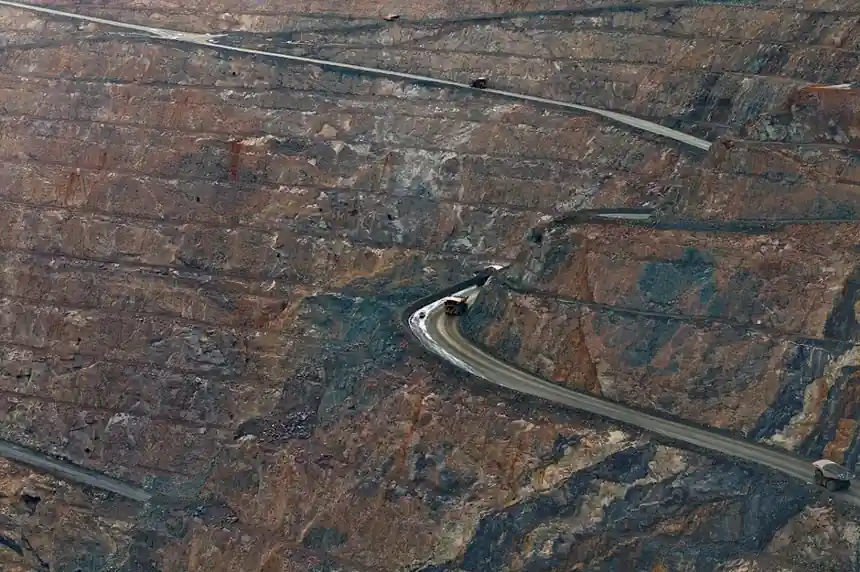
A quarry gantry crane is a ground-supported, self-propelled lifting system with no building runway, covering roughly 5 to 100 t of capacity and spans from 20 to 50 m in most stone-extraction applications [S4].
Quarries expose cranes to abrasive granite/limestone dust, water spray from suppression systems, and uneven muck-haul road surfaces, so selection must be driven by environment and structural type before capacity or span are finalised [S4][S6].
Quarry Duty Profile vs. Indoor Yard Duty
Quarry gantries are typically rated to FEM/ISO duty class A6 or A7, versus A3 to A5 for a typical indoor gantry crane on a precast yard [S4]. Rubber-tyred gantries (RTG) on 50 t and 65 t frames are documented for quarry-adjacent yards, with the CIMOLAI MST 47 (50 t) and MST 65-19 (65 t) listed as standard rubber-tyred gantries for heavy element transport [S1].
Outdoor quarry service multiplies corrosion and abrasion exposure: bearings see wash-down water and grit, and wire rope sheaves accumulate dust that accelerates wear. Brake drift after stop, a known failure mode on quarry hoists, is a function of brake lining wear, VFD brake-release timing, and contamination entering the brake housing [S6].
Structural Type Decision: Single vs. Double Girder, Rail vs. RTG
The first structural call is single girder or double girder; double girder is mandatory above roughly 20 t or for span beyond 25 m, because single-girder box-section beams lose stiffness rapidly and trolley approach runs become impractically short [S3]. For a quarry that moves the loading face every few years, a mobile crane-type rubber-tyred gantry with hydraulic or hydrostatic travel is the standard pick, since rail-mounted gantries need a re-laid rail bed whenever the pit advances.
CIMOLAI's MST 100-7 rubber-tyred gantry is listed at 100 t capacity for use on dams, drilling yards, and tunnel launching work, while their eMOBILIFT 40 (40 t) is offered in hydrostatic, hybrid, or fully electric battery-pack configurations for sites that cannot run diesel [S1]. A quarry running on grid power, or with strict diesel-restriction zones near a crusher, should shortlist the electric RTG option explicitly; conventional diesel-hydraulic travel adds 20-30% to lifetime fuel cost on a shift-intensive site.
Capacity, Span, and Hoist Selection Ranges
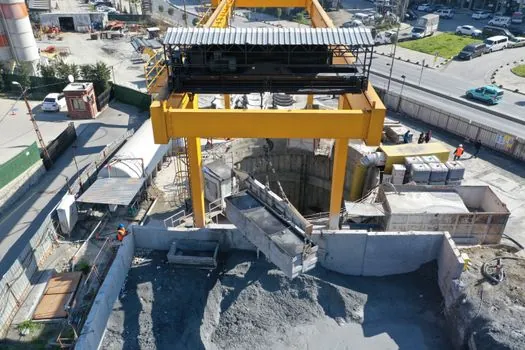
Quarry RTG and rail-mounted gantries cluster in three capacity bands: 5-20 t for primary-crusher feed bins and screen media change-out, 20-50 t for jaw-changer and cone-relining work, and 50-100 t for shift-movable primary-feed relocation [S1][S4]. Spans fall into two practical zones: 20-35 m for a fixed bench face, and 35-50 m when the gantry must straddle a haul road plus a working face plus a stockpile windrow. Working heights of 15 m on the CIMOLAI MBH mobile boats-handling gantry (50 t) show how high-lift variants extend the same chassis for tall-face service [S1].
Hoist selection should match the hoist to the duty class, not the headline capacity. A 50 t FEM A6 hoist on a quarry gantry can lift 50 t at a reduced cycle rate, but continuous 40-50 t cycles at A7 will require an oversized motor and a 6/1 or 8/1 reeving arrangement, with the wire-rope hoist chosen specifically for high-start torque and dust-sealed brake housing [S2][S6]. The same 50 t crane with a crawler crane-class hoist will not survive a quarry shift.
Comparison: RTG vs. Rail-Mounted vs. Truss Gantry for Quarry Service
Three structures compete for quarry duty. The rubber-tyred gantry (RTG) trades higher unit cost for full mobility and no rail infrastructure, suiting pits that advance every 12-36 months [S1][S4]. The rail-mounted gantry (RMG) has the lowest cost per ton for a fixed face, but every pit advance means re-laying 50-200 m of rail with corresponding ballast work. The truss gantry is lighter than a box-girder of equal capacity by 15-25% and sheds wind load, which matters on an exposed bench top, but truss chords collect dust and require periodic wash-down to prevent grit packing [S2][S3].
On total-cost grounds, the RTG wins for quarries under 15 years of planned life, the RMG wins for permanent fixed-face installations with a clear 25-year horizon, and the truss gantry is the right call only where wind exposure above 25 m/s is routine. Quarry operators who run a mixed fleet should standardise on a single hoist frame so spare wire rope, brake sets, and VFD modules are interchangeable across machines [S6].
Standards, Certification, and Power Architecture
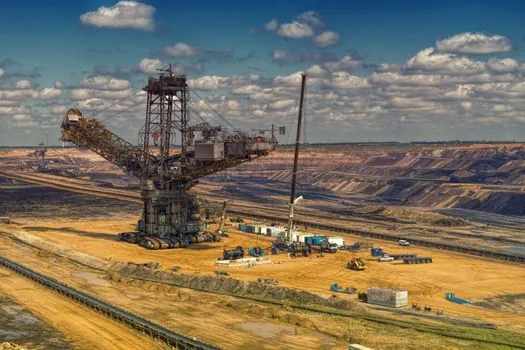
Quarry gantries are typically designed to FEM 1.001, ISO 4301, and CMAA 70/74 duty classifications, with the specific class driven by average daily cycles and load spectrum rather than nameplate tonnage [S2][S3]. Electrical packages for quarry service should specify IP55 minimum enclosure rating for the hoist and travel motors, with IP65 on the operator cabin and control pendants; dust ingress is the dominant electrical failure mode in limestone and granite pits [S2].
Power supply is the second under-specified line item: a 50 t RTG on hydrostatic drive can pull 80-120 kW peak during simultaneous hoist and travel, so the cable reel or busbar sizing must be calculated for that combined load, not nameplate motor sum. Buyers reviewing AC motor sourcing alongside the crane should match the motor frame size and service factor to the hoist's peak duty, not the motor's continuous rating. For sites with on-site generator backup, the gantry's peak load should be cross-checked against the standby generator kW tier so the generator does not drop out on a combined hoist-travel demand.
Common Failure Modes and Sourcing Traps
Quarry gantry failures cluster in three areas: brake drift on the hoist, wire-rope wear accelerated by dust, and travel-motor overheating from continuous inching on uneven ground [S6]. Brake drift is the single most reported hoist-side complaint and is driven by incorrect air-gap setting, contaminated friction surfaces, and VFD brake-release delay left at default values rather than tuned to the load [S6].
Sourcing traps to avoid: ordering a port-duty RTG and assuming it will accept quarry duty without re-rating (port duty has lower dust load and more level travel surfaces); specifying a single-girder box beam above 20 t capacity (deflection will exceed 1/750 of span under full load, the usual procurement limit); and omitting the dust-rated air filter on the cabin, which is a small line item but the largest single cause of operator-side downtime on quarry gantries. Track the tower crane alternative only if the quarry has a fixed crushing plant with a clear vertical lift and no horizontal travel requirement; otherwise, the gantry is the right structural form for quarry service.
Next signal to track: the FEM 1.001 update cycle and any CMAA 70 revision that touches dust-rated enclosures for outdoor aggregate duty. Buyers should also watch for the next round of electric RTG offerings, since battery-pack gantries in the 30-50 t band are the most likely quarry-spec change in 2026-2027 [S1].