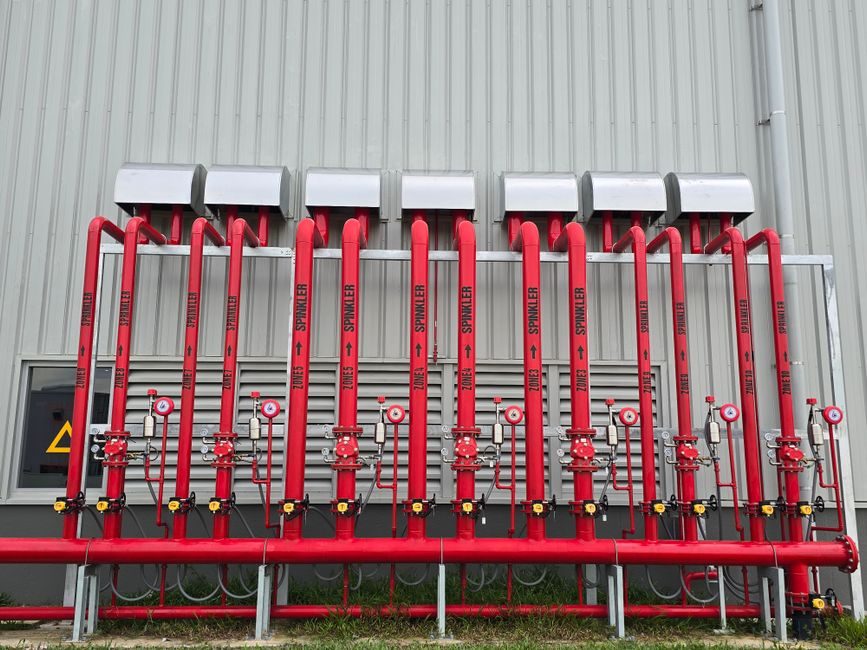
Welding operations carry three overlapping hazards — fuel gas (LPG/acetylene/hydrogen) above 25% LEL, oxygen displacement below 19.5% vol, and CO buildup above 50 ppm from incomplete combustion — and a single-gas detector cannot cover all three, so a multi-channel gas alarm controller is the default spec for any fixed welding cell [S3].
On a typical welding floor the practical envelope is 2-8 monitored channels, 4-20 mA or RS-485 Modbus signal back to a PLC, and at least two SPDT relay outputs (one for low alarm at 25% LEL / 19.5% O2 / 50 ppm CO, one for high alarm at 50% LEL / 18% O2 / 100 ppm CO), powered at 24 VDC, in a wall-mount enclosure no smaller than IP54 [S1][S3].
Hazard Stack and Sensor Mapping for Welding Cells
Welding shifts the gas hazard map from a single-axis leak problem to a three-axis one: fuel accumulation from shielding-gas leaks (argon, CO2, LPG, acetylene), oxygen depletion in confined weld cells, and CO from MIG/MAG fume or engine-driven welders running in the bay [S3]. Henan Chicheng Electronics ships a fixed multi-points combustible alarm detector, a fixed online SO2 monitor, and a portable LEL detector as separate SKUs rather than a single welding-bundled unit, which means a welding-floor buyer is forced into a multi-channel controller or a string of standalone heads [S3].
For acetylene service the LEL sensor should be a pellistor or NDIR type with 0-100% LEL range; for hydrogen welding fuel gas, only NDIR or electrochemical is appropriate because pellistors are poisoned by silicone and hydrogen can confuse some catalytic beads — a sensor-stack mistake that repeatedly causes false alarms in auto-body shops [S3].
Channel Count, Outputs, and Compliance Map
Channel count is the first spec line on the datasheet and the easiest one to under-buy: a single welding cell with two stations needs at least four channels (LEL, O2, CO, plus one spare), and a fabrication bay with MIG, TIG, and plasma cutting stations typically lands at 6-8 channels on one gas alarm controller [S1][S3]. Wuxi Yongan Electronic Technology builds standalone and multi-point combustible gas alarm controllers in the same housing family, with the 4-channel 24 VDC rack-style format the most common for welding-school and shipyard-retrofit orders [S1].
Output count is the second spec line, and at least three dry-contact relays are useful in practice: low-alarm horn, high-alarm beacon + solenoid shutoff, and a fault relay for sensor loss. RC Systems notes that a custom alarm-control package can be designed around a specific gas mix and output requirement, which is how welding OEMs and integrators usually solve non-standard channel counts without going to a full DCS [S2]. The practical point: if your shutdown logic closes a gas solenoid, you need a dedicated relay with a contact rating of at least 5 A at 250 VAC, not a generic logic output.
Compliance is harder to pin to one standard because welding shops sit between OSHA 29 CFR 1910.253 (oxygen-fuel gas welding) and the IEC 60079 series for explosive atmospheres, so a buyer should ask for ATEX Ex d IIB T6 or IECEx certification on the head, and a controller enclosure rated to at least IP54 inside the welding bay, before signing the PO [S1][S3].
Wired vs Wireless Controller Topology

Most welding-floor installations are still 4-20 mA wired because the EMI from inverters and HF TIG strikes kills 2.4 GHz wireless links unless the controller is purpose-built for it — RC Systems offers a wireless gas monitoring option, but it is generally specified for perimeter and tank-farm duty rather than inside a 200 A MIG cell [S2]. The wired topology in practice is one controller, two-core shielded cable runs to each head no longer than 500 m, and 24 VDC bus power; beyond 500 m, RS-485 Modbus RTU on a single twisted pair is the more reliable choice because it is differential and rejects common-mode noise from welding inverters [S1][S3].
A second decision node is whether to integrate the alarm into the welding-power-source interlock or to keep it as a standalone safety loop — most safety engineers now require a standalone loop because a PLC crash should not silence a combustible-gas alarm, which is why a fire alarm control panel and a gas alarm controller should not be merged onto the same CPU [S1].
Selection Criteria and Comparison Map
Against a four-axis score — channels, sensor type, output type, enclosure — the three controller families line up like this: standalone single-channel (Henan Chicheng Fixed Standalone Combustible Gas Alarm Detector) is cheapest, 1-2 relay outputs, suited to a single welding booth with one hazard; multi-channel wall-mount (Wuxi Yongan 4-8 channel) covers a full bay, supports mixed LEL/O2/CO sensors, and exposes 4-20 mA back to a PLC; custom integrated package (RC Systems engineering) is the most expensive, has 8-32 channel headroom, and is the only one with native wireless option and SIL-rated relay logic [S1][S2][S3].
For a 4-station welding school the multi-channel 24 VDC wall-mount is the lowest-risk spec; for a shipyard fabrication hall with 20+ stations the custom package pays back in cabling and shutdown integration; for a one-booth job shop the standalone single-channel is enough but will not protect a second booth added later without a controller swap [S1][S3].
Failure Modes and Installation Constraints
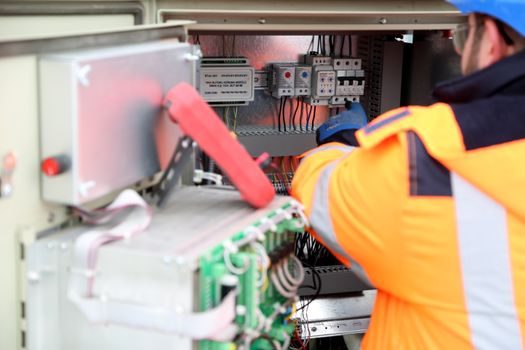
The three failure modes seen on welding floors are sensor poisoning by silicone (from anti-spatter sprays), false LEL trips during argon purging, and water-ingress into a head mounted near a wet-extract table — the fix in all three is a remote-mounted sensor head with a hydrophobic filter, an argon purge-bypass interlock, and an IP65 head on the perimeter alarm line if the controller is also covering a tank farm [S1][S3]. Calibration drift on catalytic-bead LEL sensors typically reaches 10-15% within 6 months in a high-dust welding bay, so a 90-day bump-test interval is the field norm, not the annual cycle the datasheet implies [S3].
Power-supply sizing is a quiet constraint: an 8-channel head running 4-wire 24 VDC draws around 1.2 A at full alarm, so a 5 A DIN-rail PSU with battery backup is the right spec for any controller that drives a gas solenoid shutoff — undersizing the PSU is the single most common reason a gas mass flow controller shutoff fails to close on a real alarm [S1].
Trackable Signals and Sourcing Caveats
Trackable signals into late 2026: the shift of welding-bay specs from single-gas LEL only to a 3-gas (LEL + O2 + CO) bundle; growing demand for Modbus RTU on the controller side because most welding PLCs now speak it natively; and tighter enforcement of ATEX/IECEx on the sensor head even when the welding machine itself is non-classified [S1][S3]. For deeper spec work on adjacent selections, the gas detector selection for work at height map covers the sensor-stack half, while the gas alarm controller selection for electrical work map covers the channel/output half when the bay mixes welding with switchgear rooms.
Sourcing caveat: the three public profiles surveyed (Wuxi Yongan 2003, RC Systems 1979, Henan Chicheng 2004 ISO9001-2000) do not publish identical test data, so cross-checking the LEL response time, CO cross-sensitivity, and IP rating against a third-party cert PDF is mandatory before order — datasheet numbers from the supplier's own page should be treated as a ceiling, not a floor [S1][S2][S3].