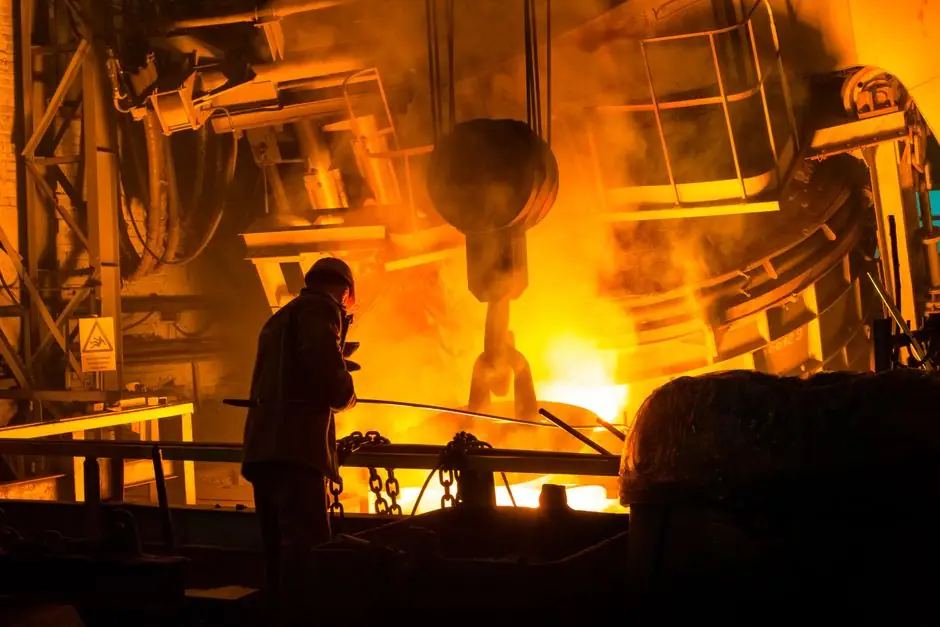
Gas-fired aluminum melting furnaces in the 0.5-10 t/h class cover the bulk of agricultural-machinery foundry demand, with bath temperatures held between 700°C and 760°C to keep dross below roughly 2% by weight [S1].
Spec gates that drive a 2026 capex decision include burner type (regenerative vs conventional), refractory grade, and specific gas consumption per tonne, with most farm-equipment castings using alloys such as A356, A380, and 6061 [S1].
Capacity vs Casting Mix for Agricultural Machinery
Rated melt rate of 0.5-2.0 t/h suits small jobbing foundries running tractor hubs, gearbox housings, and pump bodies in batches of 200-800 kg per shift, where a single 1 t/h unit is typical [S1].
Mid-volume operations producing 5-15 t/day of combine and sprayer components generally specify 3-5 t/h furnaces with 1.5-2.5 t holding capacity, while high-volume OEM lines for tillage discs and planter row units run 6-10 t/h dual-chamber regenerative units that track line-frequency induction alternatives for throughput benchmarking [S1].
Burner Technology Comparison
Conventional cold-air burners on 0.5-3 t/h units consume 45-55 Nm³ of natural gas per tonne of aluminum, with a 3-5 minute tap-to-tap cycle on small batches [S1].
Regenerative burner systems drop specific gas consumption to 32-40 Nm³/t on 5-10 t/h units, with 60-80% thermal efficiency, and 1200-1400°C preheated combustion air entering the bath zone, while recuperative burners sit between the two at 38-45 Nm³/t [S1].
Refractory and Lining Selection
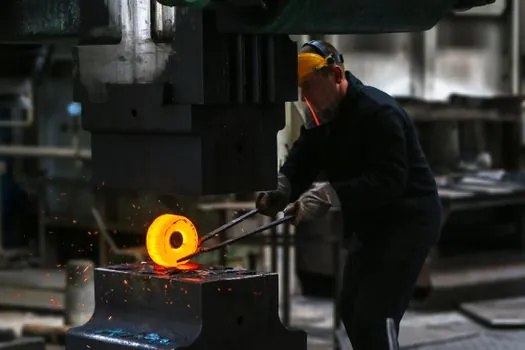
High-alumina castable lining in 70%-85% Al₂O₃ grade handles bath-zone duty at 700-760°C, with a service life of 18-30 months under 8-12 shifts/week operation [S1].
Silicon carbide (SiC) bottom and wall tiles improve thermal cycling and are increasingly used in aluminum alloy melting service where alloy changeover happens daily, with 35-50 mm tile thickness as a typical spec [S1].
Process and Gas-Consumption Specs
Standard practice holds the bath at 700-720°C for melt-down and ramps to 740-760°C for transfer and pour, keeping dross generation below 2.0% and hydrogen pickup low when the gas is dry [S1].
Reference duty for natural gas runs 35-45 m³/t on a well-tuned regenerative unit, with NOx typically held below 50 mg/Nm³ in low-emission configurations; a 1 t/h class furnace on a 40 m³/t rate consumes about 40 Nm³/h per ton of nominal capacity [S1].
Selection for Agricultural Foundries
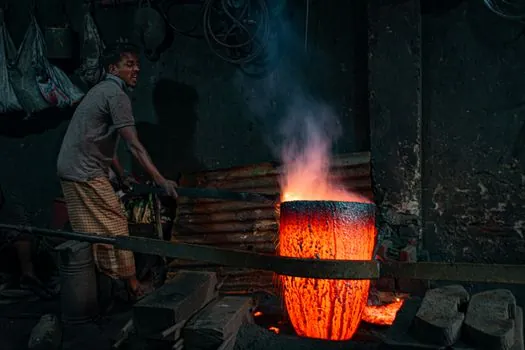
Foundries that melt A356 and A380 for tractor housings and gearbox cases in 0.5-1.5 t batches fit a 1-2 t/h gas-fired furnace with hydraulic tilt, A356/A380 charge weights of 1500-3000 kg per heat, and natural-gas pressure of 8-20 kPa [S1].
Larger combine harvester and sprayer-boom parts shops running mixed alloys are better served by 3-5 t/h units with dual-fuel backup, while a single 5 t/h unit is also a credible fit for sites that also handle crawler crane chassis parts and similar heavy ag castings [S1].
Forging and Auxiliary-Machinery Context
For agricultural forging and heat-treatment lines that sit next to a foundry, gas-fired melting furnace enclosures and car-bottom or trolley furnaces share the same gas-train spec (8-20 kPa, NG or LPG) and the same 35-45 m³/t consumption band, which simplifies spares and burner training [S1].
Engineers sourcing complete heat-processing packages should also confirm refractory type and burner preheat class with the gas-fired furnace family datasheet, since the 60-80% efficiency figure only holds on regenerative units, and the fired brick selection directly drives bath-zone lining life [S1].
Trackable signals for 2026 capex reviews: a site audit of current specific gas consumption (target 35-45 Nm³/t) and a refractory inventory check, both standard 2-3 week turnaround activities [S1].